Why You Need to Be Your Own Bank

- The Parking Ticket Problem
- What “Self-Custody” Actually Means
- Why “Convenient” Can Be Costly
- What This Means for You in Malaysia
- Key Takeaway
Most of us assume the money in our bank account belongs to us. This article explains what financial sovereignty actually means — and how Bitcoin gives ordinary people a real chance to own their wealth for the first time.
The Parking Ticket Problem
 Check your Maybank app right now. See that number? That’s not your money — that’s a promise. A promise from the bank that they’ll hand it back when you ask nicely.
Most of the time, that’s fine. But try withdrawing RM30,000 in cash tomorrow. Suddenly you need to fill in forms, explain yourself, wait for approval. You’re asking permission to access your own savings.
Think of it like a parking lot. You drove in, handed over your keys, and got a ticket stub. The car is still yours — technically. But right now, someone else has the keys. They decide when you can leave, how much you pay, and whether the lot is even open when you need it.
Bitcoin offers a different model. One where you keep the keys.
What “Self-Custody” Actually Means
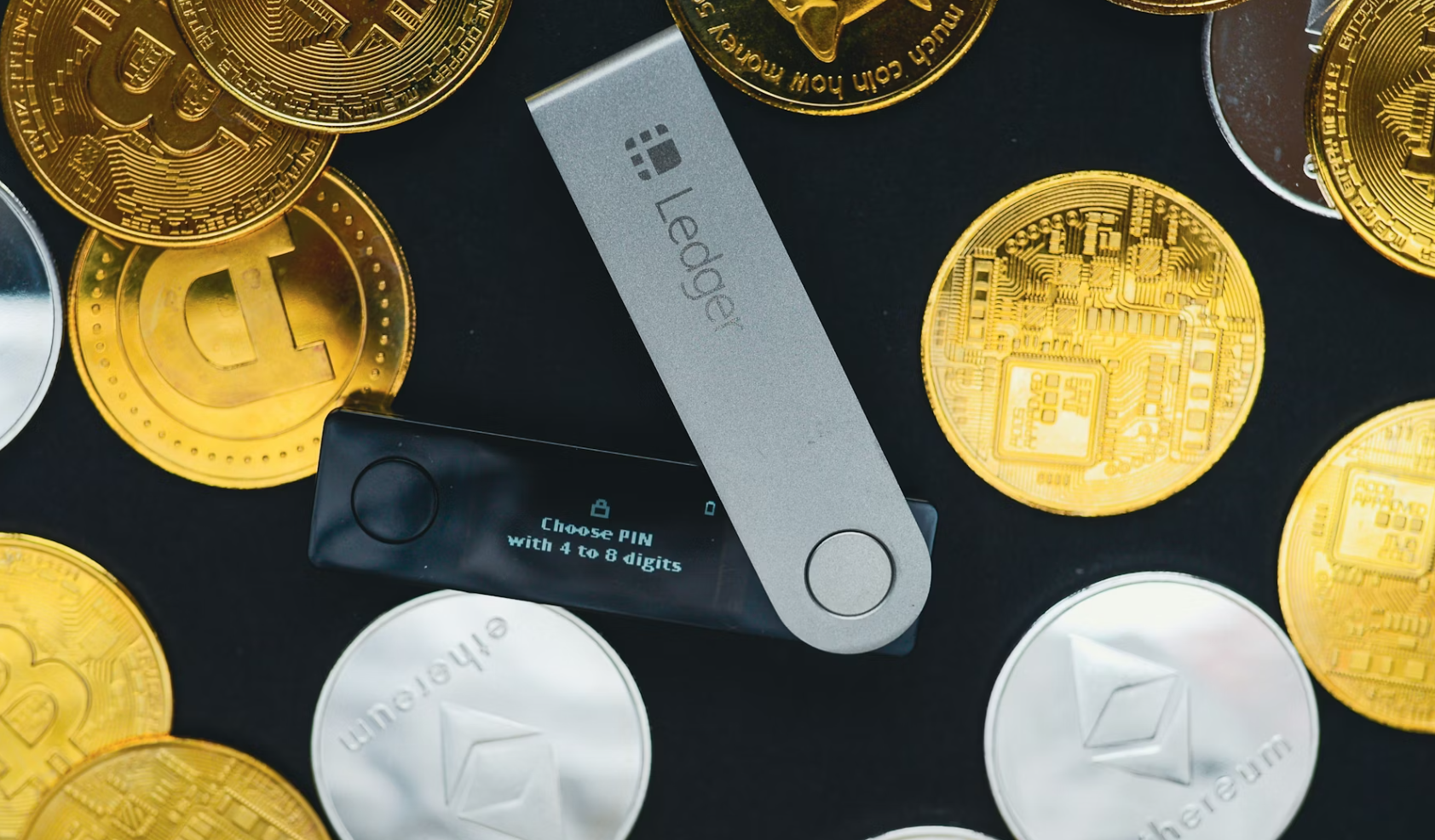 Self-custody sounds technical. It isn’t.
It means you hold your Bitcoin directly — no exchange, no bank, no third party sitting between you and your money. The way you do this is through something called a private key: a long string of characters that proves the Bitcoin is yours. Whoever holds that key controls the Bitcoin. Full stop.
The most practical way to do this is with a hardware wallet — a small device, roughly the size of a USB drive, from companies like Ledger or Trezor. You plug it in when you need to send Bitcoin, unplug it when you’re done. Even if your laptop gets hacked, your Bitcoin is untouched, because the key never left the device.
Think of it like your building’s access card. The card doesn’t store your apartment — it just proves you belong there. A hardware wallet works the same way. The Bitcoin lives on the blockchain. The wallet just holds the proof that it’s yours.
Why “Convenient” Can Be Costly
Keeping Bitcoin on an exchange like Luno or Sinegy is easier. You log in, you see a balance, it feels like money in the bank. And that’s exactly the problem.
In 2022, FTX was one of the largest crypto exchanges in the world. Millions of users had accounts there. Then, almost overnight, it collapsed. Withdrawals froze. Customer funds had been used without permission. People who had “owned” Bitcoin on FTX lost everything.
People who held their own keys? Completely unaffected. Their Bitcoin was never FTX’s to lose.
There’s a phrase that gets repeated a lot in Bitcoin circles: not your keys, not your coins. It sounds like a warning. It is. When someone else holds your Bitcoin, they can freeze your account, get hacked, go bankrupt, or simply decide the rules have changed. When you hold your own keys, none of that applies.
The trade-off is real: self-custody requires you to be careful. Lose your private key with no backup, and there’s no customer service line to call. But that responsibility is also the point — you’re not a customer anymore. You’re the bank.
What This Means for You in Malaysia

Here’s a number worth sitting with: in 2014, one US dollar cost about RM3.80. By 2024, that same dollar cost over RM4.70. Your savings account grew maybe 1–2% a year. Prices grew faster.
Bitcoin has a hard cap of 21 million coins. No central bank can decide to print more. No committee votes on the supply. That limit is written into the code and has held since day one. For someone watching their ringgit slowly lose purchasing power, that’s not a small thing.
There’s also the practical side. If your parents ever need to send you money while you’re studying overseas — or you need to send money home — a bank transfer takes days and costs RM25–50 in fees, sometimes more. A Bitcoin transfer takes minutes and costs a fraction of that. No middleman. No business hours. No forms explaining why you need your own money.
Self-custody isn’t only for developers or people with large holdings. It’s a skill — like learning to cook instead of eating out every meal. Restaurants are convenient. But knowing how to feed yourself means you’re never completely dependent on someone else’s kitchen being open.
Key Takeaway
Self-custody means holding your Bitcoin with your own keys — making you the bank, not just a customer of one.
Bitcoin House Malaysia · EduBTC Series · For educational purposes only. Not financial advice.
#Bitcoin #Malaysia #BTC #Nostr #SelfCustody #BitcoinEducation


Write a comment