The Timeline Just Got Shorter: Claude Beats Superforecaster Predictions by Seven Months
- The Compression Is Real
- Why Timelines Keep Compressing
- Implications for Builders and Operators
- Owning Your Intelligence
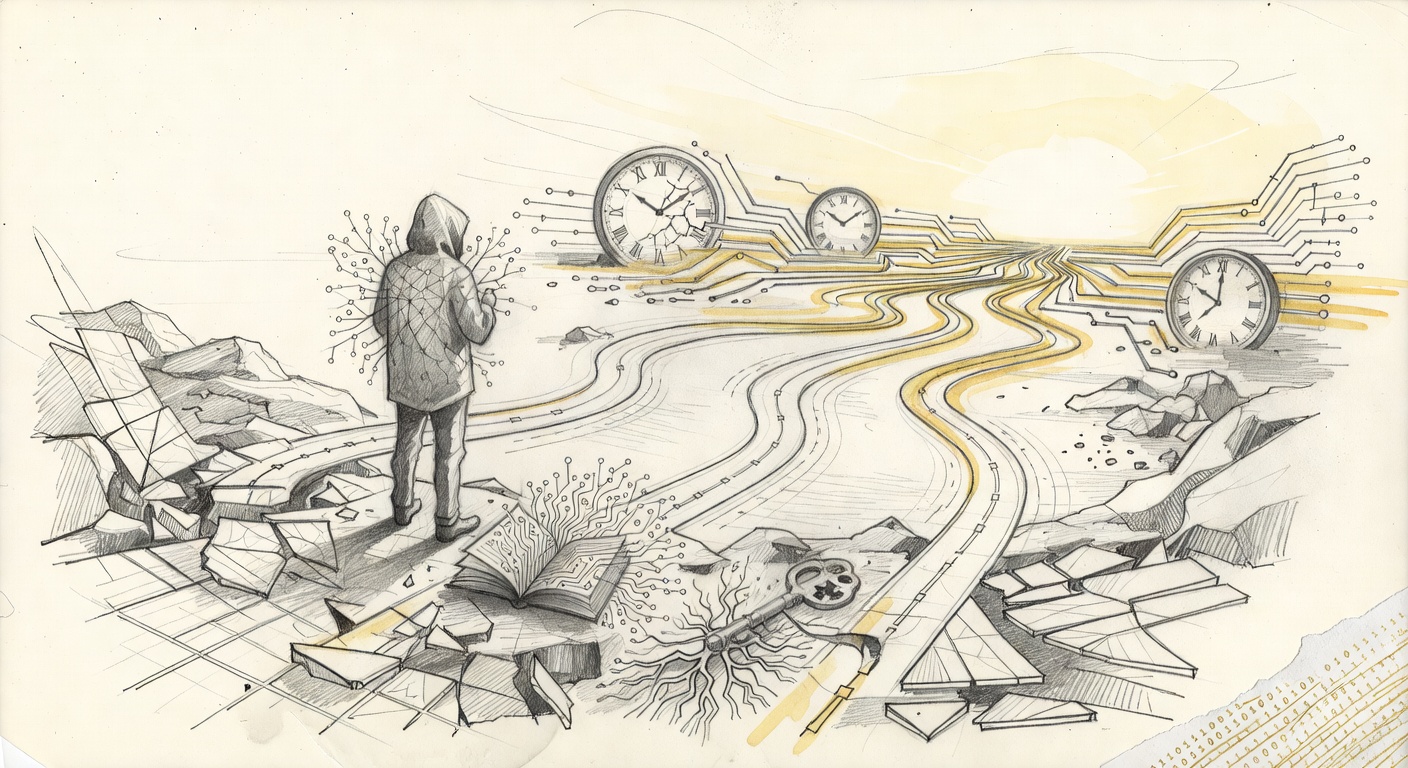
The numbers don’t lie. Superforecasters — those calibrated predictors who consistently beat markets and experts — put the 80% mark for AI systems handling 3-4 hour METR tasks at the end of 2026. Claude did it in May. Seven months early.
The Compression Is Real
This isn’t another benchmark flex. It’s a signal that the curve is bending faster than even the optimists expected. METR tasks measure real-world usefulness: long-horizon planning, tool use, error correction over extended periods. Hitting it this soon means agentic systems are no longer theoretical. They are crossing into practical territory right now.
The Stanford study adds weight. Law professors preferred AI-generated answers 75% of the time in blind tests. Not because the AI was perfect, but because it was consistently better than the alternative in structured analysis. Combine that with open-weight music generation models like Magenta RealTime 2 running on-device with 200ms latency, and the pattern emerges: capabilities are democratizing faster than infrastructure can adapt.
Miso One’s 8B parameter TTS model hitting 110ms latency with emotional nuance tells the same story. Small, efficient, open-source models are closing the gap on what used to require massive cloud clusters. The edge is becoming capable.
Why Timelines Keep Compressing
Prediction markets and forecasters have been systematically underestimating AI progress for years. The reasons are structural. Training compute scales predictably. Algorithms improve in jumps. Data quality compounds. But the real accelerator is the feedback loop: better models help build better models. Each breakthrough shortens the path to the next.
The danger isn’t the speed. It’s the mismatch between capability and control. When systems can autonomously operate for hours, the questions of alignment, oversight, and ownership stop being academic. They become operational necessities. Who runs the agent when it decides to spin up subprocesses? Where does the memory live? How do you verify its actions without trusting a black box in someone else’s data center?
This compression forces a choice. Centralized platforms will offer convenience wrapped in surveillance and dependency. The sovereign path demands local-first deployment, open models you can audit, and infrastructure that doesn’t require begging for API keys.
Implications for Builders and Operators
The practical takeaway is clear. If agents can sustain coherent work for hours today, they will handle days next quarter. Your workflows, your data pipelines, your decision loops — all of them are about to be rewritten by systems that don’t sleep, don’t forget context, and don’t bill by the token unless you let them.
Local deployment is no longer optional. Running these models in the cloud means handing your proprietary context, your customer data, your competitive advantage to whoever owns the GPUs. The compression makes that trade-off untenable. You need models that run on your hardware, with your guardrails, answering to your keys.
Open-source accelerates this shift. The Magenta and Miso examples show what’s possible when weights are public. Innovation compounds in the open. Forks, fine-tunes, and integrations multiply. Closed models might ship flashy demos, but the ecosystem that scales is the one developers can touch, modify, and own.
This also reframes Bitcoin’s role in the stack. Not as a payment rail for API calls, but as the immutable verification layer for agent actions. When an agent executes a trade, signs a contract, or commits code, that commitment needs to be anchored in something that can’t be rewritten by a CEO or censored by a regulator. Sound money meets sovereign intelligence.
The forecasters missed the timeline because they modeled progress as linear. It’s not. It’s recursive. Each capability unlocks new training techniques, new datasets, new forms of collaboration between humans and machines. The seven-month beat is evidence of that recursion accelerating.
Owning Your Intelligence
The real question isn’t whether AI will transform knowledge work. It’s whether the transformation leaves you in control or reduces you to a prompt engineer feeding a rented brain.
Sovereignty in the age of compressed timelines means three things. First, run locally or on infrastructure you control. Second, use models you can inspect and modify. Third, anchor the important outputs to a trust layer that survives corporate whims.
The builders who understand this will ship agents that don’t just work — they work for you, on your terms, with your data staying yours. The rest will wonder why their “AI strategy” feels like renting someone else’s future.
The timeline didn’t just shorten. It snapped forward. The window for getting your infrastructure in place is narrower than you thought. Start today. The agents aren’t waiting.
Write a comment