OpenClaw: The Local-First Agent Breakthrough Sovereign AI Needed
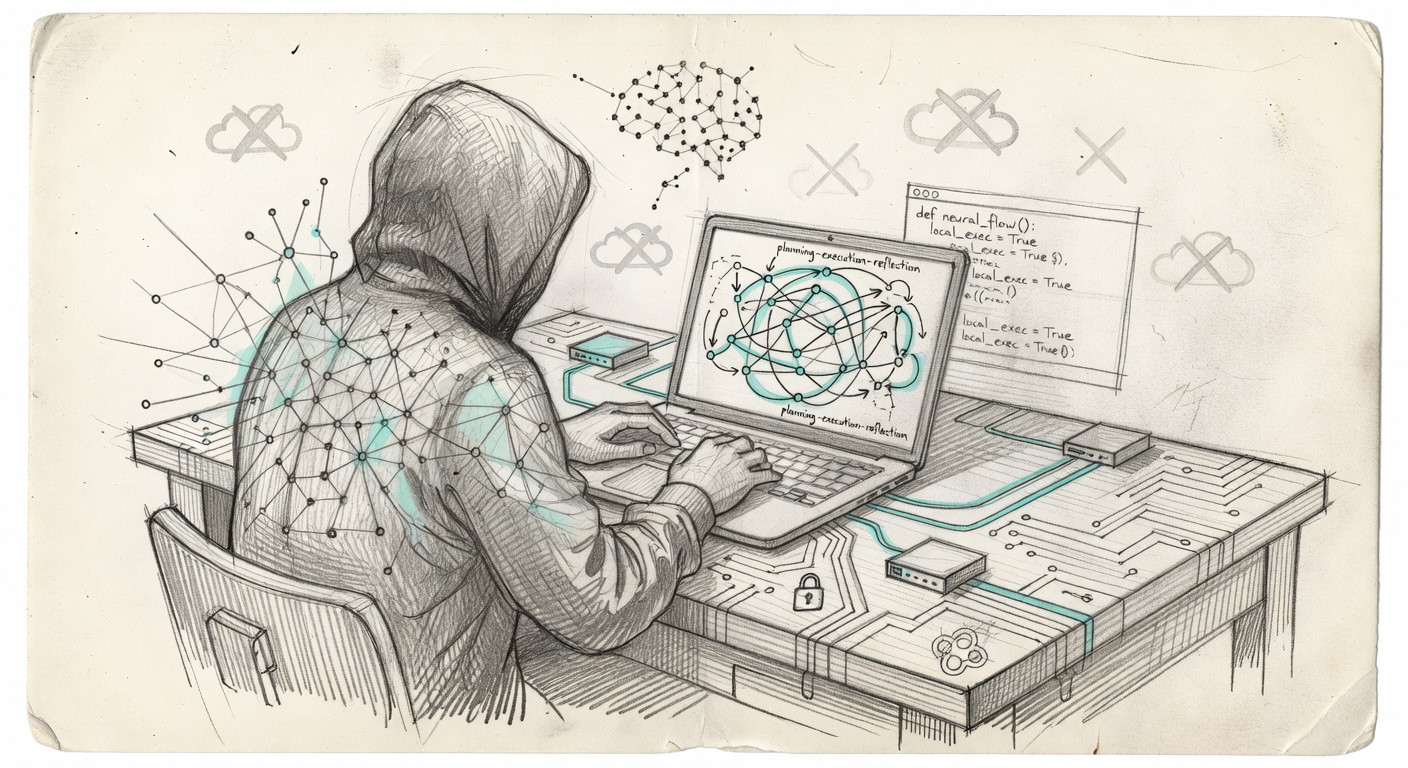
OpenClaw hit like a quiet storm in early 2026. Peter Steinberger’s open-source framework—formerly Clawdbot and Moltbot—went viral for one simple reason: it works. Not as a demo, not as a proof-of-concept, but as the first agentic AI you can actually use from your keyboard.
Forget chatty LLMs spitting JSON you have to parse. OpenClaw agents execute. They control your browser, your local files, your terminal—autonomously, on your hardware. No API keys to clouds. No data exfiltration risks. Run it in a VPC, on your laptop, behind Tailscale. Privacy is the default, not an add-on.
This matters because sovereign AI isn’t a buzzword anymore. Nations like Japan (Fujitsu’s local servers), Indonesia (NVIDIA-backed data centers), and the EU are building infrastructure to escape Big Tech’s grip. Enterprises want agents that don’t phone home. OpenClaw delivers that: local models like Llama 4 or DeepSeek powering workflows that plan, act, reflect, and iterate without leaving your boundary.
The Hacker News threads exploded. “Sovereignty of confidentiality,” one commenter nailed it. Files as interfaces, agents as extensions of your intent. No more SaaS illusions—apps die, agents persist.
Why now? Open-source reasoning leaped forward. Models that chain thoughts, not just autocomplete. Frameworks like LangGraph and CrewAI laid groundwork, but OpenClaw operationalizes it. It’s the keyboard test: can you delegate a task and trust it runs clean? Yes.
Developers are prototyping enterprise stacks: Serena for code, Satya AI for multi-agent orchestration, GitHub’s agentic Markdown workflows. Red Hat integrates it into hybrid clouds. The moat shifted—from proprietary models to boundary control.
But here’s the miss: most still chase bigger models. Wrong battle. Scale horizontally with agents on local iron. Your hardware, your rules. OpenClaw proves it scales to production without sovereignty tradeoffs.
Let’s break it down. OpenClaw agents aren’t scripted bots. They reason over tasks using local models—plan steps, execute via browser or shell, reflect on outcomes, iterate. A single prompt like “research Q1 earnings for NVDA, summarize in Markdown” spins up browser control, data extraction, local synthesis. No vendor lock. Run Mistral 3 or whatever you fine-tuned.
Compare to Devin or Cursor: those shine in code but falter on general agency. OpenClaw generalizes—web scraping, file ops, even VPC-internal APIs. Hacker News debates stack it with Cline IDE for dev loops or Tailscale for secure tunnels. Viral threads compare Clawdbot evolutions, but OpenClaw matures it: containerized, extensible, zero-config local.
Enterprise angle: Red Hat’s agentic hybrid clouds approve gates for reliability. Vercept’s Vy agents Mac workflows. Anthropic’s MCP protocol hints standardization. But open-source wins: Satya AI scales multi-agents, LangGraph DAGs state machines, LlamaIndex RAGs docs. GitHub previews Markdown agent workflows—agents as repo citizens.
Fujitsu ships sovereign servers; telcos pivot to edge AI. WEF calls for “strategic control,” not isolation. OpenClaw fits: deploy in air-gapped envs, scale with your infra. Cost? Pennies vs. cloud inference bills. Privacy? Absolute—data never leaves.
Overhype check: Not every workflow needs agents. Simple CRUD stays scripts. Agents excel multi-step uncertainty: research, triage, automate. Production needs guardrails—human-in-loop for high stakes. But for devs prototyping sovereign stacks? Game-changer.
What’s missing in the noise? Boundary moats. Shinkai nails it: “The real moat isn’t the model, it’s the boundary.” Models commoditize; control persists. Local agents + open models = sovereignty. Enterprises hoard data in VPCs; OpenClaw unlocks it without leaks.
Predictions for Q2: Hybrid stacks dominate—local agents calling vetted APIs. Approval patterns (human/LLM gates) standardize. Reddit’s LocalLLaMA dreams 2026 stacks: OpenClaw + Serena coding agents. Frontier Enterprise forecasts agents embedded in apps, killing SaaS.
Challenges remain. Local hardware lags—NVIDIA edge boxes pricey, though ARM clusters cheapen. Model reasoning inconsistent; chain-of-thought helps, but edge cases fail. Orchestration: single-agent fine, multi-agent swarms need battle-testing.
Yet the trajectory’s clear. Sovereign AI cascades: nations fund infra, devs build tools, enterprises deploy. OpenClaw accelerates it—free, auditable, extensible. No more waiting for closed vendors.
If you’re a CTO eyeing agentic pilots, start here. Fork the repo, spin a local Llama, delegate a task. Feel the shift from reactive tools to proactive intelligence. The future isn’t cloud-dependent. It’s yours to run.
That’s sovereign AI: not a feature, a foundation. OpenClaw just made it real.
Write a comment