Node Sovereignty: The Forgotten Pillar of Bitcoin's Resilience
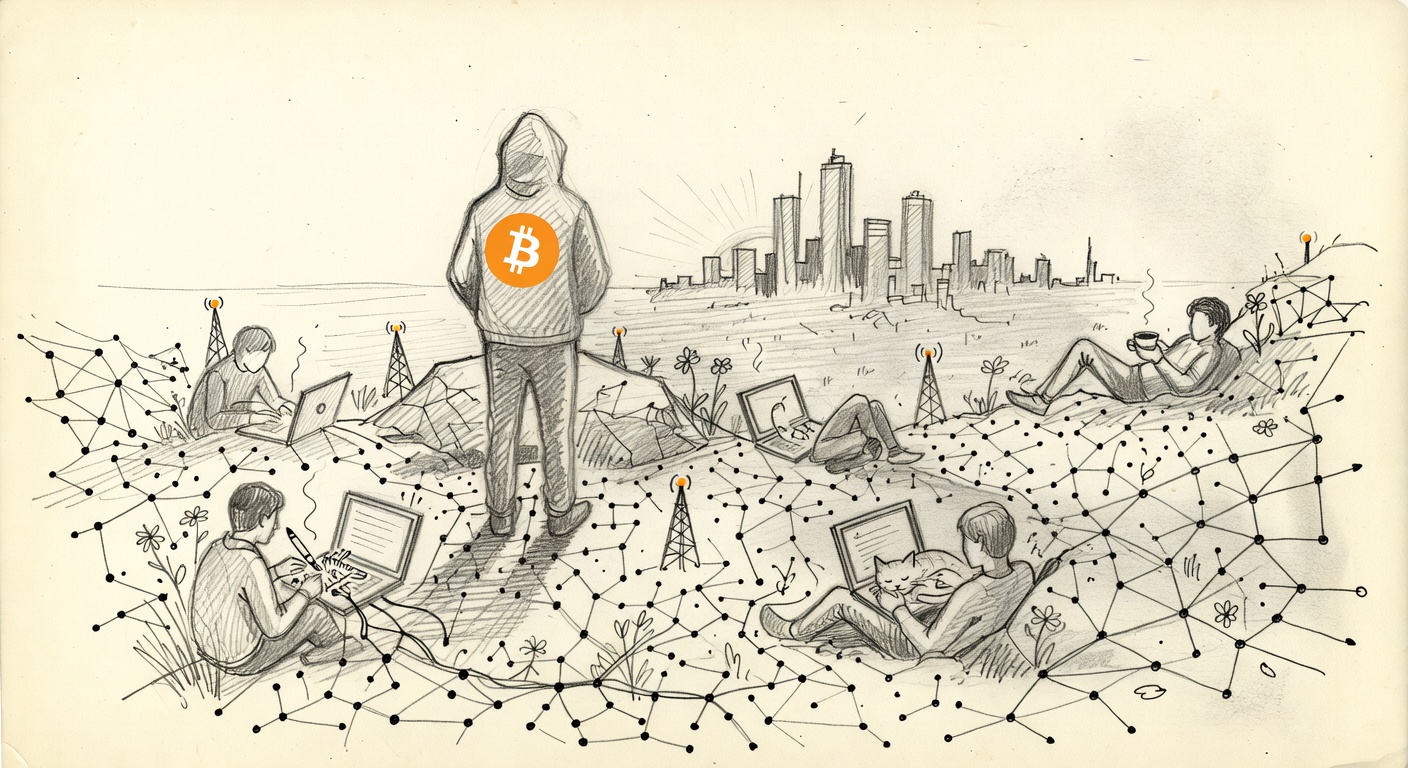
Bitcoin turned 17 this year. It’s no longer the wild west of cypherpunks and early adopters. Corporations hold billions in sats. Lightning channels hum with daily transactions. Ark and other L2s promise infinite scale. Yet amid this growth, one truth endures: your node is your sovereignty.
Think about it. Every time you use a wallet, exchange, or Lightning app, you’re querying someone else’s node. SPV wallets sip headers. Custodial services like Cash App or Strike run their nodes for you. Even non-custodial apps often rely on public Electrum servers or Blockstream’s Esplora.
That’s convenience. But it’s also surrender. If that node lies, censors, or goes offline, your reality bends. Remember the 2021 China miner exodus? Nodes in the wrong jurisdiction suddenly saw invalid blocks. Or the time Mt. Gox users trusted one company’s validation—and lost everything.
Running a node changes that. You validate every block yourself. You enforce the rules you signed up for. No intermediary can feed you a forked chain. In 2026, with UTXO commitments and covenants rolling out, full nodes become even smarter—pruning old data, verifying L2 states without storing the world.
Hardware’s cheaper than ever. A Raspberry Pi 5 with 1TB SSD runs Bitcoin Core flawlessly. Power draw? Less than your router. Cost? Under $200. Set it up once, tunnel it securely, and you’re sovereign.
But sovereignty isn’t free. Nodes demand time. Syncing mainnet takes days first time. Updates break IBD occasionally. Lightning nodes need channel management—liquidity, routing fees, watchtowers.
Most skip it. Stats bear this out: only 15-20k reachable nodes worldwide, per Luke Dashjr’s tracker. That’s peanuts for a $2T asset. The silent majority outsources validation to the few who run nodes.
Why? Inertia. Complexity FUD. “My wallet works fine.” Until it doesn’t.
The pivot is mindset. Sovereignty starts with asking: do you trust the network, or the app claiming to speak for it? A node answers directly.
Let’s get technical. A full node downloads the entire blockchain—over 600GB now. It verifies every transaction against consensus rules: signatures valid? UTXOs unspent? No double-spends? Reorgs rejected unless deeper.
SPV does none of this. It checks Merkle proofs for your tx, trusts the node for headers and filters. Fine for small amounts. Risky for HODL stacks or business flows.
Lightning nodes layer on top. You open channels, balance liquidity, route payments. LND, CLN, Eclair—pick your flavor. Tools like Ride The Lightning or ThunderHub make monitoring easy. But you still need the Bitcoin node underneath.
2026 brings upgrades. BIP-118 covenants let nodes verify contract execution off-chain. Package relay reduces mempool spam. Even pruned nodes (2GB) validate recent history, sync via assume-valid.
Incentives align too. Node operators earn routing fees on Lightning—passive income for uptime. Staking-like models emerge on L2s, rewarding verification.
Challenges persist. DDoS on public ports. ISP blocks. Family routers NAT hell. Solutions: Tor, VPNs, cloud VPS (ironic, but sovereign if you control keys).
Regulators notice. EU’s MiCA classifies node software as non-financial. US SEC leaves it alone—for now. But run a business node routing millions? Audit trails matter.
The power shift is real. Node runners dictate reality. Exchanges sync to you. Apps query your node. In a disputed fork, your chain wins.
Case study: 2023 Ordinals spam. Nodes with low block limits rejected it. Miners pushed anyway. Node software held the line—Bitcoin stayed simple money.
Today, AI agents query nodes for L2 proofs. Sovereign AI needs sovereign Bitcoin infra. But that’s another post.
Bottom line: if Bitcoin’s your conviction, run a node. It’s the difference between believing the map and drawing it yourself.
Start small. bitcoin.org/en/full-node. Join #nodechat on IRC. Watch CoinJoin meetups.
Sovereignty compounds. Yours first, then the network’s.
Write a comment