Blaze Media

News, opinion, and entertainment for people who love the American way of life.

Cover image for No More Free Ride for Federal Grant Hogs

No More Free Ride for Federal Grant Hogs

Washington has an old joke: Nothing is more permanent than a temporary government program.Look past the quip and a pattern emerges. Programs created to address specific problems rarely disappear when those problems recede. They develop constituencies, build bureaucracies, and acquire defenders. Programs meant to die are kept alive through zombie funding long after their original purpose has faded.Federal grants are not entitlements. Recipients should earn and re-earn them through demonstrated performance.Milton Friedman spent decades explaining why. In “Free to Choose,” he distilled the point into a simple insight: When you spend your own money on yourself, you care about cost and value. When you spend someone else’s money on someone else — which is precisely what federal grantmaking entails — neither cost nor value receives the same scrutiny it would if the money were your own.That is the system the Trump administration is now trying to change through a sweeping overhaul of federal grant regulations developed by the Office of Management and Budget. The core idea is simple enough that it should not require federal rulemaking to defend: Public money should produce public results. If it does not, the money should not continue automatically.Washington has often operated on the opposite assumption. Grants get awarded. Organizations build staffs around them. Those staffs lobby to preserve them. Programs that fail rarely disappear cleanly; they are restructured, rebranded, and refunded. The constituency for any particular line of spending is loud and organized. The constituency for cutting it is diffuse and quiet. That is not a bug. It is a feature that benefits insiders and leaves taxpayers with the bill.The proposed reforms rest on a simple principle: Federal funding should be earned continuously, not granted automatically. Stronger reporting requirements would force grantees to demonstrate results rather than document activity. Expanded use of the Treasury Department’s Do Not Pay system would help prevent improper payments before funds go out — a meaningful safeguard given that the OMB reported roughly $236 billion in improper payments government-wide in the 2023 fiscal year. Enhanced transparency rules would make it easier for taxpayers to see where federal dollars go and what they produce.The goal is to shift federal grantmaking from routine renewal to ongoing performance review.The proposal also takes on something Washington rarely discusses honestly: grantee capture. When a nonprofit receives most of its revenue from federal grants, it no longer operates as a purely independent civic institution. It functions as a publicly funded contractor with a development office. Taxpayers deserve to know when groups presenting themselves as independent advocates also depend heavily on federal money.RELATED: ‘Pigs at the trough’: Spencer Pratt and Bill Maher come together to blast California ‘socialists’ Man_Half-tube/iStock/Getty ImagesOne provision deserves special support: ensuring that faith-based organizations can compete for grants on equal terms with secular ones. Charitable-choice provisions dating to the 1996 welfare reform law, executive-branch guidance under President Bush, and Executive Order 14332 signed by President Trump in 2025 already prohibit religious discrimination in many grant competitions.But law on paper and law in practice often diverge. The federal government should judge applicants on their ability to deliver results — not on whether they pray before staff meetings.Critics will argue that these reforms could be used to disadvantage political opponents. Some of that criticism will land. Implementation will matter enormously, and the effort’s credibility will depend on whether agencies apply performance metrics consistently and transparently across programs.But the underlying principle should command broad support: Federal grants are not entitlements. Recipients should earn and re-earn them through demonstrated performance. Any serious steward of public resources should embrace that standard.Friedman understood that bad incentive structures produce bad outcomes regardless of the intentions of the people operating within them. The federal grant system has tolerated weak incentives for too long. Large flows of public money require constant oversight. Without it, mistakes, waste, and fraud become predictable.After decades of promises to eliminate waste, fraud, and abuse, the Trump administration’s reforms represent something Washington too rarely attempts: real change.Every dollar the federal government spends was earned by someone outside Washington. Taxpayers deserve to know it was used well.

Cover image for Japan is close to finding cure for rare disorder that devastates children

Japan is close to finding cure for rare disorder that devastates children

A rare defect that can be devastating to children is getting a first-of-its-kind medicine from Japanese researchers.A new treatment is now five years in the making, and after being used for medical applications, it's likely the product will be available for use by the general population as well.'We feel that people's expectations ... are high.'Since 2021, Japanese researchers have been hoping to find a solution for anodontia, the medical term for the complete absence of teeth, according to the Cleveland Clinic.The initial study for this project states that anodontia and congenital tooth agenesis are common tooth anomalies affecting 1% of the worldwide population, resulting in a high rate of missing teeth.The solution, according to lead researcher Katsu Takahashi, is to counteract a protein called USAG-1, which inhibits the growth of teeth."We want to do something to help those who are suffering from tooth loss or absence," he told the Mainichi in 2024. "While there has been no treatment to date providing a permanent cure, we feel that people's expectations for tooth growth are high."The goal of the project is to give young children who have no teeth the joy of a real smile.RELATED: Japan’s beautiful love affair with America EyesWideOpen/Getty Images The research was moved into human trials in October 2024 and lasted until October 2025. The controlled trial involved 30 males between 30 and 65 who were missing one or more molars, and the medicine was administered through one single intravenous dose.The study has since been marked as completed, but little public information has been released. However, the Economic Times reported that as of April, preliminary analyses showed positive results with no significant side effects.The next phase of the research is reportedly to test the medicine on children between 2 and 7 who suffer from congenital anodontia.RELATED: That customer service rep with the American accent might still be an Indian guy — here's how - YouTube The teams at Kitano Hospital and Kyoto University Hospital believe that it may be soon possible to grow teeth not only in people with the aforementioned conditions, but also for common conditions like tooth loss from cavities or injuries.According to Popular Mechanics, if the latest trials are successful, the researchers believe the medicine will become available to the public for all forms of tooth loss around 2030.Like Blaze News? Bypass the censors, sign up for our newsletters, and get stories like this direct to your inbox. Sign up here!

Cover image for The biggest fraud scandal in America? JD Vance says it’s worse than you think.

The biggest fraud scandal in America? JD Vance says it’s worse than you think.

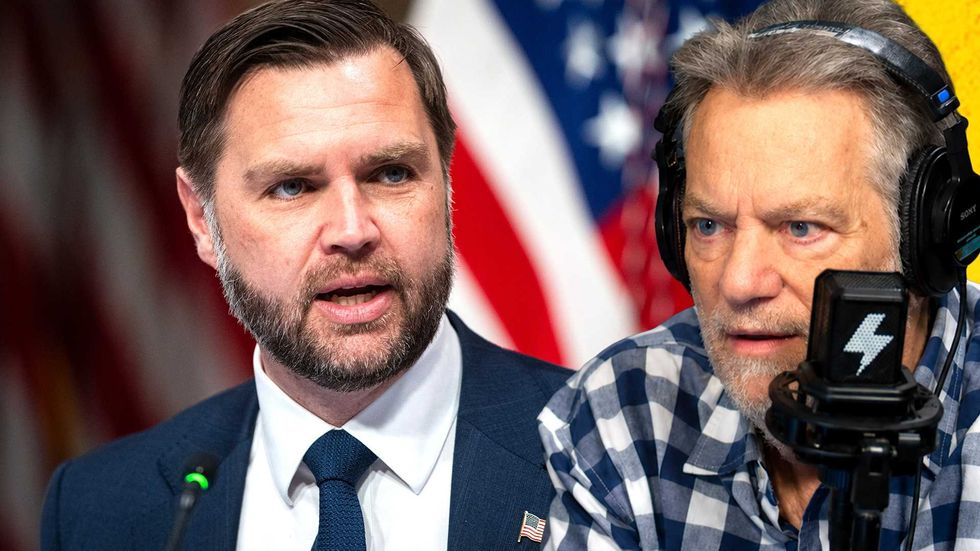
Vice President JD Vance revealed just how much taxpayer money is lost to fraud across America — and it’s more than you think.“We’ve referred over $22 billion in fraudulent small business loans back to the Treasury for collection. We deferred more than $1.3 billion in fraudulent Medicaid reimbursements that were coming from various states, particularly California,” Vance explained.The Trump administration has also “put a six-month hold on enrollments for new hospice and home health care providers” due to a large amount of fraud uncovered in hospices all over the country.“We’ve recovered taxpayer funds from the $135 billion stolen after the floodgates were opened in the immediate aftermath of COVID. We have found $6.3 billion in suspected fraudulent government contracts which were mostly awarded during the last administration, and that has stopped,” Vance continued.“And finally, we’ve blocked $60 million in student aid fraud that should have gone to young people trying to get an education, but instead were going to fraudsters,” he added.“JD Vance is doing his darndest to try to clean up the fraud situation in America,” BlazeTV host Pat Gray comments. “We’ve got all the Somali fraud. We’ve got fraud in California. We’ve got fraud, I’m sure, in every state, but it’s really really rampant in some more than others.”White House Deputy Chief of Staff Stephen Miller also commented on the huge amount of fraud, explaining that American systems were “set up based on the honor system.”“They’re set up based on the idea that you could trust the average person, through their own morality, to abide by the rules and comply with the law,” he said, before championing Vance’s efforts to tackle fraud.“Because of the vice president’s leadership, you are seeing the most muscular, robust, aggressive, dedicated, determined, and speedy effort to shut down criminal fraud that has not only ever occurred in the history of this country, but in any developed nation,” he said.“Thank you,” Gray comments.Want more from Pat Gray?To enjoy more of Pat's biting analysis and signature wit as he restores common sense to a senseless world, subscribe to BlazeTV — the largest multi-platform network of voices who love America, defend the Constitution, and live the American dream.

Cover image for Exclusive: Trump’s EPA takes major step to end animal testing after Fauci’s cruel beagle experiments

Exclusive: Trump’s EPA takes major step to end animal testing after Fauci’s cruel beagle experiments

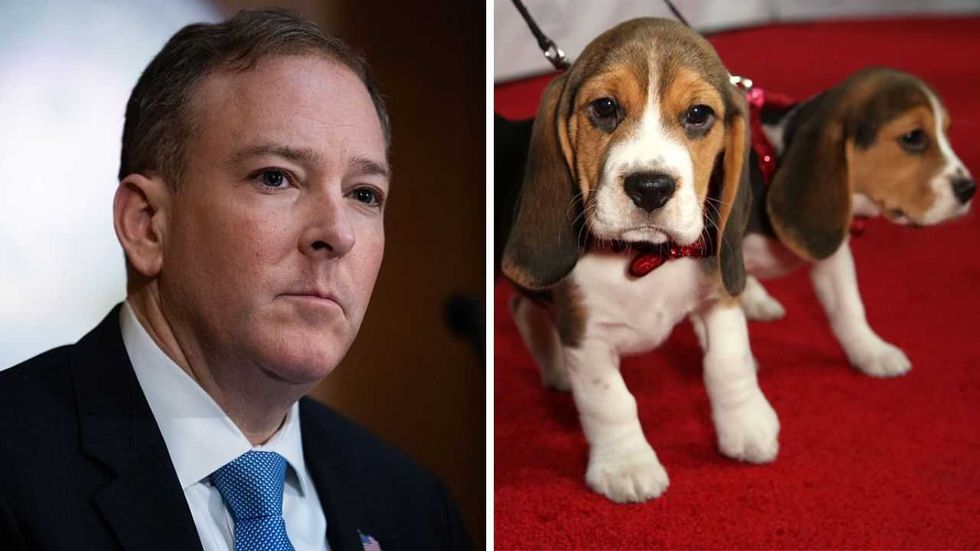
The government watchdog White Coat Waste Project pulled back the curtain in 2021 on federally funded gruesome beagle experiments under the leadership of then-National Institute of Allergy and Infectious Diseases Director Anthony Fauci. The scandal sparked a national outcry to end animal experimentation.President Donald Trump’s administration set a goal to stop all mammalian animal testing by 2035, and on Tuesday, the Environmental Protection Agency announced significant steps to reach that objective, according to a press release obtained exclusively by Blaze News.'The solution is simple: Stop the money. Stop the madness!'The EPA declared that it is expanding its approved list of “cutting-edge” alternatives to animal studies by adding 13 more new approach methods. The agency describes NAMs as “high-quality alternatives” intended to reduce animal testing, particularly on vertebrate mammals such as rabbits, mice, rats, and dogs.The Toxic Substances Control Act “directs EPA to use NAMs whenever scientifically appropriate when evaluating chemicals, and to reduce, refine, or replace vertebrate mammal testing,” the EPA’s press release read. “Modern NAMs, including human cell models and advanced computer-based methods, help EPA identify hazards and exposures faster and often with results that are more relevant to people, not laboratory animals.”The EPA contended that these alternative methods can reduce time and costs, as well as provide more applicable insight into how chemicals interact with the human body. The move “opens the door for innovators to bring the next generation of tools to the table,” according to the EPA.The agency highlighted a few of those new replacement methods, including a way to evaluate eye hazards using reconstructed human cells; a process to evaluate phototoxicity using a 3D human cell-based tissue model, and combining in-chemico and in-vitro test data to “identify potential dermal sensitization hazard, dermal sensitization potency, and a quantitative point-of-departure.”RELATED: Trump's NIH closes Fauci's apparent puppy-torture lab after 40 years of sadistic experiments Vuk Valcic/SOPA Images/LightRocket/Getty ImagesTuesday’s announcement marks the first time the EPA has expanded its NAMs list since 2021.The EPA also announced a streamlined process for industry stakeholders to nominate additional NAMs for consideration in pesticide and chemical assessments.While the goal to end animal testing was initially announced during the first Trump administration, under former President Joe Biden, the phase-out deadlines were canceled, the EPA stated.“Today’s actions get that progress back on track,” the agency declared.The EPA stated that the Trump administration has already made measurable progress toward meeting its goal to phase out mammalian animal testing, including implementing the agency's first lab animal adoption program in April 2025 and using alternative methods in cancer evaluations for dibutyl phthalate and di(2-ethylhexyl) phthalate, which prevented an estimated 1,600 mice and rats from undergoing experiments.“When the Trump administration makes a commitment, we deliver. With today’s announcement, we’re accelerating the shift to modern, gold-standard science — without the use of animal testing — by using new, innovative methods to review chemicals,” EPA Administrator Lee Zeldin stated. “By broadening high-quality alternatives and inviting strong new candidates, we can deliver faster, more protective decisions while reducing animal testing.”RELATED: Republicans should take the easy win and stop medical testing on animals Katherine Frey/Washington Post/Getty ImagesAnthony Bellotti, founder and president of White Coat Waste, commended Zeldin and the EPA for honoring their commitment to reduce animal testing.“Earlier this year, White Coat Waste proudly joined EPA Administrator Lee Zeldin to restore the historic Trump-era plan to phase out animal testing by 2035 after we exposed how the Biden administration quietly scrapped it behind closed doors,” Bellotti said in a statement provided to Blaze News.He stated that WCW is leading the charge alongside Rep. Michael Cloud (R-Texas) to “eliminate outdated EPA red tape that forces companies to poison puppies in expensive, ineffective, government-mandated pesticide and chemical tests.” Bellotti was referring to the Fiscal Year 27 Interior-EPA Appropriations bill, which includes WCW-backed language to defund dog testing mandates for pesticides and chemicals. The House is scheduled to vote on the bill on Wednesday.“Taxpayers shouldn’t be forced to bankroll big-government bureaucrats who mandate beagle torture, butcher bunnies, force animals to inhale firearm emissions in bizarre gun-control experiments, or make animals eat lard and breathe smog,” Bellotti continued. “The solution is simple: Stop the money. Stop the madness!”Like Blaze News? Bypass the censors, sign up for our newsletters, and get stories like this direct to your inbox. Sign up here!

Cover image for Democrat Goes Off the Rails, Allegedly Flashing Gun at County Employees in Hawaii

Democrat Goes Off the Rails, Allegedly Flashing Gun at County Employees in Hawaii

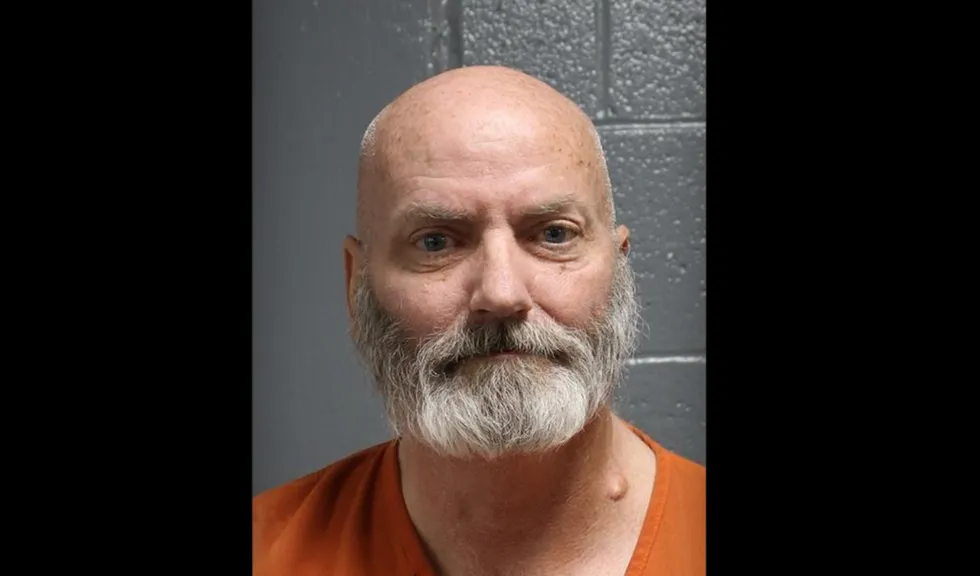
A troubled Democratic congressional candidate in Hawaii has been arrested after allegedly brandishing a firearm at county employees. At around 9:30 a.m. on Friday, a suspect later identified as 40-year-old Kirill Basin marched into a county building in Wailuku and began "brandishing a firearm and engaged in a verbal altercation with County employees," prompting a call to dispatch at approximately 10:57 a.m., according to a press release from the Maui Police Department. The alleged gun incident on Friday is but the latest in a series of apparently bizarre events involving increasingly aggressive behavior from Basin. The county has not explained the 90-minute gap between when the suspect first arrived and when police were finally called, the Honolulu Civil Beat reported. Basin was arrested in Kihei around 12:30 p.m. and taken into custody without incident, police said. He was later charged with felony first-degree terroristic threatening. "The Maui Police Department will not compromise public safety, and incidents of this nature are taken extremely seriously in Maui County," said a statement from Chief John Pelletier. "I am extremely proud of the quick response and professionalism displayed by our personnel, which helped ensure a peaceful resolution." Jail records indicate Basin has since bonded out of custody. Basin's campaign told Blaze News: Kirill Basin denies that he brandished a firearm or threatened anyone. According to Mr. Basin, the item being referenced was an unloaded pellet gun inside his backpack, with no pellet magazine in it. He states that it was never removed from the backpack, and that the individual making the accusation only saw it inside the bag. The campaign is deeply concerned that the public description of this matter omits critical facts and presents a one-sided version of events before the evidence has been reviewed. Mr. Basin is presumed innocent. He intends to fight the charge and expects the facts, including available video, witness accounts, police records, body camera footage, booking records, and medical documentation of his injuries, to be reviewed through the proper legal process. RELATED: Hawaii tells Supreme Court our rights should exist only with permission Handcuffs and fingerprint card; Daniel Tamas Mehes/Getty Images The alleged gun incident on Friday is but the latest in a series of apparently bizarre events involving increasingly aggressive behavior from Basin. On Wednesday, Basin had to be forcibly removed from a South Maui town hall meeting, police said, after he engaged in "a verbal altercation with Council Member Tom Cook and staff members." As a result of some continuing alleged interactions in the parking lot outside the town hall, Jared Agtunong, Cook's executive assistant, successfully petitioned for a temporary restraining order against Basin on Friday, the Civil Beat reported. The petition alleged that Basin has also badgered Agtunong with threatening texts and phone calls, the Civil Beat added. "I did not answer Basin’s phone call, but he left a message telling me that I’m a piece of trash, said I should think of my family, and insisted I call him back," the filing said, according to the outlet. "In additional texts sent on the same day, Basin wished me luck with prison, then at 9:00 p.m., Basin’s text said 'you’re f**ked.'" Then on Thursday, the day after the outburst at the town hall but a day before his arrest for alleged terroristic threatening, Basin filed a lawsuit alleging he has been the victim of police brutality, including "prolonged and deliberate infliction of physical, sexual, and psychological abuse," the Civil Beat reported. The lawsuit "basically outlines how 3 police officers tortured me for 14 hours," Basin wrote in an Instagram post on Saturday. "That’s the gist. It’ll never happen to anyone again." Basin was also arrested for disorderly conduct on May 2. As the press release from Maui PD states, Basin is running for Congress. He has filed to run as a Democrat in the 2nd Congressional District of Hawaii. Records with the Hawaii Office of Elections revealed that Basin was just issued an official 2026 candidate report last Tuesday. Like Blaze News? Bypass the censors, sign up for our newsletters, and get stories like this direct to your inbox. Sign up here!

Cover image for Google is about to overhaul the Android. You'll either love it or hate it.

Google is about to overhaul the Android. You'll either love it or hate it.

Every year around mid-spring, Google hosts its annual IO event where it shows off the latest and greatest features coming to its products, services, and platforms. While the keynote address is now mostly reserved for AI and Gemini, we still got a sneak peek at the cool new things coming to Android 17. Here’s what you can expect when the update lands later this summer.Gemini IntelligenceAI is everything these days, with Google even admitting it’s become an “AI-first” company under CEO Sundar Pichai, so it only makes sense that Android would receive a fresh new AI-powered update. Those who despise it may do the unthinkable: consider switching to iPhone.Perhaps as a cheeky nod to the flailing Apple Intelligence, Google introduced Gemini Intelligence, the first native AI agent for Android. Its main mission is to automate tasks on your device to free up your time to do other things. Just like you, Gemini Intelligence can interact with the apps installed on your device. If you don’t have an app required to complete a task, it can shift its workflow to the web via Chrome to navigate webpages.It’s literally like having a personal assistant inside your phone. Tell it what to do, and it will go out and do it on your behalf. Theoretically, that means Gemini Intelligence can do your online shopping, reserve tickets to an upcoming concert, and even book your vacation, complete with airplane tickets and a hotel stay.In many ways, Gemini Intelligence is the ultimate personal assistant that Google Assistant was always meant to be when it launched more than a decade ago, and with generative AI, we might finally be at the cusp of having useful AI agents in our mobile devices. That may excite some users who are bullish on the AI rush, while those who despise it may do the unthinkable: consider switching to iPhone.While the Gemini Intelligence demo looked promising, we’ll have to test Google’s new AI agent firsthand to see if it lives up to the hype, which we’ll get to do soon. Gemini Intelligence is coming to Google Pixel 10 phones and Samsung Galaxy S26 devices later this summer. Gemini Intelligence/The Android Show/I/O Edition 2026Pause PointPhones are addictive, and even with the Digital Wellbeing settings baked into Android that let you set app timers and silence notifications, sometimes your favorite app still pulls you in and wastes hours of your time before you realize what’s happened. If you’re trying to kick certain addictive apps to the curb and setting time limits isn’t enough, Pause Point might be what you need.This new feature acts as a check point between you and your apps. When activated, a pause screen will show up on your device the next time you open an addictive app. The screen stays up for 10 seconds, giving you time to consider if you really want to click through and waste hours of time doomscrolling on social media or watching cascades of short-form videos. During the waiting period, you’ll be prompted to take a couple of meditative breaths or browse photos of people you should spend time with instead of scrolling. You can even tell it to suggest different apps to open instead of that one addictive thorn in your side.RELATED: Sick of Microsoft's preinstalled propaganda on your PC? Block it now. DigitalVision/Getty Images Either let the time go by and open the app anyway, or tap “Don’t Open” to close the addictive app and reclaim the free time you almost lost.The idea of Pause Point is to get you to think twice before you spend too much time looking at a screen, and even though it might sound a little silly for some, it’s a great tool for other users who want to break their app addiction without completely throwing out their smartphone. Pause Point/The Android Show/I/O Edition 2026Other interesting announcementsGoogle had a few more interesting updates before the close of the event. Here are the highlights:Expanded Quick Share support: It’s easy to share a photo from one iPhone to another with AirDrop, or between Android phones with Quick Share, but it’s nearly impossible to do the same across OS platforms. That’s changing now that Android 17 includes interoperability with AirDrop, letting iPhone owners and Android users exchange photos, videos, and other files over the air with just a tap. The list of supported devices is small right now, but it’s a step in the right direction to knocking down the walled garden that historically made it harder for Apple and Google devices to communicate with each other. Quick Share + AirDrop supported devices/The Android Show/I/O Edition 2026New iOS transfer tools: Again, it’s easy to upgrade from an iPhone to an iPhone and Android to an Android, but it’s historically been difficult to switch platforms entirely. With Google’s new iOS transfer tools, more of your personal data can be pulled from an old iPhone to a new Android phone, including apps, app data, home screen layout, calls, contacts, and more. New iOS transfer tools/The Android Show/I/O Edition 2026Android Auto optimizations: Widgets you can easily glance at are coming to Android Auto to provide more contextual information about your apps while on the road. Immersive navigation offers a new 3D view of Google Maps when driving, complete with lanes, stop signs, stop lights, and other markers. You can also watch videos on the internal display when your car is stopped or listen to the audio of the video only when in drive. Android Auto updates/The Android Show/I/O Edition 2026GooglebooksServing as its “one more thing” moment, Google had a final surprise to tease before the end of the event. It’s called Googlebook.Not to be confused with Google Books, the books archival service established in 2004, or Google Play Books, the company’s little-known competitor to Amazon Kindle and Apple Books, Googlebooks are a new breed of laptop that run on a combined version of Android and ChromeOS.Just like mobile Android, this laptop-ready version of Android is centered on AI. Gemini lives in the cursor. Simply wiggle the mouse to summon it to the forefront to read your screen and complete different tasks based on what it sees — schedule a calendar event it spotted in your email, automatically write a reply, or prompt Gemini with your own queries. The goal is to make laptops more useful with AI, though I’m not sold on the initial demo. It feels like Googlebooks are still searching for a problem in need of a solution to make them stick.Nevertheless, Googlebooks are meant to replace Chromebooks as Google’s flagship laptop platform, though Google claims that Chromebooks are also sticking around, at least for schools and other institutions. Googlebooks/The Android Show/I/O Edition 2026Android 17 is comingAll the features covered today are expected to roll out in Android 17 to Google Pixel phones first this summer. After that, it will make its way to other Android phones as OEMs like Samsung, Motorola, and OnePlus integrate their user interfaces into the final Android codebase for their own devices.

Cover image for ‘Backrooms’ is horror for a self-justifying age

‘Backrooms’ is horror for a self-justifying age

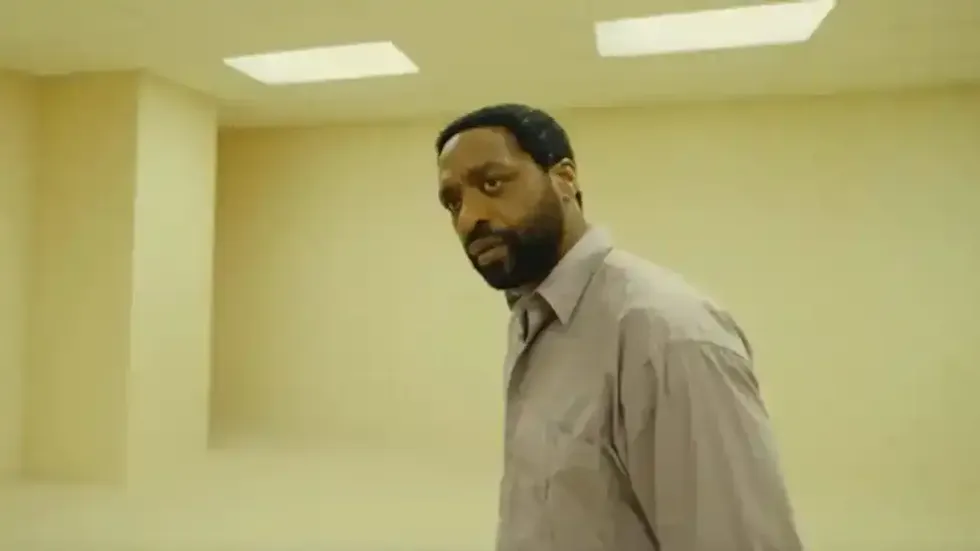
“Backrooms” came out of internet lore to take down “The Mandalorian.” Perhaps audiences are turning on Disney. The film is now a smash hit theatrical release, but its story began online, where it grew from a 2019 4chan image and creepypasta into one of the most recognizable examples of liminal horror: familiar spaces that somehow make no sense.The idea began on 4chan’s paranormal board, where a discussion about “disquieting spaces that just feel off” led to a user defining the Backrooms as spaces where you “noclip” out of reality. The term comes from video games, where a player slips outside the designed bounds of the game into unintended space. The Backrooms are marked by yellow wallpaper, buzzing lights, and seemingly infinite rooms.‘Backrooms’ asks a question more terrifying than anything hiding under the fluorescent lights: What are you doing with your guilt?These spaces are liminal, meaning they should function as transitions. Hallways, corridors, and waiting rooms are meant to have an entry point and a destination. What makes the Backrooms terrifying is that they do not go anywhere. The hallway has no destination. That is not merely inconvenient. It is a picture of purpose removed.The movement, then, runs from liminal horror to cosmic horror. Liminal horror unsettles us because a familiar space no longer performs its purpose. Cosmic horror goes further. It asks whether all of reality is like that. The terror is not merely that something bad may happen inside reality. The terror is that reality itself may not make sense.On the surface, life seems familiar and coherent. But as we move through it, life often becomes stranger and harder to explain. It does not turn out as we hoped. Our efforts fail. Our goals recede. Our explanations collapse. That is the fear beneath the fluorescent lights: not monsters, but meaninglessness.We assume reality can be understood. When failure comes, we think we need more information, more self-help, more discipline, or a better method. Then we try again. We expect success. But we fail again. The failures accumulate. And life gets shorter.That makes this horror different from a standard slasher or zombie film. In those stories, the threat is physical and animal-like. You cannot reason with the monster. You simply have to survive it. Cosmic horror raises the stakes. It asks: What if rationality is not built into reality at all? What if reason is merely man’s frantic attempt to impose order on chaos?Clark, the film’s protagonist, embodies that question. He enters the Backrooms already looking for an explanation that will let him escape responsibility. His failures have left him with a ruined marriage and a failed career. He wants to be told that none of this is his fault. He refuses to see his obvious flaws as the cause of what happened to him. That makes him a perfect fit for the irrationality of the Backrooms.Guilt is the bridge between the film’s horror and its spiritual meaning. Clark does not simply want to survive the Backrooms. He wants the Backrooms to explain him. He wants the maze to tell him that his failures were not really his fault.RELATED: Indiana Jones found the lost ark of campus clichés Jon Kopaloff/Getty Images for Paramount+In that sense, the Backrooms can be read as an image of the unconscious mind. As in a dream, things feel familiar but not quite right. The spaces are recognizable and impossible at the same time. Clark searches there for something that will excuse him, but he cannot find anything intelligible. He wants the maze to justify him. Instead, it exposes him. He is trapped in the Backrooms because he is already trapped inside himself.Director Kane Parsons has said the Backrooms are not purgatory or hell. In a literal sense, he is right. They are not presented as divine judgment according to a moral order. But that is exactly why they work as an image of a different terror: existence without moral order at all.Christianity gives a name to this terror. It is life severed from the God who made reality intelligible. Hell is terrifying not merely because of punishment, but because those in hell have cut off communion with God the Creator. God made the world with wisdom. The world makes sense because God created it and gave man a rational soul by which to understand his creation.When human beings reject God, they cut themselves off from the source of rationality and meaning. They then try to create their own smaller rationalities and meanings. All of them collapse because human beings cannot be God.The person who has lost communion with God occupies a dreadful liminal space. He senses that he was created for a purpose, but he can no longer grasp that purpose. Reality feels familiar, but something is wrong. It has become unintelligible.To be handed over to final meaninglessness while still possessing a mind that longs to understand is the greatest terror imaginable. You cannot understand reality. You cannot understand yourself. All lesser terrors frighten us because they echo this one.One word often used to describe the Backrooms and their occupants is “deformity.” That’s key. Deformity is the attempted creation of someone who cannot create rightly. It is Lucifer’s counterfeit of what God made, and it turns out wrong. When man follows Lucifer by believing he can be his own god, he ends up in the Backrooms of his own unintelligible mind.God created through the Logos. Lucifer deforms creation through the anti-Logos.RELATED: When ‘be nice’ becomes the whole ethic, we’re in trouble akinbostanci via iStock/Getty ImagesThe movement of the film is clear: A man burdened by guilt enters a world without meaning, seeks self-justification, and is destroyed by the irrationality he hoped would excuse him. That gives us good reason to consider our own guilt before God. Clark is gripped by guilt, but his solution is self-justification. He deceives himself about his failures and wants others to join the deception.If we do not deal with guilt by turning in repentance to God through Christ, we are left with the same self-deception and the same liminal space of meaninglessness.The Christian answer is not self-justification but repentance and reconciliation. In Christ, guilt is not hidden in a maze, explained away by trauma, or dissolved into meaninglessness. It is forgiven. Communion with God is restored. Reality becomes intelligible again because we are reconciled to the One who made it.In the end, “Backrooms” asks a question more terrifying than anything hiding under the fluorescent lights: What are you doing with your guilt?

Cover image for Texas Cops Investigating Odor at Home Believed Someone Died Inside — They Found 2 Children Living in Horrific Conditions

Texas Cops Investigating Odor at Home Believed Someone Died Inside — They Found 2 Children Living in Horrific Conditions

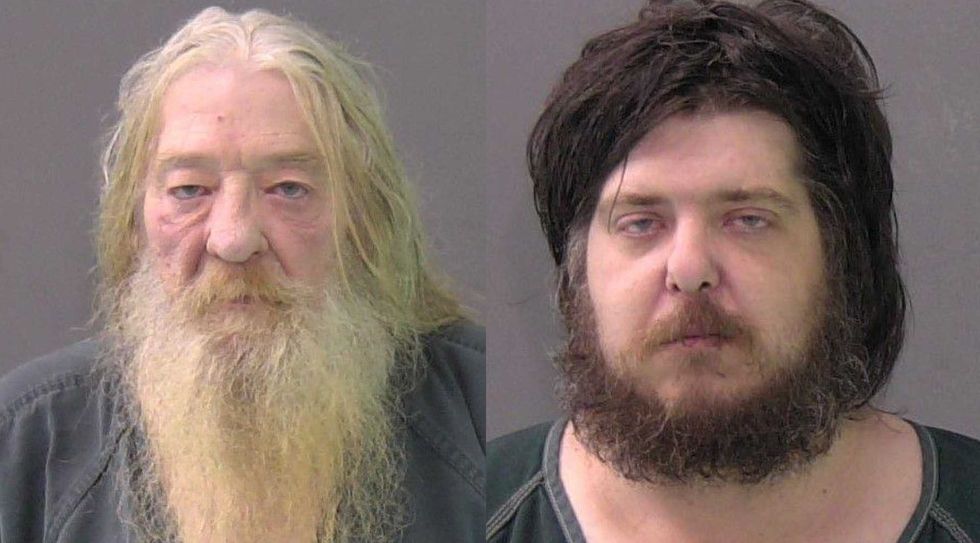
Texas police officers said a home "smelled like death" when they were called to investigate after being alerted about the foul odor. Inside they found two young children sitting in a bathtub halfway filled with dirty water and the home buried with feces, garbage, and maggots, according to an affidavit. Police said the children smelled like 'urine, feces, body odor, and stagnant water.' The children said they didn't know how to read or write and had never been to school. Officers from the Temple Police Department said they were called to the home on Young Avenue on May 20 after a caller reported the odor and no sign of the residents. They knocked on the doors and windows, but no one responded. Then they noted flies at the windows, which led them to believe someone had died inside. Police made entry into the home and found 34-year-old Michael Robbins and 68-year-old John Robbins coming to the door. They inspected the home and said every surface was filled with garbage, rodent and mouse droppings, rotting food, and maggots. Then they found the two children. The 8- and 10-year-old children had matted hair that was apparently infested with bugs. When they were told to get dressed, they returned in foul-smelling clothing with food stains. Police said the children smelled like "urine, feces, body odor, and stagnant water." The children said they didn't know how to read or write and had never been to school. One of the children had their adult teeth growing rotten in their mouth, an affidavit said. Police determined that the men were not providing food for the children and that they were forced to fend for themselves. The children were transported to McClane's Children's Hospital for treatment. RELATED: Police rescue 2 children from freezing home with 'overwhelming' smell of dog feces and urine: 'Like a punch to the face' Neighbors told police they had not seen the children in years. Both men were booked into the Bell County Jail on charges of abandoning or endangering a child with intent. They each have a bond of $60,000. Temple is a city of about 82,000 residents located 80 miles north of Austin in central Texas. Like Blaze News? Bypass the censors, sign up for our newsletters, and get stories like this direct to your inbox. Sign up here!

Cover image for Barney Frank's dying warning should worry conservatives

Barney Frank's dying warning should worry conservatives

Barney Frank spent his final months warning Democrats that the left had become a danger to itself. Frank, the 16-term congressman from Massachusetts who died May 19 at 86, had been promoting a book scheduled for September publication: “The Hard Path to Unity: Why We Must Reform the Left to Rescue Democracy.” The most effective revolutionaries do not always sound revolutionary. Sometimes they sound like men telling the revolutionaries to shut up, count the votes, and wait their turn. That title says a great deal. Frank warned his fellow Democrats that they’re losing the electorate. But he was no mushy moderate. He was solidly a man of the left who understood that his party had developed habits that could cost it power — and, in his view, endanger the country. Before anyone mistakes my point: This is not a eulogy for the co-author of Dodd-Frank, a man with more than his share of ethical lapses and scandals — male prostitution, anyone? — and a long record of expanding federal power and undermining American civilization. I am not here to praise Barney Frank’s life and career. I am here to draw a vital lesson about politics — how it works, who wins, and who loses. Frank spent more than three decades in Congress advancing left-wing causes, from gay rights and anti-discrimination law to financial regulation and a more aggressive federal role in American life. But not too aggressive too soon. In one of his final interviews, Frank told CNN’s Jake Tapper that Democrats had succeeded in moving inequality to the center of the party’s agenda. But that success, he said, had “enabled people who wanted to use that as a platform for a wide range of social and cultural changes, some of which the public isn’t ready for.” That little caveat — what “the public isn’t ready for” — carries a lot of weight. To the activist mind, public reluctance often looks like bigotry, cowardice, or false consciousness. To Frank, it looked like politics. Voters were not clay to be molded by professors, nonprofits, and online scolds. They had to be persuaded, reassured, pressured, and moved over time. Politics is persuasion — and persuasion can be the work of a lifetime. Frank never confused delay with defeat. He treated delay as part of the cost of lasting victory. That was the real meaning of his final, misunderstood calls to “moderation” — something his irritating leftist critics missed or chose to ignore. He did not ask the left to abandon its goals. He asked the left to stop endangering them. RELATED: Inside the left’s push to reshape 2028 with ranked-choice voting Michael Blackshire/Chicago Tribune/Tribune News Service/Getty Images His career offers a useful correction to our political vocabulary. We tend to call politicians “moderate” when they sound less insane than their allies. But Frank was not moderate in his ends. He was moderate only in his sense of timing, sequencing, and risk. Consider same-sex marriage. Frank supported gay rights long before they became fashionable in elite institutions. But he understood that the movement first had to win more basic fights against discrimination before asking the public to redefine marriage. “When we were fighting for gay rights — a fight I think we have essentially won — we knew that some issues were more popular than others,” Frank told the New York Times a week before his death. “So we tended to start by trying to win the ones that were most popular. Gays in the military. Employment. We didn’t go after same-sex marriage, we didn’t make marriage a litmus test, until the very end.” Then he drew the analogy to biological males competing in women’s sports. “That is the most controversial part of the agenda — the equivalent of gay marriage — so put it at the end. If you go at it that way, you build support for it. But if you insist on the most controversial parts all at once, you make it harder.” Notice what he did not say. He did not say men in women’s sports had crossed an uncrossable line. He said the left had mistimed the fight. Prepare the ground, then advance. Move the public, then consolidate the gain. Do not force every question at once and then denounce the electorate for failing to keep pace. Call that whatever you like, but don’t call it mushy moderation. That’s professional politics. The same instinct shaped Frank’s conduct in Congress. In 2007, he supported removing gender identity protections from the Employment Non-Discrimination Act because he believed the votes did not exist to pass the broader bill. Activists accused him of betrayal. Frank’s answer was coldly practical: Do what you can now, and return later for the rest. Frank was a patient institutional leftist. He understood committees, votes, caucuses, and public opinion. He could be abrasive, partisan, and arrogant. But he did not mistake moral intensity for legislative power. That separated him from Sen. Bernie Sanders (I-Vt.), whom Frank often criticized as a politician with little to show for decades in Congress. Sanders treats politics as indictment. The system is corrupt. The billionaires are guilty. The people have been betrayed. Some of that rhetoric can move voters, but rhetoric alone does not write statutes, build coalitions, or hold fragile majorities together. Sanders rages against the system. Frank learned how to use it. Alexandria Ocasio-Cortez complicates the picture. She entered Congress as a democratic socialist insurgent in the Sanders mold. But she has grown in office — not toward the center, exactly, but toward machinery. Frank would not have mistaken her for one of his own. But he might have recognized the beginning of her political education. RELATED: Your enemies aren’t mentally ill. They apparently just want to kill you. Blaze Media Illustration A better comparison might be Jerry Brown. California Republicans never got past the late-1970s caricature of “Governor Moonbeam,” and it cost them. “Moonbeam” was Jerry 1.0. The man who left the governor’s office in 2019 was Jerry 7.0, maybe 7.5: older, harder, more disciplined, more fiscally cautious, and vastly more dangerous. Brown was no conservative, though he possessed certain conservative instincts. Brown succeeded because he understood California’s currents better than the Republicans who mocked him. Brown had his canoe theory of politics: Paddle a little to the left, paddle a little to the right, and you get where you need to go — ultimately, the to left bank of the river. Brown was smart enough and steady enough not to tip the canoe on the way there. Conservatives should study politicians like Brown and Frank, not because we should admire or emulate their goals, but because we should understand their methods. A political movement that cannot describe its opponents accurately cannot defeat them. Worse, it cannot learn from them. Frank’s final warning to Democrats was simple: Stop letting the loudest voices on the left turn every unpopular cultural demand into a test of moral seriousness. Read the room. Build consensus. Move when the ground can hold. That warning should stir conservatives, too. The most effective revolutionaries do not always sound revolutionary. Sometimes they sound like men telling the revolutionaries to shut up, count the votes, and wait their turn.

Cover image for Homeowner fatally shoots squatter in his vacant house — but attorney says self-defense may be hard to prove

Homeowner fatally shoots squatter in his vacant house — but attorney says self-defense may be hard to prove

An Oklahoma homeowner was arrested and jailed after fatally shooting a squatter in his vacant residence earlier this month — and an attorney is saying a self-defense claim may be difficult to prove.Timothy Smith, 59, is facing charges of first-degree manslaughter and reckless conduct with a firearm after shooting a squatter in his vacant house in Oklahoma City on May 1, KOCO-TV reported.'At trial, I'm sure the defense will be self-defense. What's going to make that difficult? He told the police that he didn't see a weapon in the hand of the victim.'Smith on Friday remained behind bars in the Oklahoma County Detention Center. Jail information indicates Smith's next court date is June 18 and that he's also charged with assault and battery with a deadly weapon.Smith told detectives he and his daughter checked on his house after having previous issues there with homeless people, KOCO reported.Smith entered the home with a gun and found Justin King in the back bedroom with a woman, the station said.Smith and his daughter told the pair to leave, but Smith said King stepped toward him, KOCO reported.With that, Smith aimed at "the area" of King, and the gunshot struck King in the neck, the station said.Criminal defense attorney Ed Blau told KOCO a self-defense claim on Smith's part is complicated because Smith was not living in the home at the time of the shooting."There's not the death penalty for squatting in the state of Oklahoma," Blau told the station. "You can't just take a gun in and shoot somebody."Blau added to the station that a self-defense argument also may be difficult to prove because Smith admitted to detectives that he did not feel threatened.RELATED: Couple returns from vacation to find squatters who ate their brisket, drank their alcohol, and left meth in car, police say "It would be difficult to have a stand-your-ground defense hold up," Blau noted to KOCO.The attorney added to the station that "at trial, I'm sure the defense will be self-defense. What's going to make that difficult? He told the police that he didn't see a weapon in the hand of the victim."Blau also told KOCO that while Oklahoma's Castle Doctrine allows homeowners to use force against intruders in their primary residences, it's different for vacant houses."If a trespasser or a burglar breaks in or comes into your home that you live in, and you're there, you can pretty much shoot them or do whatever you want to with them because of the Castle Doctrine here in Oklahoma," Blau told the station. "In a situation like this, an abandoned house, it's much different. You can't go in, put yourself in a situation, and say, 'This is my house, so I felt I had the right to shoot him.'"Like Blaze News? Bypass the censors, sign up for our newsletters, and get stories like this direct to your inbox. Sign up here!

Cover image for Sick of Microsoft's preinstalled propaganda on your PC? Block it now.

Sick of Microsoft's preinstalled propaganda on your PC? Block it now.

Microsoft’s leftist roots run deep, from its problematic co-founder Bill Gates and his “philanthropic” ventures to its partnership that gave birth to MSNBC — recently rebranded to MS NOW — which regularly spews left-wing talking points dressed up as actual facts. It even went out of its way to stuff leftist news stories into the widgets bar of every Windows computer via its MSN news aggregator, a service that prioritizes left-wing content over the right. That’s all about to change, though, as a string of complaints over Windows’ waning security and stability lead Microsoft to make its operating system a little more user-friendly, and the MSN feed is one of the first bad ideas on the chopping block.A brief history of MSNMicrosoft launched the Microsoft Network all the way back in 1995, and the company has crammed it into the desktop operating system ever since. Debuting on Windows 95, it started as an online dial-up service meant to compete directly with the early internet juggernaut that was AOL.One year later, Microsoft secured a lucrative joint venture with NBC News. In an effort to consolidate power across established cable TV and the new internet machine, the companies formed MSNBC. The nexus of their partnership saw that NBC News continued to provide 24-hour news coverage through conventional channels while Microsoft delivered those stories to its online users, boosting viewership ratings for both brands on the way to the top.By 1998, Microsoft spun the MSN brand out into the news aggregation service known today as MSN.com. For maximum visibility, Microsoft set MSN as the homepage of its Internet Explorer browser, which, at the time, dominated the web with a 90% market share over second-place competitor Netscape Navigator. You can even see an early version of the original MSN.com thanks to web archives.Microsoft ultimately walked away from MSNBC in 2012, selling its stake in the partnership to pursue its own venture. No longer in need of NBC’s reporting alone, Microsoft became an independent news distributor under MSN.com. This move would give Microsoft full control over which news outlets it chose to feature, as well as the right to hoard the spoils of its ad revenue from these stories. To make MSN virtually unavoidable, Microsoft injected its media influence into the Windows task bar in late versions of Windows 10 and all of Windows 11 under the name Microsoft Start. Now, any time you glance down at the task bar on your Windows PC, you’ll see messages from MSN that cover weather, finances, “breaking news,” and other topics, all begging for you to click and read.Today, the MSN feed is one giant leftist propaganda billboard meant to promote any outlet that doesn’t espouse right-leaning ideas or values. What’s worse is that Microsoft can use this baked-in “feature” to serve left-wing content by default to Windows machines at workplaces, schools, and homes around the nation. Everywhere. Screenshot by Zach Laidlaw/Windows 11Microsoft’s mission to win back user trustUnfortunately for Microsoft, a series of blunders have left users unhappy with the company’s portfolio of platforms and services. Here are just a few of its recent mistakes.Windows has suffered from several critical bugs since the start of the year, all chipping away at OS security and eroding user trust.Microsoft’s aggressive push to inject its AI platform, Copilot, into every app and service has been poorly received, with users complaining about its ubiquitous integration that has only complicated usability.Xbox has suffered from major annual losses, with significant drops in hardware earnings and a small drop in software revenue.Where Windows once dominated the low-tier and mid-tier PC market, Apple’s new affordable Macbook Neo poses a significant threat to a computer segment that Microsoft historically kept mostly to itself.In short, Microsoft is feeling the heat of competition, self-inflicted failures, and customer dissatisfaction on multiple fronts, and the only way to earn back user trust is to fix some of its more egregious mistakes. One of these is Windows’ user experience.A new ‘Start’ for WindowsMicrosoft Start is divided into two sections — the “Discover” view is powered by MSN propaganda, and the “Widgets” view shows only pertinent information without political commentary. By default, Microsoft Start opens to the Discover feed, filled with news stories designed to capture your attention. It’s clickbait. Meanwhile, the more useful Widgets are hidden behind an extra click; the default widgets include useful information, like weather, sports, finances, events near you, and a couple of other stragglers.In an upcoming Windows update, Microsoft Start will show the Widgets view first, with the Discover feed as optional. Don’t get too excited, though. Microsoft will continue to pack left-wing stories into Microsoft Start, but on the upside, users can soon ignore it wholesale, making PCs a little less politically intrusive.When asked about the decision, Microsoft said, “We're working to make Widgets feel less distracting and overwhelming by making the experience quiet by default. To do this, we're testing a new set of default settings designed to reduce unexpected alerts and visual interruptions.”Get rid of MSN nowThe refreshed Microsoft Start is currently only available in preview builds of Windows for developers. However, you don’t have to wait to banish the MSN feed from your taskbar. If you really want to kick it to the curb now, open Microsoft Start, click on the Settings gear at the bottom, uncheck the green toggle beside “Discover,” and that’s it! Microsoft Start will now default to the widgets view, which you can customize to your liking. Screenshots by Zach Laidlaw/Windows 11You’re now free from leftist propaganda, at least in this section of your Windows PC.

Cover image for Rural America’s new plague: Hicklibs and fail-libs

Rural America’s new plague: Hicklibs and fail-libs

Rural America was once a refuge from radical leftists. Fewer amenities and job opportunities were a price some conservatives were willing to pay if it meant their traditional values and patriotism didn’t have to compete with progressivism.But those pastoral sanctuaries are being blotted out one by one thanks to two new phenomena: hicklibs and fail-libs. “As media and universities became more radical, their disciples moved into rural America through government-mandated institutions like schools and libraries,” says BlazeTV host Auron MacIntyre.“Thus the hicklib was born.”A hicklib, MacIntyre explains, is “usually a social outcast, a failson who needs a moral explanation for why he hates the community he never fit into.”“His resentment searches for a theory that will dignify his rage, and the progressive missionaries installed in his local institutions are happy to provide one,” he says.The message is one of moral superiority: America is evil; those who disagree are “racist, sexist, backwards religious fanatics, destroying the lives of minorities"; and “white Christian culture” is the real evil in the world.“The hicklib's failures to fit in become proof of moral superiority,” says MacIntyre.Having found a solution to his inferiority complex, he sets out on a new mission.“The hicklib shows up at town council meetings in a Black Lives Matter shirt to denounce minority oppression in a community with no actual black people. That absence naturally becomes further proof of the town's intolerance,” says MacIntyre.“He loudly organizes Pride events attended by two other hicklibs. That little clique stages protests, distributes flyers, and imitates urban activist rituals. By practicing the sacraments of their faith, they hope to summon the spirit of the age to judge their reactionary little town.”The hicklib, MacIntyre argues, has become a “plague” for rural communities.But as plagues often do, the hicklib has evolved.“As the value of college degrees collapse, a new breed is emerging: the fail-lib,” says MacIntyre.Unlike the failure-to-launch hicklib, the fail-lib is outwardly successful.“The fail-lib worked hard in high school and gave progressive teachers every approved answer. She wrote her college entrance essay on the oppression of trans women of color in coal mining. On campus, she became an activist. She secured a degree in some woke humanities discipline and earned straight A's by repeating everything her communist professor told her,” MacIntyre illustrates.But despite her academic success, the fail-lib fails to land the “cushy corporate HR job” her expensive college degree promised her. Turns out, college degrees no longer come with the status they used to, and the “poor, oppressed immigrants” she’s long defended are now the preferred candidates.Instead of moving to a big, liberal city like she planned, the fail-lib is forced to dwell among the rural “townies” she disdains.She “was promised luxury and elite influence; now she serves the people she despises while searching for any opportunity to make their lives worse,” says MacIntyre, speculating that the rise of artificial intelligence will only “intensify this problem.”“The fail-lib might make less money than you; she may be less respected than you; she may even be despised by the townies she once mocked, but in her heart, she knows she's superior, and nothing could ever convince her otherwise.”To hear more, watch the video above.Want more from Auron MacIntyre?To enjoy more of this YouTuber and recovering journalist's commentary on culture and politics, subscribe to BlazeTV — the largest multi-platform network of voices who love America, defend the Constitution, and live the American dream.

Cover image for Canada-US coalition emerges against Mark Carney's surveillance bill

Canada-US coalition emerges against Mark Carney's surveillance bill

What happens when a government can order technology companies to create a back door into encrypted communications that even they cannot access?A rare cross-border coalition of Canadian civil-liberties advocates and Republican lawmakers is warning that Canada's proposed surveillance legislation could threaten privacy rights on both sides of the border.'Privacy is not a luxury in a free society.'Sweeping vulnerabilitySupporters of proposed Bill C-22 say such powers are necessary to help law enforcement investigate terrorists, organized crime, and other serious threats in an age of encrypted messaging. Critics counter that once a vulnerability is built into a system, it cannot be confined to one country, one agency, or one investigation.Last Friday, the Justice Centre for Constitutional Freedoms presented a petition to the office of Canadian Prime Minister Mark Carney. More than 40,000 people signed the petition opposing Bill C-22, which would expand the government's ability to obtain electronic communications and other digital evidence during criminal and national security investigations.US oppositionVPN providers are already threatening to leave the Canadian market if the bill becomes law. In a May 7 letter, Rep. Jim Jordan (R-Ohio), chairman of the House Judiciary Committee, and Rep. Brian Mast (R-Fla.), chairman of the House Foreign Affairs Committee, warned Canada's Public Safety Minister Gary Anandasangaree that the legislation could jeopardize privacy rights in both countries."Canada's Bill C-22, currently under consideration in Parliament, would drastically expand Canada's surveillance and data access powers in ways that create significant cross-border risks to the security and data privacy of Americans," the lawmakers wrote."We write to express our concerns that, if enacted, Bill C-22 would allow Canadian government officials to compel American companies to build backdoors into their encrypted systems, thereby introducing systemic vulnerabilities that could be exploited by hackers, foreign adversaries, and cybercriminals."The lawmakers also warned that the bill's language is sufficiently broad to permit secret ministerial orders."If a U.S.-based provider is forced to redesign its system to facilitate Canadian authorized access to content that is currently inaccessible even to the provider itself, the resulting capability cannot be geographically limited," they wrote. "This directly threatens the privacy of U.S. persons who expect and depend upon robust encryption to protect sensitive communications, health data, financial records, and personal correspondence from unwarranted intrusion."RELATED: Albertans are ready to vote on Canadian secession — so why is their premier stalling? Separatist leader Mitch Sylvestre at a rally in front of the Elections Alberta headquarters in Edmonton, Canada. Henry Marken/Getty ImagesStark termsAt a Friday news conference before submitting the petition to Carney, JCCF board member John Robson, a prominent Ottawa historian and journalist, described the bill in stark terms.“I'm here on Parliament Hill today because we are delivering a petition with 42,344 signatures asking Parliament not to proceed with Bill C-22 ... because [Prime Minister Mark Carney] is the moving force behind this bill, and we're hoping to persuade him that all these signatures from Canadians across the country ... represent legitimate, serious concerns about the scope of this bill,” Robson said.Robson noted that many Canadians and the constitutional scholars at the JCCF “are concerned about Bill C-22 because it would require service providers to compile Canadians' electronic data, to develop systems for extracting information from it and turning it over to the government.”“It's not that Canadians ... are against law enforcement having appropriate powers, including to fight organized crime,” Robson said. “It's one more ham-fisted way of targeting ordinary, law-abiding people instead of adopting tailored measures suitable to the real crime problems. And privacy is not a luxury in a free society.”

Cover image for Are Christians wise to ignore the alien/UFO debate? This answer may surprise you.

Are Christians wise to ignore the alien/UFO debate? This answer may surprise you.

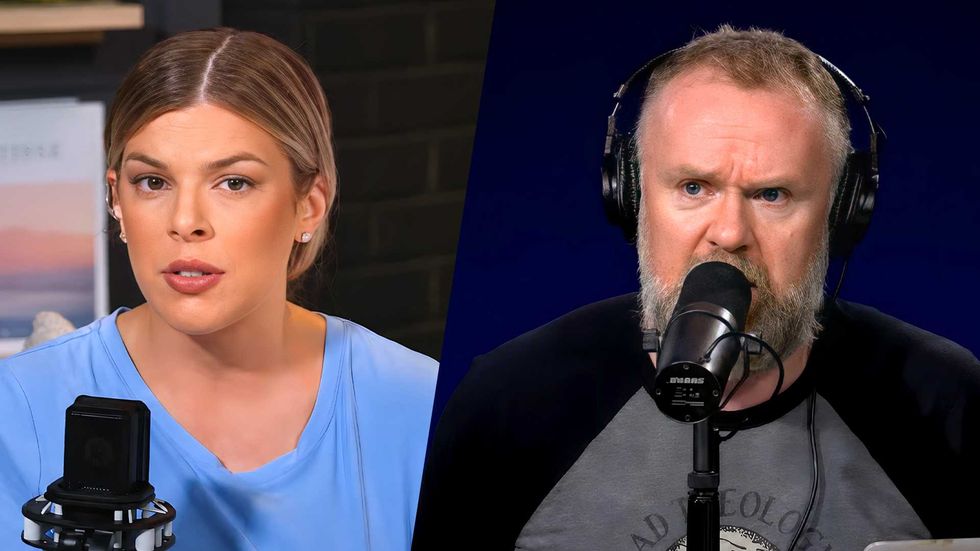
As theories about aliens, flying saucers, and disclosure swirl in the wake of the UFO file dump, an Allie Beth Stuckey interview from a few years ago has resurfaced.In 2023, the “Relatable” host interviewed Jeremiah Roberts and Andrew Soncrant, hosts of the popular Christian apologetics podcast “Cultish,” a show that explores cults, high-control religious groups, and related movements from theological, sociological, and psychological angles.Allie cut straight to the chase and asked the duo if aliens, UFOs, and the like are even something Christians should concern themselves with: “I could see a lot of people listening to this and be like, ‘Well, that's just too much for me. It's kind of scary. It's kind of overwhelming.’ … Why do Christians — why should Christians really care about this?”The answer they gave was compelling. According to Roberts and Soncrant, the alien conversation “shouldn’t be taboo” for Christians. If anything, it’s a subject that demands a biblical response.“Everything — all the creation, both visible and invisible — they're created by Christ and for Christ,” says Roberts, “so we as Christians, we should have confidence that this whole discussion of aliens, demons, unidentified aerial phenomena exists in the universe that Christ is upholding by the word of his power, so that's why this is something as Christians we can't ignore.”Soncrant agrees and cites 1 Peter 3:15: “But in your hearts revere Christ as Lord. Always be prepared to give an answer to everyone who asks you to give the reason for the hope that you have.”“We need to be able to have a defense — a reasonable defense — for what we are seeing with this phenomenon,” he says.Soncrant argues that when Christians “shrink back from popular culture,” they “end up letting the secular world interpret the evidences through their own presuppositions and come up with conclusions that are antithetical to the biblical worldview.”“We need to be in God's word, and we need to be speaking out in the public sphere. That's why God commands us to,” he declares.Roberts notes that when they first began “Cultish” in 2018, his friend and Presbyterian minister Colin Samul reached out and urged them to prepare to speak on the alien/UFO subject.Samul predicted they would see “the whole UFO conversation showing up in the news on a regular basis” and encouraged them to “embrace” the subject in a biblical way so that they could then field questions from their audience.“And sure enough, a lot of what he initially talked to me about has come to fruition,” says Roberts.Today, both he and Soncrant continue today to address the alien/UFO debate through a biblical lens, offering a reasoned Christian response to recent UAP disclosures and the growing cultural fascination with non-human intelligence.Want more from Allie Beth Stuckey?To enjoy more of Allie’s upbeat and in-depth coverage of culture, news, and theology from a Christian, conservative perspective, subscribe to BlazeTV — the largest multi-platform network of voices who love America, defend the Constitution, and live the American dream.

Cover image for John Cornyn’s defeat could be the end of the GOP establishment

John Cornyn’s defeat could be the end of the GOP establishment

As soon as polls closed in Texas on Tuesday, the Associated Press called a decisive victory for state Attorney General Ken Paxton, presumably ending Sen. John Cornyn’s 35-year political career. The 30-point margin was also another feather in Donald Trump’s cap.“Last night was very powerful,” the president said at the start of Wednesday’s Cabinet meeting at the White House. In an earlier Truth Social post, he called Cornyn a friend and promised to headline “big, beautiful rallies” for Paxton in the upcoming months.For the rest of the day, Trump posted screenshots of news outlets covering a 100% success rate in primary endorsements so far this year.'It’s an all time total collapse and embarrassment for the GOP establishment.'In addition to showcasing Trump’s endorsement weight, the runoff election results also exposed the weakness of the Senate Republican establishment. For months, National Republican Senatorial Committee Chairman Tim Scott took to the morning news shows extolling Cornyn’s virtues while insisting that he was the key to keeping Texas safely red. The NRSC posted lists of Paxton’s various personal and professional scandals, as Cornyn called his opponent an embarrassment.In his concession speech Tuesday night, Cornyn committed to supporting Paxton as the party’s nominee, despite spending months calling him scandal-ridden and morally unqualified to hold office. Chastened Senate Republicans are likewise reversing course.“A vote for Ken Paxton in November is a vote for a safer, stronger, and more prosperous America. He has my endorsement and support,” Senate Majority Whip John Barrasso (R-Wyo.) posted to X on Tuesday night. He had previously endorsed Cornyn. “[James] Talarico is too radical for Texas. Ken will be a key member of our Senate Republican majority fighting for America First.”The same night, the NRSC deleted every critical post of Paxton it had made over the past year, even though its statement on the general election does not mention him by name. Some conservative activists now want the organization to clean house. Breitbart News Washington bureau chief Matthew Boyle personally tagged NRSC staffers in posts on X, needling them for backing the wrong horse.“It’s an all time total collapse and embarrassment for the GOP establishment,” Boyle wrote.The NRSC faced a dilemma that Paxton’s backers will now confront. One of the most senior Republicans in the Senate, Cornyn has been a GOP fundraising heavyweight — a potentially significant factor in what is shaping up to be a strong Democratic year. He was also a former NRSC chair in 2010 and 2012. He could have largely funded his own race.Paxton, however, will need party money to keep pace with newly emboldened Democrats who are pouring money into Talarico’s campaign. Furthermore, Paxton’s impeachment, messy divorce, and fraud allegations provide plenty of fodder for Democrat attack ads.RELATED: JD Vance might be unstoppable in 2028 Akos Stiller/Bloomberg/Getty ImagesTrump delivered his endorsement for Paxton on May 19 on Truth Social, after early voting had already begun in Texas. He did not notify the NRSC or Senate Republicans in advance of his post.“He essentially let them know he didn’t care about their preferences at all,” Josh Blank, director of research for the Texas Politics Project, told RCP. “From a Republican elite perspective, not only does it look like you have to spend more money in Texas now, but you have to convince your donors that Ken Paxton is a good vehicle for that money — and Paxton has a challenging past to reconcile.”As if on cue, the first Talarico ad dropped by Democrats detailed the many controversies that have dogged Paxton’s career. His wife filed for divorce in 2025, citing adultery. Former staffers have testified that he used his office to convince a friend to give his mistress a job.In 2023, the Texas House of Representatives impeached Paxton on 20 articles for bribery, obstruction of justice, and abuse of power, but the state Senate voted to acquit and reinstate him. In 2024, he paid $300,000 and completed community service to settle an indictment for securities fraud.Nevertheless, Cornyn’s re-election bid was already flailing even before Trump weighed in. Conservative voters were not enamored with his 2022 efforts to pass a bipartisan red-flag law. Last year, the National Association for Gun Rights PAC endorsed Paxton. In 2023, Cornyn suggested Trump might not be electable any more, a comment he walked back in 2024 and last year. But Trump remembered.“I worked well with him, but he was not supportive of me when times were tough,” Trump wrote in a congratulatory post for Paxton.Despite outspending the Paxton campaign 17-1 in advertising alone, Cornyn remained in a statistical tie with his opponent for most of his campaign.“I think Paxton probably still could have won without Trump’s endorsement, but not at that magnitude. It was a blowout,” Conservative Partnership Institute Vice President of programs Rachel Bovard told RCP. “The Senate Republican conference is the chummiest place in America. Their political loyalties are to each other. So I think the dynamic is going to shift a little bit. The conference is being remade, and I don’t know that it’s going to be much help to Trump for the rest of the year.”RELATED: How Trump can fix his endorsement problem Anna Moneymaker/Getty ImagesFrom the beginning of Paxton’s bid, it became clear that the race would become about who could relate better to Trump. Cornyn was never the thorn in the president’s side that Rep. Thomas Massie (R-Ky.) or Sen. Thom Tillis (R-N.C.) often were.But things came to a head when some media reports indicated that Trump was about to endorse Cornyn, at the urging of Senate Republicans. Then Paxton delivered a public promise to drop his campaign if the Senate passed the SAVE America Act, a voting reform bill that would require proof of identity and citizenship to vote.“That was a pivotal moment in this election cycle,” Blank said. “Paxton demonstrated to Trump the lengths he would go to support his agenda and a key distinction between himself and Cornyn.”The SAVE America Act passed the House but has not yet moved through the Senate. Senate Majority Leader John Thune (R-S.D.) has said there is not enough support in the Senate to use a filibuster to pass the bill. Cornyn was one of several institutionalist members who said it is important to keep the 60-vote threshold, even if it means not passing the legislation. In March, Trump insisted that he would not sign any legislation until Congress passed the SAVE America Act, and he told the Senate to “kill the filibuster” to get it done.“Cornyn long held that he did not think the filibuster should be changed because he held a certain amount of fealty to the institution of the U.S. Senate. Paxton demonstrated his fealty to the president, and that was ultimately much more persuasive,” Blank said.Some analysts say this further cements Trump’s political kingmaker status, at least within the Republican Party, even while his popularity is sinking.“There is zero doubt tonight that Donald Trump is in complete and total control of the Republican Party,” pollster and political consultant Frank Luntz posted on X on Tuesday night.He can beat just about any Republican in just about any state in just about any primary. He is chief strategist, chief advocate, and chief voice of the GOP. His name may not be on the ballot in November, but make no mistake: Nothing and no one will have a bigger impact on voter behavior.Trump’s involvement hardly guarantees Paxton’s win in November. The attorney general has advantages with name recognition and his record of winning statewide elections in the past. But Talarico is surging with his own fundraising, and Texas Republicans sometimes have a turnout problem in years when Trump is not on the ballot.“We would expect most Cornyn-supporting Republican voters to support Ken Paxton come November, because they’ve voted for him in the past,” Blank said. “But if even a small share of Republicans decide that Ken Paxton is ethically unfit for office, as John Cornyn argued and spent nearly $100 million promoting, that makes a competitive election that much more competitive.”In a Wednesday appearance on "The Hugh Hewitt Show," Thune described the GOP’s newfound advocacy for Paxton.“Obviously, we are making the pivot,” Thune said. “He’s all-in, ready to go for the fall election, and not taking any time off, already on the phone raising money and all the things you’re going to have to do to be successful.”Editor's note: This article was originally published by RealClearPolitics and made available via RealClearWire.


Cover image for Check your receipts: USPS postmaster steals thousands from small town while embezzling locals' money

Check your receipts: USPS postmaster steals thousands from small town while embezzling locals' money

A United States Postal Service employee has been caught dipping her hand into both public and private payments. Joyce Smith, a 51-year-old former postmaster, pleaded guilty to one count of theft by government employee after she was caught scheming with citizens' cash and government payments.'Smith even brazenly issued herself around $3,700 in money orders.'The Scott City, Kansas, ex-postmaster was caught when it was revealed that she had taken more than $57,000 from the USPS between January 2023 and February 2025.The U.S. Attorney's Office for the District of Kansas documented in a press release on Tuesday that Smith's biggest score came from typically normal services. Regular check payments for permits or mass mailings were reportedly routine for some of the post office's customers, and while Smith accepted the checks and provided the services, she did not log the receipts into the USPS records system.These payments constituted the majority of the money stolen, totaling just under $40,000. This includes checks for a total of $16,788 issued by the City of Scott City, Kansas, which has a population of just over 4,000 and a median income of $54,800.Other missing funds included $5,850 from the Scott County Landfill and another $17,108 in checks from a local newspaper. All of this money is unaccounted for, according to the USPS.RELATED: Postal worker allegedly tried to help detainee escape from ICE — and she was on duty at the time Joe Raedle/Getty Images In addition to taking money from the businesses and government entities, an audit indicated that Smith stole approximately $10,600 in cash payments from customers, but that was not all.Smith even brazenly issued herself around $3,700 in money orders. The government employee is also said to have embezzled another $3,400 from fees customers were paying for their P.O. boxes, bringing Smith's grand total of stolen funds to more than $57,400.U.S. Attorney Ryan Kriegshauser said that Smith likely thought her position would allow her to continue to "fill her pockets with money" that didn't belong to her and likely thought she would not get caught or face any consequences.Kriegshauser added that Smith's behavior "reminds us of why audits and other forms of government oversight of financial records are necessary."RELATED: Modern life isn't so bad (even if my furnace is out again) Joe Raedle/Getty Images The U.S. Postal Service Office of Inspector General is currently investigating the case, but released a statement saying that the guilty plea was the result of "hard work and dedication" by special agents in the U.S. attorney's office.Special Agent in Charge Dennus Bishop said that law enforcement partners remain committed to "safeguarding the U.S. Mail and ensuring the accountability and integrity of U.S. Postal Service employees."Like Blaze News? Bypass the censors, sign up for our newsletters, and get stories like this direct to your inbox. Sign up here!

Cover image for Caregivers should not have to lie to prove compassion

Caregivers should not have to lie to prove compassion

“Why not just stay in your lane and focus on caregivers?”A listener to my radio program for family caregivers reached out recently with that question. He appreciated the program, he said, but felt troubled when I “went political.” Then he added, “I reached out because I thought you would listen.”People retreat from politics because the noise exhausts them. But avoiding politics and refusing to morally examine the world unfolding around us are not the same thing.Fair enough. So I did. I listened while doing dishes and folding laundry because that is caregiver life. Then he asked what I thought.I spend my days speaking with families navigating catastrophic injury, dementia, trauma, chronic illness, memory care centers, prosthetics, bureaucratic failure, and exhaustion. Caregivers do not have the luxury of pretending reality is negotiable. Family caregivers now provide more than $1 trillion worth of unpaid care annually in the United States. We sit at kitchen tables staring at medical bills, insurance statements, pharmacy receipts, and impossible spreadsheets while trying to keep another human being alive, safe, and cared for.We pinch pennies. We know what groceries cost, but we also know the price of wound care supplies. We know what one wheelchair repair can do to a monthly budget. Meanwhile, we keep discovering billions in taxpayer dollars flowing through fraud and “quality learing centers” bilking people already struggling to pay the IRS.Caregivers notice things like that because caregiving quickly introduces a person to reality. So yes, I have become exasperated watching people in power lecture the country about “compassion” while families quietly drown at their kitchen tables.Recently, I was at a cancer center preparing for prostate treatment. Before I reached the medical history section, the form opened with questions asking what sex I identify as and what sex I was assigned at birth. I sat there staring at the page for a moment and thought: This whole trans movement seems built for virtue signaling until “she/her” has to get “her” prostate checked.Prostate cancer does not care how I identify.Then I asked the caller a question: “Which political worldview do you think put that language on that form?” When a civilization loses the ability to say plainly what a man or woman is, even inside medicine, something foundational has broken.My wife lost both legs after years of struggling with catastrophic injuries from a car accident decades ago. Not once did either of our sons say, “I think I should amputate my leg to look like Mom.” Had they done so, I would have sought psychiatric help immediately. If a physician had offered to remove healthy body parts from a confused child, I would have reported that doctor immediately.Again, I asked the caller, “Which political party aligned itself with removing healthy body parts from children?” In his silence, I pressed further: “And you’re wondering why I’m not staying in my lane?”I told him I am not here to carry water for the Republican Party. But right now, only one major political movement seems increasingly hostile to objective, biological, and theological reality. That matters to caregivers because we deal in reality every day.I asked him point-blank, “What do you actually like about the Democratic Party?” He repeated a phrase I have heard for years: “Democrats seem to be the party that cares.” The word “seem” leapt out.RELATED: What my colonoscopy taught me about stewardship Benjavisa/iStock/Getty ImagesSo I asked what exactly was caring about any of this. What is caring about allowing millions of illegal immigrants to overwhelm already strained schools, hospitals, and social systems while corporations benefit from cheap labor and America absorbs the consequences? What is caring about enabling addiction and destructive behavior? What is caring about encouraging irreversible medical interventions for confused children? What is caring about demanding that citizens deny biological reality to prove compassion?Political parties do not care. They exist to wield power. Government’s role is not to love us. Its role is to preserve equal justice, protect liberty, and provide conditions where citizens can work, worship, raise families, and pursue opportunity. That is very different from emotional branding.I also shared the moment something changed for me as a broadcaster. I watched Barack Obama stand before Planned Parenthood as president of the United States and say, “God bless Planned Parenthood.” I remember thinking: Which God? The God of Abraham, Isaac, and Jacob? The God who said, “You shall not murder"?I asked the caller, who professed Christianity, “How do you shake hands with that?” He said he agreed with much of what I said. “How would anyone know?” I asked. “I guess I have to say something,” he replied. “And that’s what I do on my show.”Then, I asked him to name one major idea currently being advanced by Democrats that he believed would genuinely strengthen the country. “They’re not in power,” he protested. “Ideas are power,” I countered. “Give me one. Not opposition to Donald Trump. An actual idea.”Finally, he admitted, “I can’t think of anything, and I haven’t been paying attention to the news.”I told him, “You have my number. If you come up with one major idea being advanced by Democrats that makes you say, ‘This is genuinely good for America,’ let me know, and I’ll talk about it on my program.”People retreat from politics because the noise exhausts them. I understand that. But avoiding politics and refusing to morally examine the world unfolding around us are not the same thing. I do not drift into politics for sport. I was preparing for prostate cancer treatment when politics invaded the top of the questionnaire.Caregivers deal with reality every single day.And in the exam room, reality should have the last word.

Cover image for Marine vet stuns Robertsons with biblical theory linking aliens, Nephilim, and demons

Marine vet stuns Robertsons with biblical theory linking aliens, Nephilim, and demons

Interest in the extraterrestrial continues to mount in the wake of President Trump’s recent order to declassify government documents on UFOs/UAPs. Theories about what aliens and flying saucers really are dominate social media every day.On a recent episode of “Unashamed,” Jase and Al Robertson along with Zach Dasher welcomed Marine veteran, Mighty Oaks founder, and author Chad Robichaux to the show to share his wild biblical theory on UFOs, giants, and demons. Whether or not what’s in the government files — historical sightings, military encounters, astronaut reports, etc. — is real or fake, Robichaux believes the church is obligated to address the subject so it doesn’t “throw people off their faith.”The majority of Christendom, he explains, holds an “anthropocentric view,” meaning it interprets humanity as the epicenter of the created cosmos.Robichaux fears that if something related to the extraterrestrial proves true, it would shatter this widely held worldview and throw Christians into a state of confusion and doubt.He highlights the biblical passages about the “secret places and secret things” of God’s universe and the numerous mentions of various celestial beings.“I think [humans] are special,” he caveats. “God sent His only son on earth to die for us. We're special and made in His image, but that doesn't mean necessarily we're the only one.”Robichaux believes that “The Book of the Watchers,” the first section of the Book of Enoch — an ancient Jewish text that expands on the origins of Genesis 6’s mysterious half-human/half-god Nephilim — provides reliable information as it “doesn’t contradict the gospel in any way.”According to the text, a group of 200 “Watchers” (angels assigned to watch over humans on the earth) rebelled by mating with human women, producing the Nephilim and necessitating the Noachian flood.But being neither fully human nor fully god, the Nephilims’ fate was unique, says Robichaux.“They can't go to eternal death or life like us, and so their spirits ... roam the earth, and this is what the Book of Enoch says: The demonic world that we're facing, the spiritual demons that we see in our world, are the disembodied spirits of these giants,” he explains.Perhaps modern UFO sightings and "alien" encounters are these same Nephilim spirits manifesting in physical or interdimensional forms to deceive humanity.If Christians want to stay rooted in truth, Robichaux argues that their anthropocentric perspective must be replaced with a Christocentric view that sees Jesus Christ as the hub of the cosmos’ wheel and humans — as well as every other created being — as spokes.If this becomes the Christian worldview, “little green men [coming] off a spaceship” won’t shake believers’ faith, he says.To hear more, watch the episode above.Want more from the Robertsons?To enjoy more on God, guns, ducks, and inspiring stories of faith and family, subscribe to BlazeTV — the largest multi-platform network of voices who love America, defend the Constitution, and live the American dream.

Cover image for ‘Godball’: Are outspoken athletes Christianity’s most powerful evangelists?

‘Godball’: Are outspoken athletes Christianity’s most powerful evangelists?

Christian affiliation in America has been in steep decline for decades, with church attendance falling and nearly 30% of adults religiously unaffiliated. Pew Research Center has argued that there is “no clear evidence of a religious revival among young adults,” but sports fans might reach a different conclusion when tuning in to post-game interviews and press conferences, where they frequently hear athletes boldly professing their faith and giving glory to Jesus Christ.‘You’re not alone in seeing it, and you’re not alone in recognizing that it is a revival.’While Pew’s latest polling shows that the long decline has only plateaued, New York Times bestselling author and sports journalist Steve Eubanks believes there are undeniable and meaningful signs of revival, particularly among athletes.Teed upIn his forthcoming book, “Godball: How Athletes Are Saving Christianity,” which releases June 9, Eubanks takes a deeper look at the faith resurgence sweeping America and how these outspoken athletes have become Christianity’s most powerful evangelists. “I don’t think I would have noticed it if it hadn’t been for the event that you and I talked about three years ago,” Eubanks told Blaze News, referring to a 2023 incident in which the leading golf publication he then worked for attempted to censor his interview with professional golfer Amy Olson. When Global Golf Post refused to run the piece unless Eubanks removed Olson's references to her Christian faith and pro-life views, he “resigned on the spot.”At the time, Eubanks told Blaze News that widespread leftist bias had created a “sad state of affairs” for journalism. But now Eubanks says the experience had a silver lining: showing him that outspoken Christian athletes like Olson were more common than he realized. “I thought, ‘Wow, for an athlete to say something like this is extraordinary,’” Eubanks told Blaze News. “Well, then I started paying attention, and I thought, ‘Maybe it’s not that extraordinary; maybe it’s something that’s happening every day, and I just hadn’t noticed.’”Jesus firstCombing through press conferences and pre- and post-game interviews proved his hunch correct. More and more athletes seemed to be using the spotlight to profess their faith, sidestepping questions about athletic performance to give thanks to Jesus and share the gospel. “It’s a huge movement now,” Eubanks declared. “Really, it’s a revival.”RELATED: Exclusive: Golf writer says staff 'went ballistic' over story on pregnant golfer's pro-life, Christian views — and outlet's higher-ups refused to run it Steve Eubanks. Image source: Steve EubanksWhen asked why athletes tend to be more outspoken than other public figures, Eubanks pointed to the confidence that comes from succeeding in “one of the few meritocracies left.”LeaderboardSports also instill a willingness to resist the herd, Eubanks said. “From the time they were 7 or 8 years old, they were the leaders of the teams,” Eubanks said. “They had been told by the coaching staff, ‘Look, you’re the person who has to step up.’ And it’s a natural extension of that.”Eubanks asserts one of the main reasons these athletes are speaking out now is tied to the COVID lockdowns. He highlighted that an athlete’s career is significantly shorter than most other professions and that, during the lockdowns, everything they had dedicated their lives to was put on hold for an uncertain, lengthy period.“I just think COVID radicalized these kids,” he stated. “Those people realized that their entire lives could be taken away from them in an instant, and that it was important for them to stand up for the things that were really important and to go ahead and make these proclamations of faith.”He argued that athletes have become the “cultural drivers” of American society, more so than artists and musicians.Bad betsEubanks hopes that church attendance, particularly among young men, continues to grow, but expressed concern about one emerging threat within the sports community that could impact the current Christian revival. Image source: Steve Eubanks “If there’s anything that could derail it, it is the sports gambling,” Eubanks told Blaze News. “It can compromise the integrity of the sports themselves.”He detailed how throwing a game used to mean deliberately manipulating the entire outcome, but recently, some athletes have been indicted for allegedly engaging in spot-fixes, rigging small moments, such as a specific baseball pitch, for prop bets.Eubanks also noted that the barrier to gambling has been substantially lowered, from having to seek out a local bookie to using your phone to place numerous bets in seconds.“It’s almost the slot machine effect. There’s just enough bells and whistles to keep you engaged and to keep you throwing money down the rathole,” he said. “There’s a huge, huge addiction problem out there with this that we haven’t recognized yet, but that could really derail this revival movement in my eyes.”RELATED: When Archie Comics found Jesus: Strange artifacts from a once-Christian culture Sydney McLaughlin-Levrone. Erica Denhoff/Icon Sportswire/Getty Images Walking the walkTo sustain and grow the revival, Eubanks believes athletes must become more vocal about their faith and take a stand against immoral practices in the sports industry, including opposing sports betting and the playing of songs with obscene lyrics at stadiums and arenas.“In order to walk the walk, you’re eventually going to have to stand up and say, ‘This is not right; we shouldn’t be doing this,’” he said.Eubanks hopes that readers of “Godball” understand this revival movement is significant and expanding. He also aims to inspire young athletes to express their faith publicly, which could spark a domino effect of fans being drawn to Jesus Christ.“There’s an entire legion of people out here who are seeing exactly the same thing. You’re not alone in seeing it, and you’re not alone in recognizing that it is a revival,” he stated.Like Blaze News? Bypass the censors, sign up for our newsletters, and get stories like this direct to your inbox. Sign up here!

Cover image for Florida deputy accuses driver of 'holding a phone' with her 'right hand.' But there's a big problem.

Florida deputy accuses driver of 'holding a phone' with her 'right hand.' But there's a big problem.

A Florida sheriff's deputy a few months back pulled over a driver and proceeded to tell her that she was "holding a phone" with her "right hand," which would be a violation of the state's wireless communications while driving law.The Palm Beach County Sheriff's deputy told the woman during the Feb. 11 stop in Lake Worth Beach that "we're doing an operation for distracted driving, and you drove past me holding a phone with your right hand," according to bodycam video of the traffic stop.'Hand to God — you did not have a phone in your hand?'But there was a big problem with that accusation.The driver quickly lifted up her right arm and showed the deputy that she has no right hand. In fact, it appears most of her right forearm is missing too.The motorist laughed and told the deputy, "So, obviously not!"RELATED: Video: Florida motorist decides to drive in reverse for a while — and then comes face-to-face with deputies The woman then asked the deputy, "So, you wanna just call this a day, or ...?"But the deputy persisted: "I don't want to call it day — you had a hand up manipulating a phone."The woman argued back, "You just said my right hand."The deputy replied that he "thought" he saw her "right hand."She then insisted, "You didn't" — and then held up her arm with no right hand and moved it closer to the open driver-side window."You didn't see me with my right hand," she added.The deputy persisted and asked the woman if she had a phone in her hand, not specifying right hand or left hand."I did not," she replied.Almost comically, the deputy came back with, "Hand to God — you did not have a phone in your hand?"The woman then raised her right arm that lacked a hand and replied, "Hand to God."The deputy then asked, "Your other hand to God — you didn't have a phone in your hand?"The woman then raised her left arm — which has a hand attached — and repeated, "Hand to God."With that, the deputy issued her a citation anyway for "wireless communication handheld while driving" — and the pair began sparring again before the deputy acknowledged to her that he did, in fact, say that he saw her holding a phone in her right hand and that she can take the citation to court.The woman posted video of the traffic stop on TikTok, WPEC-TV reported, and as you can imagine, the station said the case drew widespread attention.What's more, the station said the civil penalty amounted to $116.Naturally, the woman said she requested a hearing date and planned to fight the citation in court, WPEC said.But it turns out that it wouldn't be necessary.RELATED: Police stop bicycle-riding male for traffic violation; turns out he has a gun and then runs from cop. It doesn't end well. WPEC said a hearing had been scheduled for Tuesday of this week — May 26 — but the hearing was canceled after the case was dropped.In fact, court records show the citation was dismissed at the request of the deputy who issued it, the station said.WPEC added in a video short published Friday that the incident is now "under agency review."Like Blaze News? Bypass the censors, sign up for our newsletters, and get stories like this direct to your inbox. Sign up here!