Goodbye, Shame. Hello, Diversity.
Source: Goodbye, Shame. Hello, Diversity. Publisher: Peter Boghossian | Author: Peter Boghossian Published: June 1, 2026 | Archived: June 5, 2026
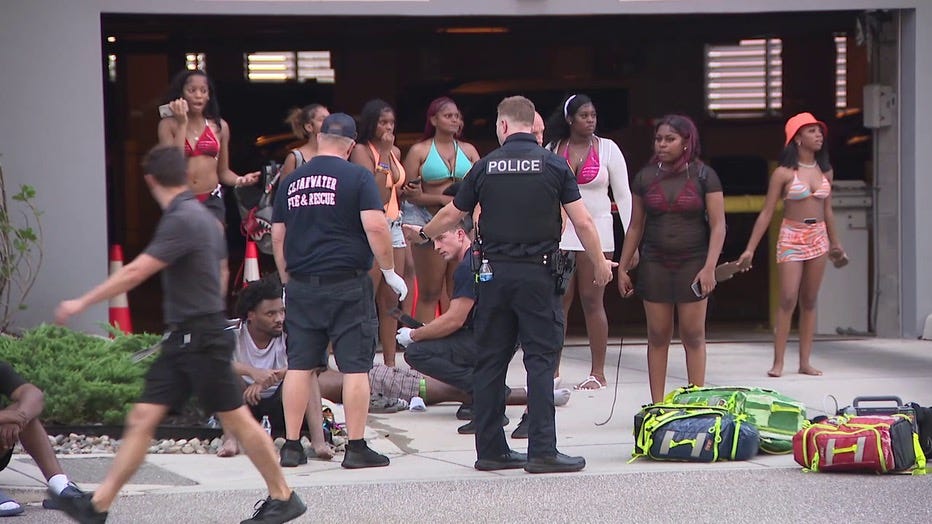
What do the following have in common?
#1:
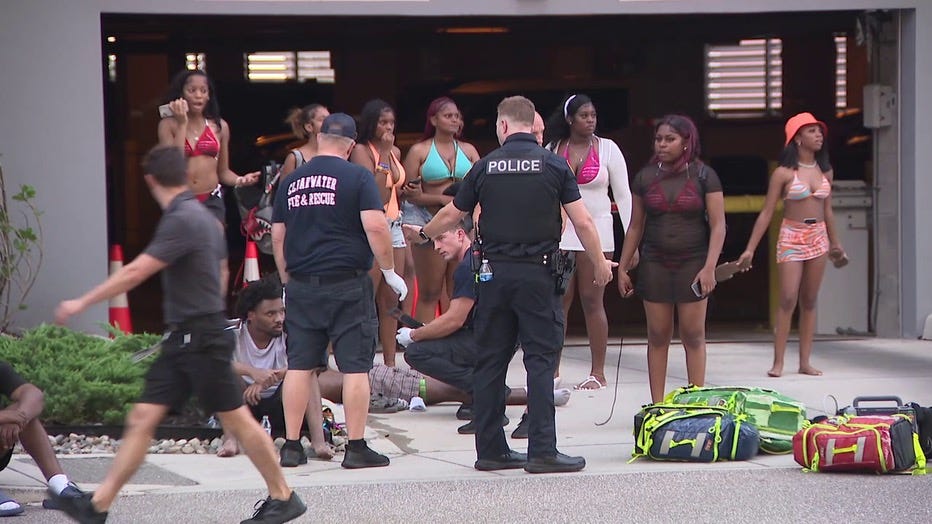
#2:
#3:
There are many good answers to this question, and the one you offer is a litmus test. Some right-wing readers are likely disgusted by all three, and identify them as the results of left-wing policy failures. Left-wing readers may instead see three groups resisting various tendrils of America’s power, be they patriarchy, white supremacy, or cultural erasure.
I offer a different answer: All three are a result of the demise of shame as a cultural force in America.
In order to shame someone, you have to share a basic moral and cultural framework with them. Put more simply, you have to think the same things are bad. This is why shame was such an efficient cudgel during the Woke era: There was a shared understanding of what constituted wrongthink (even among the minority who disagreed that it was wrongthink) and this shared understanding enabled the Woke to efficiently identify, shame, and punish transgressors.
My suspicion is that Wokeness was likely the last mono-morality that will ever exist in America; peak-Woke is over and we are too diverse a nation for any one moral system to hold purchase over everyone. Now, different moral tribes compete and coexist: Urban Black, conservative Muslim, Woke, WASP, conservative Christian, and those of various immigrant groups, to name a few.
It’s easy to see the good that freeing people from shame does. I am now more able to speak my mind without fear of social, professional, and legal reprisal than I was during peak-woke. Two men in love can hold hands while walking down the street, something much harder during the 1950s era of conservative Christian cultural domination. These are positive, liberal developments. They bring our society closer to Enlightenment ideals that form the beating heart of Western civilization.
But shame is also an important tool of social control. Without shame, we will become forced to default to carceral solutions, which leaves everyone, from taxpaying shamers to those whose behavior is immune to their shaming, worse off.
Decades ago, when I was still teaching at a university I will not name, I taught an ethics class. I asked students to raise their hands if they believed we should shame other people for things they do. Nobody raised their hands. I then offered a specific example: What if, in the park just outside our classroom, we saw a man call his girlfriend a “stupid bitch,” and then spit on her? Should we shame that behavior? Most hands went up.
Shame is an integral part of a well-functioning society. We should shame smoking in front of children. We should shame littering. But shame stops functioning as a mechanism to control behavior in morally diverse societies. For instance, urban Black youth culture does not consider public disorder to be shameful (as evidenced by video #2, filmed gleefully by participants). WASPs, meanwhile, do find public disorder shameful. That sets up an incommensurable cultural conflict that no amount of shaming will solve, because the former group doesn’t give a shit about what the latter thinks is proper. (And to be fair, neither do the latter about the former.)
The post-Woke era is also the post-shame era. Some groups—Christian LARPers, Marxists, those who aspire to institute Sharia Law—believe that they will be the ones to enforce the next dominant moral orthodoxy. They are all wrong. It is too late for that. Diversity (our strength!) has triumphed over a shared sense of right and wrong.
But I’m not writing this essay to mourn the past. I’m writing it to build the future. We need to create the moral, legal, and physical infrastructure that will allow the United States to continue to function efficiently even as it becomes an increasingly diverse society. This is a simple idea in the opening salvo of what will hopefully be a longer conversation:
A common thread among low-trust cultural and moral groups is a disrespect toward the commons. Examples include littering, welfare fraud, playing music loudly on public transportation, and riding motorized bikes on pedestrian sidewalks. Some of these can be easily remedied by intelligent public policy: Increase the number of trash cans in public spaces, or make it physically impossible to enter public transit without paying. (For more on the latter, see Lessig’s Code 2.0.)
Both of these have already been implemented in large blue cities to tremendous effect. Let’s look at one example: In August of 2025, San Francisco installed 6ft tall plexiglass fare gates in BART (their public transit system) that made it almost impossible to enter without paying. In tandem, they also increased the number of police. The result? A 41% decrease in crime relative to the year before, 961 fewer hours spent cleaning up graffiti and vandalism in just the first 6 months after installing the gates, and $10,000,000 in annual revenue recovered. This is an excellent example of how even minimal selection against low-trust behavior (fare evasion) in public spaces pays dividends. As the United States becomes more culturally and morally diverse, and low-trust behavior becomes more common, the returns from enforcing socially productive behavior increase.
It’s easy to blame low-trust behavior on people in low-trust societies, but in fact, in most places, our public policy actually incentivizes low-trust behavior. Why would you pay for the subway when you know that (a) fares are not enforced, and (b) you’re going to be harassed during your ride by (c) other people didn’t pay the fare! It’s effortless to imagine how one would think it’s illogical and unfair to pay.
This too is a downstream effect of, among other things, decreased shame. Harassing innocent people used to be shameful behavior—it was done in dark alleys and at night—now, it’s done in subway cars in New York City by the criminally mentally ill. And if you stop them from harassing others (Daniel Penny) the justice system—the very people who are entrusted to ensure your safety—shame and attempt to punish you.
A dream scenario would be for cultural and moral homogeneity simply to the extent of a respect of public spaces. I won’t hold my breath. Absent this, I’ll take enforcing laws (whether through rebuilding physical infrastructure, increased police presence, or harsher legislation) designed to compel behavior that was once largely self-enforced. This will necessarily mean increased state presence in the lives of citizens, something which I am (generally) against. There may, however, be no other realistic options.
If you have further ideas for preparing the United States for increasing low-trust behavior I would love to hear them. I think this will be one of the defining questions of the next few decades of American life.
Peter
Write a comment