How to Recognize Female Narcissism
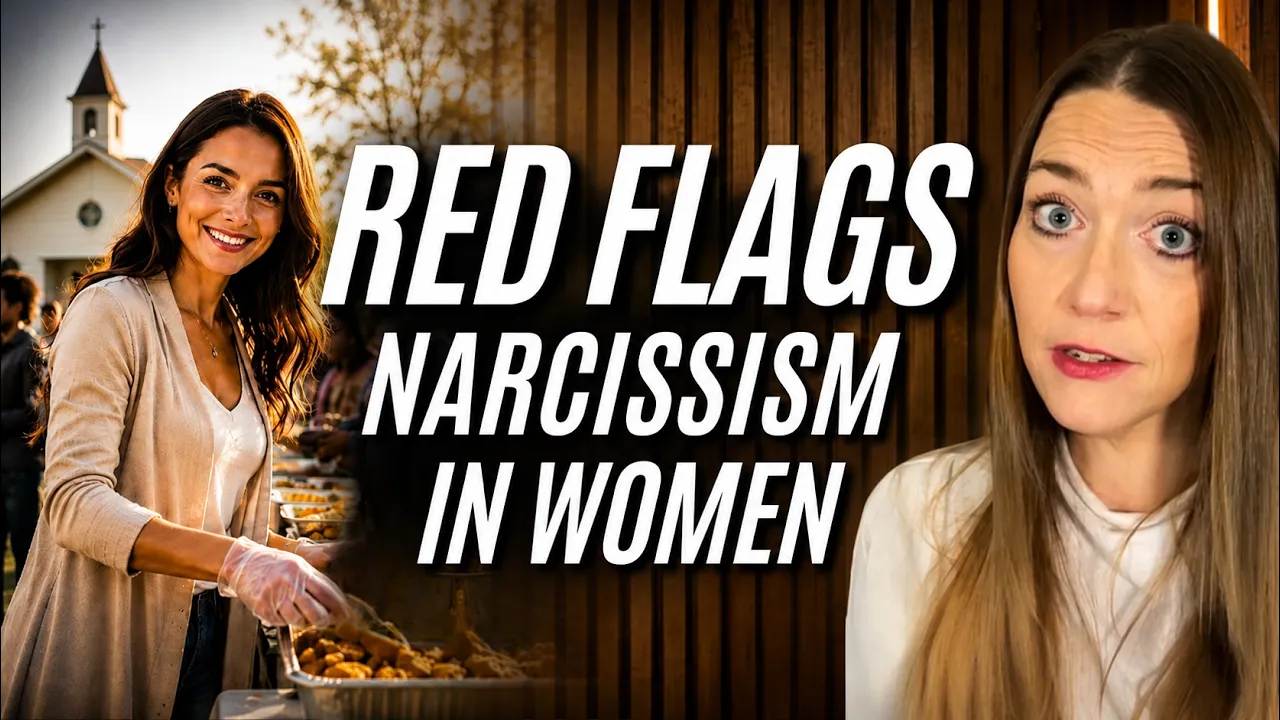
Source: How to Recognize Female Narcissism Channel: Hannah Spier, MD Published: May 28, 2026 | Archived: May 29, 2026
Video: How to Recognize Female Narcissism
Channel: Hannah Spier, MD
Published: May 28, 2026
Duration: 23:46
Views: 25,898
Category: News & Politics
Video ID: BmKNfSV0m3Q
Description
In this episode, I break down the red flags of narcissism in women and why female narcissism is often much harder to recognize than male narcissism.
Women are taught from very early on to speak the language of empathy, compassion, healing, boundaries, emotional safety and self-awareness. But that does not necessarily mean the underlying personality is agreeable, sacrificial or kind. In many cases, the narcissism is simply cloaked differently.
This Sunday at 3 PM Eastern, paid subscribers on Substack are invited for a Google Meet where we will talk about he effect of having been raised by a feminist. Subscribe on Substack and find the link in the Chat or get it on mail! https://substack.com/@psychobabblewithspier
00:00 Intro: Narcissism in women 04:05 Red flag 1: Watch what she does, not what she says 05:17 Red flag 2: “I’m just being real” 06:42 Red flag 3: Therapy language as an excuse 07:35 Red flag 4: Getting diagnoses 09:35 Red flag 5: Diagnosis without responsibility 09:49 Red flag 6: Giving bad advice to girlfriends 11:06 Red flag 7: How other women act around her 11:56 Red flag 8: How you feel around her 12:22 Red flag 9: How she handles social discomfort 13:05 Red flag 10: What type of man she thinks she deserves 13:42 Red flag 11: Status-seeking causes 14:36 Red flag 12: Instagram morality and “healing” language 15:34 Red flag 13: Lack of humility 16:11 Red flag 14: Narcissism in motherhood 18:03 Red flag 15: Contempt for ordinary female duties 19:55 Red flag 16: Public sacrifice, private neglect 20:51 Red flag 17: Mother getting diagnosis for kids 21:27 Red flag 18: Diagnosis without treatment 21:46 Red flag 19: “How does this affect me?” 22:40 What to look for instead 23:07 Outro
Tags
narcissism women covert narcissism psychology feminism
Transcript — YouTube panel (human-authored)
0:00 is they learn to cloak the narcissism. What’s very common is this. I really hate everybody and that’s just me being real. Yeah, I’m just being real. Red flag. When you look at narcissism, it’s very difficult to distinguish the criteria for narcissism with fulfilling the criteria for low agreeableness. And that in essence is what narcissism is. It’s very low agreeableness. And that low agreeableness is the core of all of the cluster B personality disorders. Which is why I’ve never seen a borderline patient who isn’t also a narcissist or someone with an antisocial personality disorder isn’t also a narcissist.
0:49 Because what it really is is that disagreeableness, no concern for others. You’re not really uncomfortable when someone else is crying. that doesn’t move you the way it moves someone who’s very agreeable. And so if you put the questionnaire for low agreeableness next to any questionnaire which is designed to screen for narcissism, they’re almost exactly the same. And that’s how we have all these pop psychologists online who talk about narcissism so much because it is so easy for people to recognize exactly what they want. Narcissistic people tend to be snobby.
1:26 They tend to be elitist. They are empty inside. Genuinely, nothing terrifies a narcissist more than exposure. You don’t have to be specific because the diagnostic criteria aren’t very specific. It describes a personality trait. It doesn’t describe a pathology the way that the borderline is a pathology or the antisocial personality is a pathology. So that’s why I think narcissism belongs much neater in the dark tetrad together with machavelism and psychopathy and and sadism. That’s a much better descriptive category for narcissism than a clinical diagnosis. So that’s why I agree with this opinion that it should be taken out. But if we’re going to talk about it, I want to make it specific and that’s what I want to do with this episode. I want to make concrete how you can recognize narcissism in women because it’s never talked about and it is so interesting because with our sort of cultural trends
2:26 of empathy first women learn already as girls to dress up their language as empathy as compassion. So they learn to speak the language of agreeableness while the actual trait agreeableness disappears under this constant mantra with which we raise girls. You know you do you. You have to assert yourself. You have to be confident. All of those things is designed for agreeable girls who need to learn to stand up for themselves. But we have somehow universalized that for all girls. With that, we’re giving girls license to be disagreeable, which is the core of narcissism. And I have to say, as a mother, that is something I will teach my boys very early to screen for a woman who is agreeable because within agreeableness lies sacrifice. And you do want to marry someone who doesn’t find it beneath her to sacrifice for the family. Within agreeableness also lies gratitude. And we know that showing gratitude every day in a relationship is so important for its long-term success.
3:36 But before we start with the first red flag, please like and subscribe. That will help me a lot. And also head on over to PsychoBabel on Substack where I host live streams where I host Google meets at least once a month. And there we can discuss things in a better format than here. I enjoy them very much. I love hearing what people have to say and discussing things real time. That is also where all of my articles are. So, if you ever wonder about any sources or want to look closer at the research to which I’m referring, then please head on over to Substack. That is where I’m most active. The first red flag is pay attention to what she does, not what she says. Because as I mentioned, they learn to speak the language of agreeableness, of empathy and compassion. And narcissism is in women very much cloaked, very much disguised that it makes it very, very hard to spot for us.
4:34 And more specifically, you want to look at how is she with her friends. When you first start dating, observe her with her friends. If she has a friend who’s less attractive than her, that is where you really want to focus your attention. How does she behave with a friend who she considers lower status than her? The first sign of inconvenience, cancel her plans with a friend who’s less attractive than her. That is a red flag.
5:00 With a friend she wants to please, with a friend who she wants approval from, you’ll see that even if she’s tired, she’ll go to the birthday party. Even if she’s having a rough week, she’ll do something that friend asks, but she won’t do that for someone she’s not seeking approval from. The second red flag has to do with this language that’s used. And that’s really something I’m going to come back to here. The language is so important now because they learn to cloak the narcissism. What’s very common is this.
5:30 I really hate everybody. And that’s just me being real. I just tell the truth. And telling the truth is crazy in a world full of lies. I’m just being real. You have to be honest. They’re trying to make rudeness into a virtue. And that’s something girls learn very early on. Now I see it with my own daughter, my own daughter’s friends. They are so rude all the time because they’re constantly taught to be confident. So parents confuse rudeness with confidence in girls, only in girls.
6:04 All the time they’re speaking up for themselves, talking to adults the way I’d never allow my kids to talk to adults. And that continues into adulthood. I’m I’m just being real. I’m just being honest. like they’re doing something good. Wait, they’re doing what they’ve been taught to do. And language also cloaks other types of behavior. This is another red flag. You know, if she does something bad, if she lies, does she then excuse it with mental health language? Oh, I lied. Yeah, but it’s just because it didn’t feel safe for me to tell the truth.
6:34 Fear of communication is a trauma response. When you’re not feeling seen or heard, this triggers you to react in ways that you normally wouldn’t in most of your other relationships. Red flag. she insults someone or or she insults you. Oh, no, it’s because your behavior triggered her. She’s triggered. Or you catch her flirting with someone. Oh, it’s because I’m feeling unseen. Not good. So, the low agreeableness will have her prioritize her own needs over everyone else’s. That’s just within that personality traits because we’ve now served this kind of emotional language, this mental health language on a silver platter. And girls learn to speak this so early now. They learn it even in school. Then bad behavior very quickly hides behind emotional needs.
7:22 I think there are people that master the art of lying because they are so insecure about the person they are that they have to make up a new version of themselves for them to feel okay with and for other people to feel. And that brings us to red flag number four which is in the same category. the therapist beg girlfriend I call it. I am not me right now. I’m my PTSD and I know you. So you don’t have to defend yourself. Just know that and just help me get me out of the episode until I’m able to get myself out of it. Okay?
7:56 If you’re dating someone who knows all the terms, I would say step carefully. If she’s talking about attachment styles, trauma bonds, and nervous systems, you know, that’s my favorite. boundaries, emotional safety. If she’s speaking this kind of language very fluently, I’d be careful because these terms are so often used now to push your own needs forward and as an excuse to trot all over everyone else. And I’ve spoken about this before. I think that so much female narcissism hides behind mental health labels. But that doesn’t mean it’s a red flag every time because so many people now have mental health labels. But I would advise one thing. If you’re dating a woman and these sort of labels comes up, we were talking about ADHD or autism or bipolar or depression, any sort of mental health label. I would ask her about the treatment. That’s where you can really scope out the if this is being used as a manipulative method or not. Because sure, having ADHD, it’s not in and of itself a red
9:07 flag, but what you want to know is what sort of treatment is she taking for her problems. When the only things that help her are things that accommodate her, things that other people do, things that she needs, that is a very strong red flag. So having ADHD is not a red flag in and of itself, but what she does with it might be. So you want to know when and how she tells you about it. You rarely hear from a woman who claims she has ADHD that I have to go and exercise every day because I have ADHD and this helps me. Like that would be a good thing, but that’s not usually what you hear. It’s usually, “Oh, I haven’t been able to do these and these things that you asked me to do because I have ADHD.” It’s rarely, “I need to go to bed now. I need to have a clear structure in my day, so I’m going to say goodbye because I have ADHD, so I need to keep a clear schedule.” Red flag number six is giving
10:04 bad advice to girlfriends. I just had a very interesting conversation with Dr. Danny Solakowski that I’ll be releasing next week where she talks about this interexual competition and she did that amazing study of uh hairdressers and she discovered how women advise other women they find threatening or more attractive than them to cut their hair shorter than if a female hairdresser didn’t see the client as a threat that she wouldn’t advise to cut so much hair. And I think at the bottom of that lies this self-promotion, striving for status, which is the core of narcissism, and also a sign of low agreeableness. So, does she ever say girlfriend is single or just, you know, trying to date? Does she say things like, “Oh, you should stay single for a while. You know, I’m just concerned for you. I just don’t want you to get hurt again. I don’t want a boyfriend.” Bad sign. or really anytime a woman says, “I’m just having your best interest at heart.” They rarely do. The next thing you want to
11:07 look for is how do people react around them? How do other women act around this woman? Do they look relaxed? Are they seeking her approval? Because you can see someone’s level of agreeableness when they’re in a group because someone who’s very agreeable, they will try to make everyone feel comfortable. So, people tend to relax more. or are other women looking at her for approval? Um, are they trying to up their own status through her or does it look like they genuinely like her? But the red flag is if you are with this date in a group of women and you see other women, they’re always checking what she thinks. If they make a joke, they’re always looking at her first to check if she laughs. That’s a red flag. And that goes handinhand with red flag number eight, which is how do you feel when you’re around her? Can you relax? Is she trying to take care of your needs? Of course, you can fake that. For example, when you give an opinion, is she immediately oppositional? Is she immediately trying to poke holes in whatever you’re saying?
12:12 If you’re talking about something you’re passionate about, does she immediately say, “Oh, I don’t know if it’s quite like that.” A very agreeable person wouldn’t do that. Red flag number nine. Okay, let’s say you’re with her and you’re with a group of friends and there’s a conflict. Then let’s say you’re walking home with her and if she’s a very agreeable woman, she’ll be plagued by what’s happened. They don’t like conflicts. She’ll try to figure out how it could have been avoided. It’s not something she wanted to happen. Maybe even investigate her own part in it.
12:42 That’s a really great sign. So, typically an agreeable person will say, “Oh, that was unnecessary. We could have had a nice evening.” But a disagreeable woman will say, “Can you believe she said that to me? Can you believe she did that?” So, be very insulted at the other people, not really concerned with how the evening came out and that nobody enjoyed themselves. 10. You will discover when, and that’s the conversation you just have to have, when you talk about past boyfriends. Are her demands so high that nobody matches what she deserves? That’s the question you want to have in the back of your mind.
13:19 Women seek status through high value mates. We know this. And so that is also where we’ll find narcissism in women because narcissism is striving for status in the easiest possible way with low effort. So what type of man she thinks she deserves is a very good screening method for this in women. So that’s where you can find red flags. I think the next one is the contemporary causes also one of the most visible status seeking things today and especially with women because they cloak these causes in the empathy. I’m just compassionate. I just love the climate, you know, I just oh the birds. Not that there are never any causes to protest and I’m not saying that this cause is worthy and that cause isn’t, but a red flag would be if you know, did she first protest Trump and then she protested Ukraine and then she protested free Palestine? Or can she actually give a coherent explanation why she’s protesting, why she’s out there with the signs and the rest? I would just want to
14:21 have that investigated and I think you can find some red flags if you go into that conversation or you know did she protest the climate 10 years ago and she’s still protesting the climate maybe those feelings are genuine and then you want to look at the Instagram because you have the sort of Instagram moralist where they put online is all about compassion and women supporting women and healing and I mean personally I think it’s a red flag posting about healing and journey and you have all these sort of red flag words doing the work cuz they rarely do the work. So that’s where you want to in private is she contemptuous and competitive and envious and cruel and then you have this public persona about being on journeys and healing and being just so nice. Does she go and help her less attractive friend without posting about it? A narcissistic woman really wants to be seen as compassionate because that is how you get status today. But she is not kind when she’s
15:26 inconvenienced by a friend who cannot help her towards status. When she’s inconvenienced by an ugly friend. And so that brings us to the next one which is you want to look for humility. That is one of the core features in agreeableness. Does she feel uncomfortable talking about herself? That would be a good sign. If you’re having a conversation with her and she deflects and starts talking about you, amazing. That’s what you want to have happen. Or does every conversation somehow end with her talking about her own experience? Oh, this happened to me, too. And just completely monopolize the conversation. Red flag. Doesn’t mean that every woman who does this is a narcissist. That’s why I’m calling it red flags. It just means uh-oh, maybe investigate further. And this is so important because you do not want the mother of your children to be a disagreeable woman. That’s going to end badly. Why? Because she’s going to think
16:23 that sacrificing for the family, she’s going to think that cooking and cleaning for the family is beneath her. And this is really a topic that’s very close to my heart because it pains me. It pains me to see how women talk about motherhood. How even conservative media, how they portray motherhood, there’s so much narcissism in it because it’s about the woman. It’s not so much about the kids or the babies. It’s about how motherhood affects the woman. It is completely blown out of proportion. And every time I read it, it’s like, girls, we have been doing this since the dawn of time. Quite literally. Is it such a big deal? Is it such being a stay-at-home mother, and I am one, is not harder than going out to work every day. When you hear women talk about motherhood and it starts revolving around themselves, I think that’s a bad sign. They emphasize how it affects them negatively. And I’m sorry, I’m I’m going to step on some feet here, but they do
17:27 inflate the sacrifice in it while complaining nonstop. They post about the hardships they have that one baby and then every morning they post about how they didn’t sleep. Is that really proportionate? And then that leads to them treating the fathers unfairly. Every single woman I know will force the father who has to go to work to do night shifts just so that it’s 50/50 because of all of the hardship and the sacrifice even though he has to go to work and she’s on maternity leave. That is crazy to me. So I think that’s the first sign of narcissism in motherhood, overinflating the sacrifice that comes with it and how it affects them negatively as a person. The next one is this contempt for ordinary female duties. They want the status of femininity and there is more attention now to oh women should be feminine again but they still think that cooking and cleaning is sort of beneath them. I think in a sign of narcissism in women is wanting that admiration for being
18:32 feminine but still having contempt for female duties. They’ll never talk about what it means to be a good mother, for example. It relates to what we just talked about before that she wants to be seen as maternal, but she still resents every daily sacrifice. She still resents having to get up in the night to breastfeed. They’ll speak about motherhood as something that nobody has ever done before and that they want to be seen as delicate and fragile and they want that masculine provision, but they don’t want to do their part. We can’t start to talk about what female duties are. Looking pretty. No, it’s not about looking pretty. And that’s the bone I have to pick with conservatives nowadays why I think they are failing in anti-feminism and really fighting feminism. They will not accurately describe what female duties are. It’s just about we want feminine and we want women to admit that they’re fragile and that they need men, but they will still pathize motherhood and infantilize women
19:35 who are mothers. And I’m going to do an episode also on this pathizing of motherhood of this postpartum depression that’s become very popular because it’s it’s a part of this. So I think status without duty that is where narcissism hides and with women you see it in this way. The other thing I see with uh mothers where I see narcissism is I know women who run charities and have their fingers in all these different pies and they get status from that and they get appreciation and women are always talking about them like look and what they’re doing and they’re doing this and they’re doing I can’t believe that she does so much and and and oh she she’s working all the time and then you take a look at her personal life and her husband’s exhausted and gaining weight.
20:24 the kids have attachment issues and aren’t behaving properly and clearly need more maternal presence and she’s doing all these things for status and it’s and it’s for good things and I’m just doing this for for our community and then she’s neglecting the people for whom she really should sacrifice but doesn’t give her any status towards the outside. That is where I do see a lot of narcissism. And then there’s the mother whose child proves her specialness. You know, her child’s behavior is never poor, never badly behaved. No, he’s highly sensitive. He’s gifted. He’s misunderstood. His brain is wired differently. If you give any practical suggestion, you’re invalidating. You’re you just don’t understand. And she’ll say things like, “Oh, we’ve been to three different specialists and nobody understands him.” Or finally the last one, this ADHD specialist, he Sidler, of course you’re going to see it. If all you have is a hammer, everything is going to look like a nail. And here
21:28 again, the diagnosis itself, it’s not proof of narcissism, but what she does with that diagnosis, which treatment she chooses, how it changes their personal life, that is a sign of is this diagnosis used in seeking status or not? Is this a genuine thing? And the last one is, how does this impact me? This happens to me all the time where I have conversations with other women with wives and their husband will have had an accident or broken an arm or something and the conversation is only about how this affects their day. Like how much more they have to do with the kids because you know he had this accident and I’m just like poor thing. Like how can he work with this broken arm? Oh, he manages like but me it’s not so explicit but the conversation is about how this impacts her and once you see that really feel for this me these men huh it’s I I I really I really feel for them what gets me every time is that what we say I don’t need sympathy I don’t need empathy
22:32 I just need the respect I just need to be honored for what I do and they can’t even get that so if you want to check that a woman isn’t a narcissist you want to look for humility you want to look for gratitude, for kindness towards those who don’t have a lot of status. You want to ask a lot of questions to find out really why she’s doing why she’s saying the things that she is. And you want to find out what she does, not what she says. Because women learn from very early on how to speak the language of agreeableness while being very disagreeable. So, if you like this, please show your gratitude and appreciation by liking and subscribing, please. That will help me out. And uh there’s a lot more coming. Next week, I’ll release the conversation I had with Dr. Danny Silicowski, which is very interesting. And then we’ll talk about pathologization of motherhood, of postpartum depression, and how that’s spun nowadays. But let me know in the
23:31 comments section what you think. Are there signs? Are there red flags that I’ve missed? I would love to hear them and head on over to Substack and uh have a conversation with me there. And if I won’t see you there, I’ll see you next time hopefully here. Have a nice day.
- Reference: https://www.youtube.com/watch?v=BmKNfSV0m3Q

Write a comment