Hidden in Court Docs: (The Real Reason Mormon Stories is Getting Sued)

Source: Hidden in Court Docs: (The Real Reason Mormon Stories is Getting Sued) Channel: RISE ZION Published: April 22, 2026 | Archived: May 24, 2026
Video: Hidden in Court Docs: (The Real Reason Mormon Stories is Getting Sued)
Channel: RISE ZION
Published: April 22, 2026
Duration: 32:43
Views: 18,382
Category: People & Blogs
Video ID: iewBPQk8LcA
Description
THE CHURCH STRIKES BACK? MORMON STORIES HIT WITH FEDERAL LAWSUIT ⚖️🔥
What just happened may become one of the most important media battles in modern Latter-day Saint history. The Church of Jesus Christ of Latter-day Saints has filed a federal trademark and copyright lawsuit involving Open Stories Foundation and the Mormon Stories podcast—and the implications go far beyond one courtroom.
Is this an attempt to silence critics? Or is this the Church finally defending its identity after years of confusion, imitation, and brand overlap? 🤔
In this explosive episode, we break down the facts, the timeline, the legal claims, and the deeper spiritual meaning behind the controversy. Because this isn’t just about logos, colors, names, or media branding…
It’s about truth vs confusion. Trust vs manipulation. Discernment vs deception. ⚔️
For nearly two decades, Mormon Stories has occupied a unique and controversial place in the online world surrounding the Church. Many former members praise it. Many faithful members believe it has caused deep family division, faith crises, and spiritual damage. But now a major new question is front and center:
Did the branding itself help lower people’s defenses?
As a graphic designer, I explain why branding is never accidental. Colors matter. Fonts matter. Names matter. Logos matter. Familiar aesthetics matter. Every serious organization knows that trust can be built visually before a single word is spoken. 👀
So when people repeatedly believed Mormon Stories was somehow connected to the Church, was that coincidence… or strategy?
We also examine reports that the Church first approached the issue privately, sought mediation, and even proposed simple disclaimers before taking legal action. If true, that changes everything.
This video explores:
⚖️ Why the Church says this case is about confusion—not criticism 🎯 How branding influences trust and perception 📜 Why trademark law exists in the first place ⛪ Whether the Church waited far too long to act 🧠 How discernment matters in the digital age 🔥 Why this battle could reshape LDS media forever
Many people will be shocked by what is revealed here.
Some will say the Church is being aggressive.
Others will say this should have happened years ago.
But one thing is certain:
This moment matters.
Because in a world filled with noise, counterfeits, and competing voices, clarity matters more than ever.
Doctrine & Covenants teaches that the Lord gives patterns “that ye may not be deceived.” That warning feels more relevant now than ever before.
Whether you agree or disagree with the lawsuit, this story raises serious questions every member, former member, and truth-seeker should consider.
Who do you trust? Who represents themselves honestly? And what happens when lines become blurred? ⚠️
Watch to the end and tell me your thoughts in the comments. Is this justified protection—or dangerous overreach?
👇 SOUND OFF BELOW 👇
If you love fearless commentary, faith-centered analysis, and bold conversations about Zion, subscribe now and join the movement. We’re just getting started. 🚀
#LDS #MormonStories #LDSChurch #ChurchNews #JohnDehlin #UtahNews #Mormon #Christianity #ReligionNews #FaithCrisis #BookOfMormon #JesusChrist #Zion #GeneralConference #ExMormon #ChurchOfJesusChrist #Truth #PodcastDrama #BreakingNews #SpiritualWarfare #Discernment #LegalNews #CultureWar #ChristianYouTube #RiseZion
Transcript — YouTube panel (human-authored)
0:17 All right. Hello everyone and welcome to Rise Zion. My name is Seth and I hope you’re all having a very great Tuesday. Welcome back you guys. Now, today we need to talk about one of the most significant clashes that we’ve seen in modern Latter-day Saint media. The Church of Jesus Christ of Latter-day Saints has just filed a federal trademark and copyright lawsuit involving Open Stories Foundation and Mormon Stories podcast hosted by John Delin. And I want to say something right from the beginning. This issue is deeply personal to me. And it is a matter that is deeply spiritually significant at the same time. It’s personal to me because there is probably not a single person within the sound of my voice who’s not had a family member, a close friend or a ward member or somebody they love fall away from the church. And that by itself wouldn’t be such a big deal. It is something that we are very sad about, of course, but by itself it wouldn’t be a big deal if it weren’t for the animus that exists in the anti-ormon community.
1:15 For many faithful Latter-day Saints, this is not abstract. This is not just internet drama. This is about real souls, real family divisions, real painful confusion, and real spiritual damage. Even very real pain and suffering as wedges have been driven in between family members. A meaningful portion of that confusion, pain, and suffering has been instigated by John Delin and Mormon Stories podcast presenting harmful narratives, half-truths, and misrepresentations as though they are plain honest truth about the gospel. And it raises a very serious question, and I think faithful members have every right to ask it. Had Mormon stories not spent years cultivating branding that felt familiar, trusted, and church adjacent, would it have been nearly as effective at getting people to lower their guard and trust the source?
2:08 They’ve done this for nearly 20 years. As a graphic designer, let me say this as clearly as I can. Branding is not accidental. For those who may not be familiar with the term, branding in general refers to a company’s visual identity. It refers not only to a company’s logo but every visual detail including colors that they use, images, fonts, and other design elements. That’s important to remember as we are discussing this online. The idea is that when you see these visual elements together, you know without question what that organization is. When you see those golden arches, you instantly know it’s McDonald’s. Visual identity is intentional. It’s planned. It’s coordinated. Color is very intentional.
2:52 Typography is intentional. Symbolism is intentional. The tone is intentional. And when an organization consistently adopts naming, imagery, and design choices that feel closely similar or adjacent to a trusted institution, that is not some small side issue. It’s not only illegal, it carries with it deep moral and ethical considerations as well. According to Mormon Story’s own website, the podcast dates back to 2005.
3:20 That means this platform has been around for roughly two decades. I personally remember seeing Mormon stories billboards along the freeway in Utah when I was still quite young. And I remember thinking it was some kind of an organization that was led by the church. At the time it was an invitation to visit the website mormonstories.org which at the time the church’s own website was mormon.org or lds.org.
3:43 Both would carry you to the same URL. The confusion for me was very real. Now, that memory has stuck with me and has led me to become bitter as some of my own family and friends have been influenced by this dishonest organization. So, when the church now says that there have been public questions and ongoing confusion about whether Mormon stories is official church content, I don’t have a hard time believing that at all? My thought is, well, obviously, and what took you so long and this is why I think what is happening right now is a very good thing. I know that some people will frame this as the church being aggressive and latigious. But I don’t see it that way at all. I see it as the church finally defending its identity and finally protecting its members from confusion and pushing back on something that in my opinion should have been challenged years ago. Maybe part of the delay came from a sincere desire to
4:32 avoid contention and maybe part of it came from institutional patience. But there comes a point when avoiding contention stops being charity and starts becoming passivity. And when confusion has gone on this long and when so many people have been affected by it, I think it’s not only appropriate for the church to act. I think it’s the only responsible thing to do. So today I want to fully develop this issue with facts, direct quotes, legal content, spiritual context, and my own perspective as both a faithful member of the church and a graphic designer. Because this is not just about trademark. This is about truth, trust, deception, and discernment. In 2 Corinthians 11:14, it says, “And no marvel, for Satan himself is transformed into an angel of light.
5:13 Therefore, it is no great thing if his ministers also be transformed as the ministers of righteousness, whose end shall be according to their works.“ End quote. Now, let’s slow down and carefully walk through what actually happened here because this story is still progressing and we have some updates. It’s already being framed in radically different ways depending on who is telling the story. Some people are portraying this as the church is trying to silence critics while others are portraying it as the church has abandoned the use of Mormon as its title. So why do they even care? Okay, and we’ll get to that. To understand what is really happening, we need to look at the timeline, the statements and the claims being made by both sides.
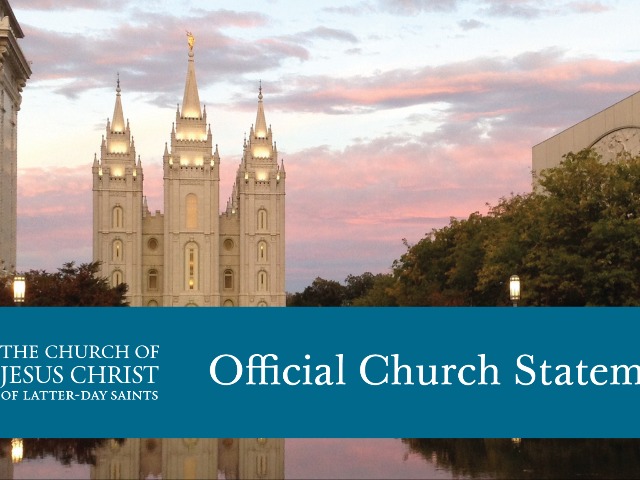
5:55 Now, according to official church statements reported by Desireette News, this did not begin with a lawsuit. The church says the first step happened privately. The church stated in its official statement released just this past Friday, quote, “In November of 2025, the church contacted Open Stories Foundation privately about concerns with its branding. The goal was to resolve the matter privately and amicably that matters. The church did not immediately rush into court to sue. They did not begin with public pressure and they didn’t begin with a media campaign. They began privately. They attempted direct resolution first. In the court documents that the church filed in a federal court in Utah, they included in their submission a copy of their original email, which I’ve decided to include as evidence of the church’s amicable intentions.
6:41 It says, quote, “Dear Mr. Dyn, I’m reaching out to you regarding trademarks and copyrighted materials used by Open Stories Foundation. My name is Redacted and I manage the intellectual property office of the Church of Jesus Christ of Latter-day Saints. Part of my responsibilities is to help maintain the integrity of trademarks and copyrights owned by the church. My office has received questions and comments from the public regarding materials on the Mormon Sto’s website, YouTube page, and other social media pages that feature church trademarks and copyrights. While the church respects your right to host a podcast, operate a website, and m maintain an online brand, the church has an obligation to protect its trademarks as unique identifiers to prevent confusion about what is and isn’t official church content. Okay. They go on to show different examples of where confusion might occur in some of the new logos that the Mormon stories podcast
7:30 published. And I think that that is actually important. And it seems to me that this was the beginning rather of the current conditions as to as to why this didn’t actually start 20 years ago. It seems like the church is more focused on this new logo and trademarking branding that the Mormon stories podcast recently published because it is it is clearly more in line with the church’s logo and branding currently. Um, so it seems like that was something that was a of great concern to them which instigated the mediation. And then they clearly explain later in this letter, using trademarks and copyrights in this way makes it likely that a person seeing your iconography would reasonably but wrongly assume that they are viewing church affiliated or sponsored content.
8:15 End quote. And that is very important. When many people hear that the church is filing a lawsuit, they often think that this is the organization’s only option. But in reality, most people in organiz or organizations prefer not to go to court because of the cost associated with it and because of the negative feelings that come with it as well. They prefer to to set aside their problems privately first, right? And that is always a good thing to do. That is usually what serious institutions do when they are trying to solve a problem without escalation. They seek resolution and court is the last resort after months of trying to find a resolution.
8:50 And again, it sounds like the church contacted Mormon stories back on November 14th of last year. So negotiations have been ongoing for some time now. The church also said in their recent statement, quote, “The church then engaged in good faith mediation and and proposed several options to reduce confusion while minimizing disruption. When those efforts did not result in a resolution, the church filed a complaint in federal court to protect its intellectual property.” Okay, that phrase is extremely important. Reduce confusion while minimizing disruption.
9:18 Okay, this suggests at least according to the church that they are not trying to destroy Mormon stories platform. They were not trying to shut down speech. They were not trying to erase criticism from the internet. They’re trying to resolve a narrower issue, confusion over affiliation. It was only after mediation failed that further escalation became necessary. And this is really important to recognize as well. When people think of suing or filing a lawsuit, they usually think that it involves suing for money. Okay? And that isn’t the case.
9:47 Suing just means that the church is appealing to a higher authority, a federal judge in this case, to fairly enforce the law, and to judge whether or not Mormon stories will be legally compelled to take any actions that the judge deems necessary to avoid branding confusion according to the law. If such action is needed, the court will issue an injunction, which is a court order for an organization to take appropriate actions. And if they don’t comply with those injunctions, then punitive measures may be taken by the government as prescribed by the judge. Now, that is how these cases cases typically work out. But as far as I’m aware, it doesn’t sound like the church is asking for damages or financial compensation at all. So, those people in the comment section of Mormon Stories podcast who are saying, “Don’t settle with the church. Don’t don’t settle.” Well, it’s not a matter of settling. It’s a matter
10:34 of of uh you know first of all uh what uh actions that the judge will deem necessary after a jury finds that that that they are using copyrighted material. And again the the documents that the church submitted to the court are very very detailed and describe in great length all of the different ways that Mormon Stories podcast has uh has misrepresented itself as affiliated with the church. Well, it sounds as if they are being rather generous here in not asking for financial compensation. They just want a judge to um to again create an injunction that will compel Mormon stories to act in certain ways. Uh now, here is the most important quote in the entire story from Desert News. The church publicly stated, quote, “The issue is not the podcast viewpoint. The church respects the right of individuals to express their opinion and engage in public discussion. The concern is the use of church protected names, images,
11:32 and design elements in ways that are causing confusion about whether the content is officially endorsed by or affiliated with the Church of Jesus Christ of Latter-day Saints. So, let that sink in. Okay, that is a very specific legal and moral claim. This is about branding confusion. This isn’t just about the use of the word Mormon or Mormon stories, although the church has included exhibits in the court case that do show that the church does own trademarks. for example, uh using Book of Mormon stories a and other uh variations of that same title. Okay. The issue is much more broad than a single design element or a single word choice.
12:11 Which is why when John Delin posts on his Facebook, for example, that he’s confused about the use of a single branding element such as the word Mormon or the color blue, as he did just recently, saying, quote, “I’m very confused.” After threatening to sue Mormon Stories podcast for using blue in our logo, as recently as last month, LDS Church changes its branding to purple. Go figure. Right? So, he’s being a little bit disingenuous here. In my opinion, the church isn’t threatening to sue over the use of the color blue. That isn’t that isn’t the whole story, right?
12:43 The real issue is the overall organization identity that causes confusion rather than a single branding element. It’s a combination of branding elements that combine together to form a visual identity. It isn’t about just using a spec a specific shade of blue either. Okay? Uh it can be any similar shade of blue as well as as long as a reasonable jury at this point can conclude that confusion between two organization is likely and you know and this of course is as it was expressed by the initial letter from the intellectual reserve inc. Okay. So that that distinction matters very immensely.
13:23 Now, just taking a look at the examples that the church included in its court documents, the case is pretty damning against Mormon stories. Uh they’ve been using church images uh of the temple of apostles and prophets. They’ve been using uh for example different logo elements. They’ve been using what they call these light beams uh or the the light rays uh in their logo. They’ve used the Christa statue logo or iconography. that given this level of not acting in good faith, it’s no surprise that on March 26, John Dyn posted the following on their Facebook page, saying, quote, “Mediation talks with the LDS church have ended with no agreement being reached. We cooperatively addressed every one of their reasonable requests, even prior to mediation. In the end, the church’s demands were just too unreasonable, and we walked away. I don’t know if the church will actually pursue any formal legal action. We don’t know. We don’t think they have any
14:16 legitimate claims and we are preparing to fight if that ends up being the case. Okay. So, just right off the bat that is not true. Even if they did um as they claim uh cooperate with every one of their reasonable requests, which we don’t have any reason to believe that they actually did. Even if they did that, the church still could sue for damages because clearly they were in the wrong for using copyrighted material. whether or not uh you know a whether or not a a case can be made or whether or not a jury finds that they are intentionally misrepresenting themselves as affiliated with the church. So whether or not that is the case they ha they could sue for damages based on the fact that they have been using copyrighted images for example um and so forth. So right off the bat that is an untrue statement. We continue. We are not willing to be bullied into allowing the church to micromanage our organization and
15:12 interfere with our mission. Okay, so see the framing that they’re trying to use here. The church is trying to micromanage our organization. Okay, so again, the church is the big bad bully. The church when they are clearly in the wrong for using copyrighted material for over 20 years uh to make it look like they are the church before you actually click and watch their videos, then you realize what it actually is. Now, according to the church’s statement, one of the proposed solutions was remarkably simple. The church said simply, “To address that,” the church proposed a simple solution, a brief disclaimer that the podcast is not affiliated with or endorsed by the Church of Jesus Christ of Latter-day Saints. This is a common and straightforward way to help audiences understand the source of content. That step was not adopted.
15:57 Okay, so pause here just for a moment. Okay. So that was a very key turning point it seems in the mediations falling apart uh the conversation falling apart rather um it was after this point it seems that John Delin was not willing to make this concession. Okay. And I will explain exactly what h what appears to happen based on the court documents. Uh the statements that were made by the church and John Delin were not explicitly clear. Uh but I will I will clarify what occurred. Okay. And and again this seems like a very reasonable ask by the on the part of the church because if confusion is accidental right on the part of John Delin and Mormon stories then disclaimers help everyone right if confusion is unwanted then clarification should be welcome but if that disclaimer proposal was rejected many people are naturally going to ask well why then you know like why why resist a simple statement of independence that is a fair question.
16:52 John Delin actually did respond to that on April 18th in a Google doc that he published um on his Facebook page and he said that they simply don’t want a statement of what they are not to become their branding. Okay. So I I guess that that’s why he feels that that was too much of an ask. Um he didn’t want to put that for clarity. He just to make this clear he didn’t want to put that before every single video which is what the church was asking. And that’s a little bit ironic. just going to say it right now considering that their channel is totally about not being a member of the church any longer after of course they lure unsuspecting members of the church to view their content in the first place using images fonts colors and similar logos etc. So even using the name Mormon again which has been affiliated with the church for over 200 years now based on a recent document that Mormon stories published again on April 18th. John also
17:45 claimed quote immediately after the church raised concerns we voluntarily made changes to accommodate them despite our disagreement with their position. Among other things, we changed the color and style of our logo, removed three years worth of images from our homepages and thumbnails, altering the description of the podcast, and added the church’s preferred disclaimer language to the podcast description on every platform.
18:07 The lawsuit came as a surprise e given how cooperative we’ve been, we have been cooperative at every turn.“ End quote. Okay, so we don’t know all the details. Again, uh again, John is often very dishonest in my view. Uh it to be fair here it does sound like he did make some accommodations but not all of what the church was asking for was accommodated and we don’t know exactly what the conversations were during mediation. Uh but from the court documents uh that were published by the church recently it seems that the church was not solely concerned about the disclaimer being in the podcast description. they wanted it to be um they they also had concerns about uh the use of copyrighted uh images in their branding even after they had discussed it. So that’s also an important factor as to why it seems that the church decided to take legal action. So the church’s court filing said in paragraph
19:02 2 on the uh on their documents. So it says, quote, “When the church approached defendants about their infringement of the church’s intellectual property rights, they agreed to make some changes, but ultimately would not agree to take basic actions necessary to lessen the confusion caused by defendants infringements. For example, defendants refused to include a simple statement, either verbal or written, at the case beginning of podcast episodes acknowledging that Mormon stories is not affiliated with the church. And while defendants assured that the the church that they would remove the church’s copyrighted images from their website and social media pages and would not use copyrighted images in the future, just a few days later, defendants used a copyrighted image of the church’s temple to advertise a podcast episode. Okay. So again, that seems to be um you know, just a part of their concern. their deep concern is that they’re going to continue to do this um you know if the
19:59 church doesn’t take legal action. So and again John Delan made a big uh you know a big deal about the fact that the church um was attacking him and he even described the church’s uh statement that they put out as dishonest and damaging to them because they said that he wasn’t going to comply with putting a disclaimer. But of course, what to clarify here that the church’s document is making it clear that the conversations that they had involved putting it before each episode, either written or verbally. Now, to understand why this case matters so much, we have to look beyond one lawsuit or one podcast and talk about something much bigger, which is the issue of trust.
20:41 Now, every institution runs on trust. Okay? I I think that that is very self-evident. You wouldn’t go to a bank if you didn’t trust it. And trust is not created overnight. It’s usually built slowly over many years through consistency, credibility, sacrifice, reliability, and public confidence. But while trust can take decades to build, it can be damaged very quickly through scandal, confusion, deception, or misrepresentation. And once lost, it’s often very difficult and expensive to rebuild that trust. You can see this principle everywhere. People donate to charities they trust. Patients walk into hospitals they trust. And students enroll in universities that have a good reputation. Members turn to the churches that they trust. Trust is the invisible foundation underneath everything. Almost every important relationship between institutions and the public. Now many people assume trust is built only
21:33 through words or reputation. But in reality, trust is often communicated before any word is ever spoken to you. It’s communicated visually and psychologically before an an institution even says one word or you read any pamphlet or see any commercial from them. People form impressions immediately within seconds through design choices, colors, fonts, logos, photography, style, even website layout, naming conventions, tone, and overall presentation. These things may seem small, but they communicate powerful messages instantly. They tell people often subconsciously who is speaking, what kind of organization this is and whether it feels familiar, whether it feels credible and whether it feels safe. That is why branding matters so much. Branding is not just decoration.
22:20 Branding is communication. And this is exactly why copying or closely imitating another organization’s branding is not only illegal, but deeply unethical. When an organization borrows the visual identity of another, it can capture trust that it didn’t earn. It can create confusion where clarity should exist. It can cause people to believe they are dealing with one source when they’re actually dealing with another. And that’s very deceptive. It is the attempt to benefit from someone else’s reputation and credibility and years of trust building without actually doing the work required to build that trust yourself. And that’s a part of why trademark protections do exist. That’s why these issues matter. But let me give you a perspective that many commentators can’t. I happen to be a graphic designer as well as a podcaster. So, I spend a great deal of time thinking about presentation, messaging, audience psychology, and how visual identity shapes trust. I’m not offering legal advice. I’m not pretending to be an
23:15 attorney. But as a designer, these legal principles were directly connected to my work as well. Part of professional design work is understanding brand identity, trademark boundaries, visual differentiation, and source confusion, and why organizations protect the trust associated with their name and image. Any competent designer who works with real brands understands that you can’t simply borrow another organization’s identity or try to mimic its look or trade on its reputation without creating serious ethical and potentially legal problems. So while I’m not speaking here as an attorney, I am speaking as someone whose profession required understanding of how branding functions in the real world. Branding is never accidental. No serious organization randomly selects its visual identity. Things like color palette, typography, spacing, gradients, lighting, iconography, emotional tone, naming structure, and symbolic imagery are chosen deliberately. They’re tested, they’re refined, and they’re meant to communicate something specific to an
24:08 audience. Those decisions are very intentional. They’re very strategic, and they’re very psychological. Designers understand that people make snap judgments in seconds. Before someone reads an article or listens to a podcast or studies an argument, they have already formed impressions based on what they see visually. They subconsciously ask themselves, does this feel trustworthy? Does this feel professional? Does this feel familiar?
24:32 Does it feel safe? Does this feel like something I already recognize? That is how branding works. So, when I see branding choices that visually echo official church media aesthetics, I do not interpret that as random coincidence. I see it as very intentional deception. I interpret that as intentional positioning. And in my personal opinion, the Mormon stories brand appears to have been intentionally designed in ways that could lead many viewers to assume it was church adjacent or church friendly or church approved.
25:02 Now, to be very clear, only the people behind the brand know their full intent, right? But from a design standpoint, these are not meaningless details that they’ve included. They are signals. And according to the lawsuit, the church itself pointed to specific examples that it says created confusion. The Salt Lake Tribune reported in the complaint, the church includes a number of examples of online comments it says were pulled from Mormon stories YouTube and Facebook pages in which commenters say they initially thought the podcast was connected to the church before listening to an episode. That is highly significant because the question in branding disputes is often not merely what the creator intended, but what the audience reasonably believed. If viewers repeatedly thought the source was connected to the church, then the design signals were doing exactly what design signals do, shaping perception before
25:52 the content was even consumed. And that matters because familiarity lowers defenses. When something looks official, people are more likely to trust it. When something feels connected to a respected institution, people are more likely to give it credibility. And when branding creates the impression of shared identity, many people stop asking hard questions until much later. And that is the power of design. That is the power of art. And that is why branding is never a trivial issue. So in my view again, the church is doing the exact correct thing in pursuing this. If the church made a mistake in this situation, it was not acting aggressively enough.
26:28 It was waiting for too long. 20 years is a very long time in the digital age. 20 years is enough time to build an entire media ecosystem. Enough time to influence multiple generations of listeners. Enough time to shape narratives. dominate search results and establish brand recognition and become deeply embedded in online conversations surrounding the church. That is two decades during which many people appear to have encountered a brand name and visual identity that according to the church’s complaint created confusion over whether the source was connected to or affiliated with the church. To be clear, back in the early days, back when I saw those billboards from Mormon Stories podcast when I was young, it was the font that convinced me that Mormonstories.org or was in fact affiliated with the church. It was the font choice and the colors that were used. Two decades of possible member confusion. Again, two decades of search confusion, two decades of branding ambiguity, two decades of benefiting from familiarity associated with the
27:24 church while presenting content fundamentally opposed to it. Most corporations would not wait 20 years to address that. And most nonprofits would certainly not wait 20 years either. Okay? They would move much sooner to protect their identity and prevent public confusion. But the church by contrast has historically tolerated a remarkable amount of criticism, mockery and hostility without resorting to legal legal conflict. Now anyone observing honestly can recognize that and that is why this case is so significant because what appears to have triggered action here was not criticism. Again critics have ex have existed for generations.
28:02 Opposition has always existed to the church and disscent is nothing new. What appears to have crossed the line according to the church’s own statements was confusion. Okay, confusion over identity. And when confusion continues over years without resolution, eventually action becomes necessary. This issue is not only legal, it is very spiritual and ethical and moral and all of that. In Doctrine of Covenant section 52:14, we read, “And again, I will give unto you a pattern in all things that ye may not be deceived, for Satan is abroad in the land, and he goeth forth to deceive the nations.” The Lord warns deception is very real and patterns matter in order to identify him and his people. This is explicitly mentioned so as to avoid deception from Satan and his minions. What would my advice be to Mormon Stories podcast moving forward as a designer? Okay. If the content is truly compelling and able to stand on its own merits, then the strongest path forward would be to build a fully independent identity moving forward.
29:00 Create a new name. Develop original visuals. Establish a distinct color palette and typography that belongs entirely to the brand. Choose a lane that is unmistakably its own. Build something no one could confuse with anything else. Then let the ideas compete openly in the marketplace of thought. Let the audience evaluate the arguments, the interviews, the claims, and the perspective without any questions about borrowed identity, implied affiliation, or visual association. Honestly, that would likely strengthen the brand over the long term because a fully independent identity removes distractions. It removes confusion. It removes the criticism that success depended in part on the church’s on the church’s reputation. And if the message is strong enough, it should not need another organization’s shadow to thrive. What would I say to the church?
29:49 Good. Finally, defending identity is not weakness. Protecting members from confusion is not insecurity. clarifying source trust in a chaotic digital age is wisdom. And if the church is going to engage less less in cultural combat than many institutions do, that is also fine. But when lines are crossed, it’s appropriate to respond. The church is not suing criticism. Again, the church appears to be addressing confusion. That is a very important distinction. As a member of the church, I support the right of the Lord’s church to protect its identity and to help people clearly understand what is and is not official sources. As a designer, I understand why names, imagery, presentation, and visual trust matter so deeply. As someone who has watched these issues unfold for years, I personally believe that this should have been addressed much, much sooner. But beyond the it should have it should have started with the use of Mormonstories.org if you want to be honest. Okay, the name itself was a step in the wrong directions for Mormon Stories podcast.
30:48 But beyond the legal questions and beyond the media headlines, I believe there’s a larger spiritual principle at work. God is a God of truth, light, order, and clarity. The adversary thrives in distortion, imitation, confusion, and counterfeit appearances. That is why discernment matters. That’s why truth matters, and that’s why clarity matters. My hope is that whatever happens legally, this moment encourages people everywhere to seek honest sources, ask sincere questions, and turn again to Jesus Christ because no lawsuit can save a soul. Only the Savior can do that. He lives. He loves his children. And the Church of Jesus Christ of Latter-day Saints is his restored church upon the earth. Truth does not need to disguise. The restored gospel does not need borrowed aesthetics. The work of God does not depend on imitation, confusion, or counterfeit signals. It moves forward by light, by truth, and by the power of the Holy Ghost. The kingdom of God will move
31:40 forward. No lawsuit can stop it. No critic can halt it. No controversy can overthrow it. Jesus is the Christ. He lives and he stands at the head of this church. He knows his people. He guides his work. and this is his church. In the name of Jesus Christ, amen. Now, before you go, please make sure to like, comment, and subscribe to the channel. Our goal is to reach 80,000 subscribers in three months to spread these important messages to as many people as possible through the YouTube algorithm and to support the cause of Zion. Your generous contributions help support our volunteers and other charitable projects that Rise Zion will be engaged in in the coming days. If you’d like, please consider becoming a member to the channel to help our channel to keep growing. We will be doing a raffle for members only every month. And this month’s reward is a $200 prepaid Visa gift card. So, you’re not going to want to miss out on the opportunity to win this reward for your support. Make sure to become a member. Make sure to check out our live streams in the evening
32:30 every Thursday where we’ll announce the winners. We also have t-shirts available for order on our website, risezion.org, if you’d like to support the channel in other ways. Thank you guys again so much for watching and until next time. Bye.
- Reference: https://www.youtube.com/watch?v=iewBPQk8LcA


Write a comment