Snap Releases $2,195 Consumer AR Glasses
- Early development and spin-out
- Launch at Augmented World Expo
- EyeConnect and privacy features
- Fashion, comfort and adoption doubts
Snap Releases $2,195 Consumer AR Glasses Snap is turning its long-running augmented reality experiment into a high-stakes consumer bet, pushing pricey smart glasses into a market that has repeatedly rejected them.
Early development and spin-out
Snap CEO Evan Spiegel has said the company has been working toward AR glasses for more than a decade, describing the project as an effort to “bring computing into the world” and “make it more human.” To shield that effort, Snap created a wholly owned subsidiary, Specs Inc., in January to insulate the AR program from the core business as it moved closer to a commercial launch.
Launch at Augmented World Expo
On June 16, Snap unveiled the consumer version of its AR glasses, called Specs, at the Augmented World Expo in Long Beach, California, pricing them at $2,195 with preorders open immediately via a $200 refundable deposit. The devices will ship in fall 2026 in the US, UK and France.
The glasses are fully self-contained, running on dual Qualcomm Snapdragon processors and offering a 51-degree field of view, four hours of continuous battery life, plus 20 additional hours via a charging case. An AI assistant, powered through partnerships with OpenAI and Google, can answer questions about what the wearer is seeing and translate text and speech in real time.
EyeConnect and privacy features
A flagship feature called EyeConnect enables shared multiplayer AR experiences when two Specs wearers make eye contact, synchronizing content in both fields of view. For privacy, an LED lights up when recording, following the approach Meta adopted for its Ray-Ban smart glasses, though Meta’s version has been criticized as “too dim to notice in daylight.”
Fashion, comfort and adoption doubts
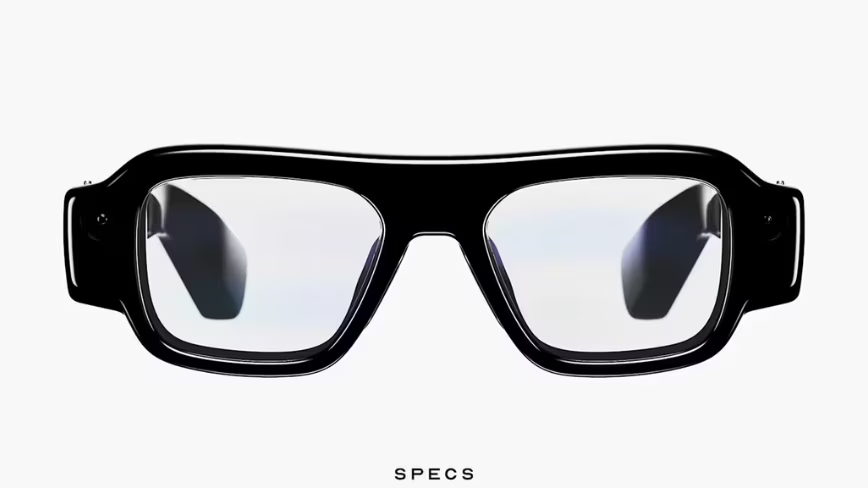
Snap is positioning Specs as an “aspirational, high-fashion gadget,” backed by a global campaign shot by fashion photographer Steven Meisel and featuring models and celebrities known for eclectic style. But early reviewers note the chunky, angular frames and large arms make them conspicuous and potentially heavy, raising doubts that “the device has to be comfortable — and stylistically versatile — enough for everyday wear.”
That tension between bold design, high price and everyday practicality now defines Snap’s gamble: betting the company’s future on AR while hoping that, this time, consumers will actually wear the glasses.
Continue reading https://foxvector.com/stories/019ee7f9-ba75-1d01-7091-02d4171709d7
Write a comment