SpaceX Completes Record $75 Billion IPO, Making Elon Musk World's First Trillionaire
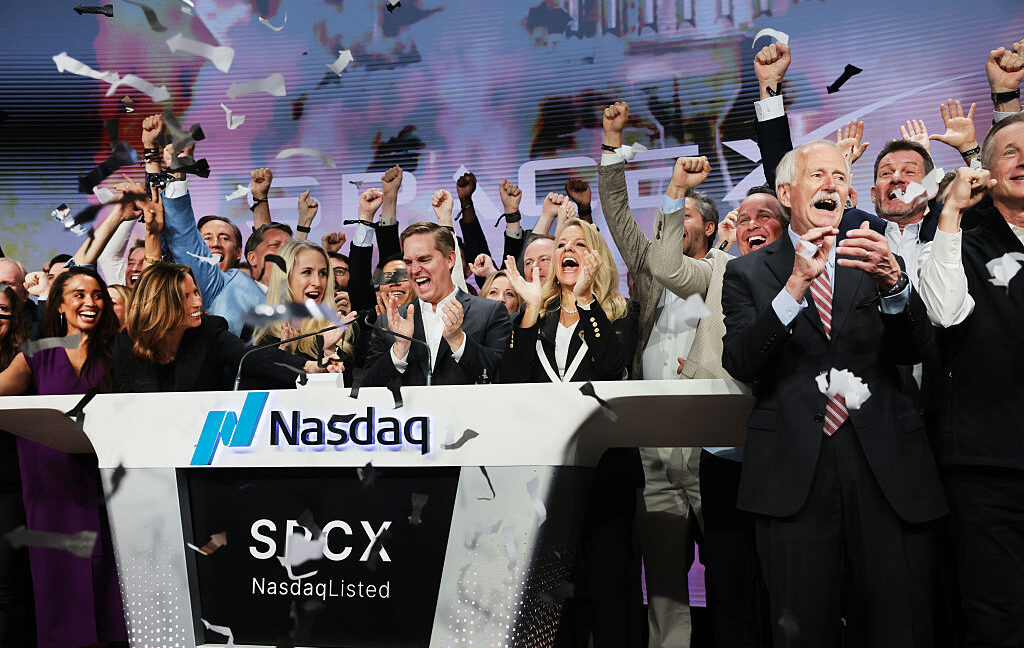
SpaceX Completes Record $75 Billion IPO, Making Elon Musk World’s First Trillionaire SpaceX’s record-shattering stock market debut has turned Elon Musk into the world’s first trillionaire, capping a years-long build-up of investor hype around the rocket-and-AI conglomerate and igniting a broader scramble in tech and public markets.
On June 11, SpaceX confirmed it had priced 555.6 million shares at $135 each, raising $75 billion and officially securing “the largest IPO in history,” a deal widely expected to make Musk a trillionaire on paper. The Financial Times likewise reported that “Elon Musk’s SpaceX raises $75bn in world’s biggest IPO,” underscoring the blockbuster demand for shares.
Trading began on Nasdaq on June 12 under the ticker SPCX. TechCrunch’s live coverage noted that SpaceX shares opened at $150, an 11% jump, and closed at $160.95, up 19% on the day, with Robinhood reporting “record-breaking” traffic as retail investors piled in. The Economist calculated that the pop valued SpaceX at around $2.1 trillion and “made its boss, Elon Musk, the world’s first trillionaire.” The Verge similarly observed that as long as SPCX traded above $138, “that is enough to make Elon Musk the world’s first trillionaire,” giving SpaceX a market cap above $2 trillion.
As the dust settled, outlets turned to what the IPO means. TechCrunch outlined “everything you need to know,” pointing out that despite SpaceX losing $4.9 billion on over $18 billion in 2025 revenue, the deal “looks set to make Musk the world’s first trillionaire” and mint thousands of employee millionaires. Ars Technica emphasized that the newly public company is now “valued for its AI potential,” with SpaceX’s own filings arguing that traditional space services and Starlink represent less than 7% of its “total addressable market,” and that most of its value lies in providing AI services from space.
Other commentators focused on power and risk. The Financial Times described how Wall Street “pulled off the biggest IPO in history for SpaceX” by persuading investors to believe in a “sci-fi strategy” while “hand[ing] full control to Elon Musk.” Another FT analysis framed the offering as a display of Musk’s “dominance,” arguing that his hold on the public imagination has been transformed into “Wall Street gold.” The Verge’s package on SpaceX’s “massive IPO” stressed that the listing both enables Musk’s ambitions—like AI data centers in orbit—and cements an extraordinary concentration of wealth and influence. In a separate essay, the publication tried to convey the scale of a trillion dollars, concluding simply that “a trillion dollars is a stupid amount of money.”
Finally, market watchers see SpaceX as the opening act in a broader shift. TechCrunch’s Equity podcast argued that “as AI companies race to go public,” SpaceX’s debut is helping set up a “hot IPO summer” for AI and deep-tech firms, with other startups trying to “ride that SpaceX IPO wave.” Whether investors ultimately bought into a durable new business model or a speculative bet on Musk’s vision, the IPO has already redrawn the map of global wealth—and expectations for what tech can command in public markets.
Continue reading https://foxvector.com/stories/019ec86b-4166-1294-7194-1f0c671d531c
Write a comment