Perplexity Launches 'Personal Computer' to Orchestrate AI Tasks
- Early moves: From browser to “Computer”
- Computex: Hybrid inference and cost pressure
- Personal Computer: An orchestrator, not a box
- Broader ecosystem perspective
Perplexity Launches ‘Personal Computer’ to Orchestrate AI Tasks Perplexity is pitching a future where the “operating system” is no longer the desktop, but an AI layer that decides what runs on your laptop and what runs in the cloud — a shift driven as much by energy economics as by new capabilities.
Early moves: From browser to “Computer”
Perplexity’s push beyond search began with Comet, an AI-powered browser launched in July 2025 to automate background research and task execution. By October 2025, Comet became free on desktop and started attracting enterprise users, including a partnership with Coinbase that embedded real-time crypto data directly into the browser.
In 2026, Perplexity embedded its “Computer” orchestration system into Microsoft 365 in two phases: first inside Microsoft Teams on 4 May, then as side panels in Word, Excel, PowerPoint and Outlook on 28 May. This allowed AI to coordinate tasks across live web data, local spreadsheets and corporate documents, moving “way beyond search” toward an agent that can “actively pilot desktop files and local apps.”
Computex: Hybrid inference and cost pressure
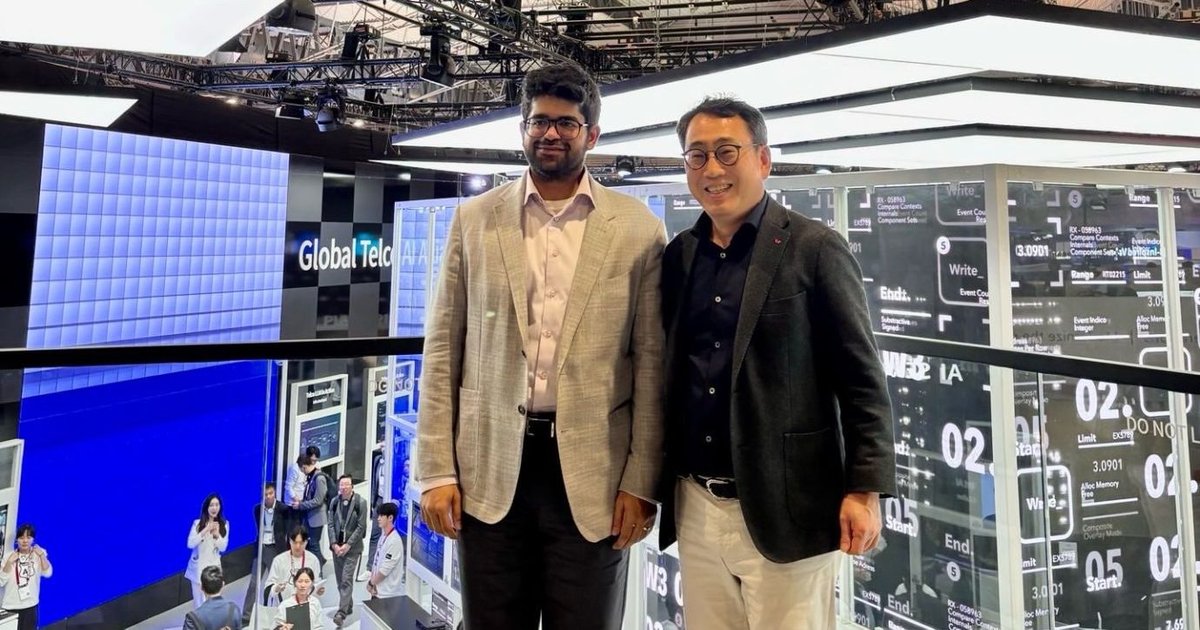
On 2 June 2026 at Computex in Taipei, CEO Aravind Srinivas unveiled a platform that splits AI workloads between PCs and cloud servers in real time, calling it an “air-traffic controller for AI tasks” aimed at slashing inference costs. He argued that companies don’t want “all your compute centralised in servers and everything running through the largest models” as some are “spending half a billion dollars per month,” and should instead chase “efficient value per watt per user.”
Intel highlighted the same hybrid model, promoting “keeping sensitive data on device while cloud AI adds scale and context” in a demo of local–server orchestration at Computex. Perplexity, meanwhile, framed the strategy as “hybrid agentic inference” in which Computer “can split tasks between a local model running on your machine and frontier models in the cloud,” keeping private data local while “maximiz[ing] token efficiency.”
Srinivas later reinforced this direction, saying Perplexity is “bringing local models that can run on your personal hardware inside Perplexity Computer,” combining local privacy and “token efficiency per watt” with server-side frontier GPUs when needed.
Personal Computer: An orchestrator, not a box
By early June, Perplexity formally introduced “Personal Computer,” described as an orchestrator that routes tasks through “the most efficient path,” connecting to local files and apps across Windows and Mac. The goal is to unify models, apps and hardware into what amounts to an “agentic operating system,” bringing “the data center to the user’s laptop.”
Srinivas frames the competitive game as “taken value per watt per user,” balancing accuracy, latency, cost, privacy and intelligence. In this view, energy economics — not just model size — will “define AI winners.”
Broader ecosystem perspective
Others in the AI ecosystem see Perplexity’s hybrid and orchestration push as part of a wider shift. Advocates of open models argue that “using open models and inference clouds (which serve open models) is a leading indicator of what is to come,” stressing that open weights let organisations “train, serve, and continually improve your own model” while controlling “cost, quality, latency, deployment options.”
Together, these perspectives suggest Perplexity’s new “Personal Computer” is less a single product than a bet: that the next platform layer will optimise where, how, and at what energy cost every AI token is processed.
Continue reading https://foxvector.com/stories/019e93a0-4d5a-2bb1-711e-1133a1c5afe4
Write a comment