Nvidia Announces RTX Spark Chip for AI-Powered Windows Laptops
Nvidia Announces RTX Spark Chip for AI-Powered Windows Laptops Nvidia’s new RTX Spark “superchip” is set to remake the Windows PC around local AI, but its debut also opens a costly new front in the chip wars against Apple, Intel, AMD, and Qualcomm.
Early June: Nvidia’s AI-first PC push
At Computex in Taipei, Nvidia formally entered the consumer PC processor market, unveiling RTX Spark as an Arm-based CPU–GPU–AI package it calls “the most efficient PC chip ever built.” The flagship configuration mirrors its DGX Spark “personal AI supercomputer,” with 20 CPU cores, 6,144 GPU cores, and up to 128GB of unified LPDDR5X memory. Ars Technica notes this brings “a 20-core Nvidia Grace CPU… and up to 6,144 Blackwell-based GPU cores” to Windows laptops and compact desktops this fall.
Nvidia frames Spark PCs as machines for running large AI agents directly on-device, claiming they can host 120‑billion‑parameter models and render massive 3D and video workloads without being plugged in. TechCrunch reports CEO Jensen Huang is chasing a new “$200 billion” CPU market for AI-focused PCs, backed by secure sandboxes and CUDA-accelerated local models.
Microsoft and partners line up hardware
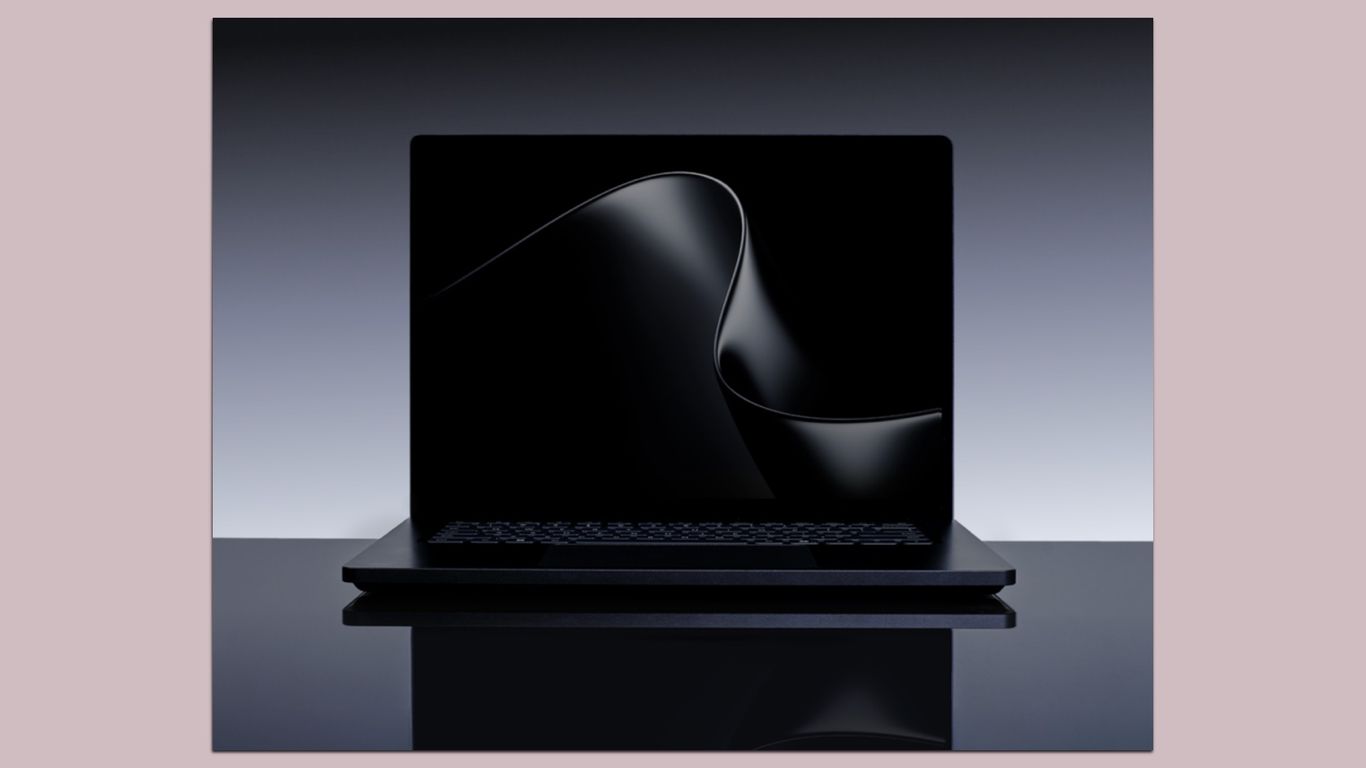
Microsoft quickly positioned itself as Spark’s showcase partner. The company announced the Surface Laptop Ultra, described as its “most powerful Surface, period,” built around RTX Spark with up to 128GB of unified memory and roughly RTX 5070‑class graphics. A separate roundup of early devices highlights its 15‑inch mini‑LED HDR touchscreen, broad port selection, and claims that it is “the most powerful Surface Laptop ever built.”
Major OEMs including Dell, Asus, HP, MSI, Lenovo, Acer, and Gigabyte are also preparing Spark laptops for a fall launch, all centered on the Arm-based “superchip,” with configurations scaling down to 16GB of RAM for lower prices.
Microsoft CEO Satya Nadella publicly tied Spark to a broader Windows AI strategy, saying the goal is “unmetered intelligence to every home and every desk,” and calling RTX Spark “a real breakthrough toward that vision.”
Analysts: a possible ‘Windows M1 moment’—with caveats
Commentary from The Verge argues Nvidia’s move “could be Windows’ moment to blow us away” much like Apple’s M1 transition, pointing to the Spark’s 20 CPU cores, 6,144 CUDA cores, and 128GB unified memory as a “monster of a laptop chip.” But the same analysis warns that, unlike Apple’s relatively accessible first M1 systems, early Spark laptops from Microsoft, Dell, Asus, HP and others “are looking like they’re going to be expensive.”
A related Vergecast episode characterizes Nvidia’s entry as starting “a new chip war,” asking whether the company can “reinventing the personal computer” without “charging a fortune.” Meanwhile, the Financial Times frames Spark as a PC “superchip” directly “in challenge to Apple and Intel,” built to run AI apps tightly integrated with Windows.
Across these perspectives, Spark is portrayed as both a bold technical step—bringing workstation-class AI and graphics into thin laptops—and a high-stakes economic gamble that will test whether users are ready to pay a premium for PCs built around always-available, on-device AI.
Continue reading https://foxvector.com/stories/019e8be6-a6c1-2357-73b2-02a98f43cdb1
Write a comment