SpaceX S-1 Filing Reveals Financial Losses and AI Focus
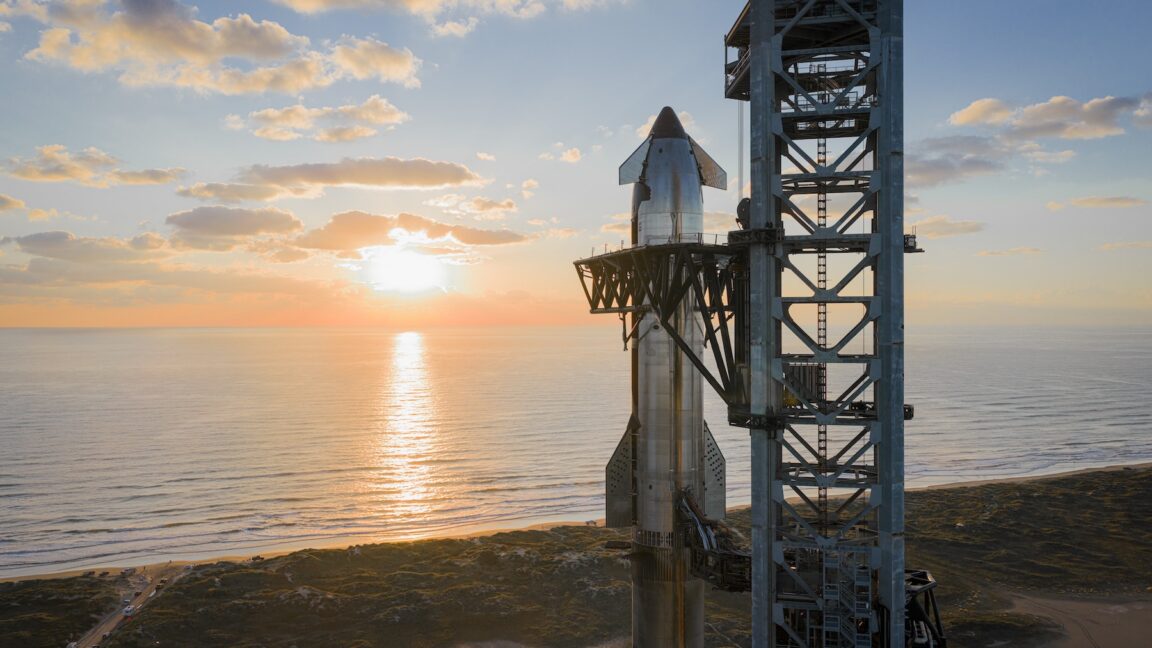
SpaceX S-1 Filing Reveals Financial Losses and AI Focus SpaceX’s long-anticipated S-1 has turned the company from myth into math, revealing a money-losing but wildly ambitious business that is staking its future less on rockets and more on artificial intelligence.
From secretive rocket company to open books
On May 20, SpaceX publicly opened its financials for the first time, detailing $18.67 billion in 2025 revenue but a $4.94 billion net loss, largely driven by AI spending. Analysts noted the numbers show SpaceX is “wildly unprofitable,” with its IPO valuation hinging on “staggering future growth” expectations rather than current earnings.
The filing also framed SpaceX’s opportunity as a $28.5 trillion total addressable market, with $26.5 trillion tied to AI compute rather than space services. “We believe we have identified the largest TAM in human history,” the company wrote, pitching orbital data centers as its “next trillion-dollar market.”
xAI merger and the AI pivot
In February, Elon Musk merged his AI startup xAI — which had previously acquired social platform X — into SpaceX, creating a combined AI-and-space entity ahead of the IPO. The newly disclosed xAI numbers show losses ballooning from $1.56 billion in 2024 to $6.4 billion on $3.2 billion in revenue in 2025, with plans to scale Grok to “multiple trillions of parameters,” implying even heavier compute spending.
Yet Grok adoption remains modest and lags rivals like OpenAI and Anthropic, even as SpaceX pitches AI as the “tentpole” of its future and claims AI represents most of its projected market. One Axios analysis concluded SpaceX “isn’t quite David, but it’s sure as hell not Goliath,” warning that the AI unit with X and xAI generated just $818 million in Q1 2026 and that only Starlink is currently profitable.
Musk’s central role and sci‑fi vision
The S-1 underscores how deeply intertwined Musk’s empire has become: Tesla, X, xAI, the Boring Company, and Neuralink all appear throughout the risk disclosures, with SpaceX described as “highly dependent” on Musk even as his other ventures may compete with it.
At the same time, the prospectus reads “like a sci-fi manifesto,” laying out plans for orbital AI compute, lunar and Martian industries, asteroid mining, and point-to-point Earth travel, while admitting these bets target “future markets” that don’t yet exist. A companion summary of the filing presents this as a blueprint for an extraterrestrial economy spanning the Moon, Mars, tourism, and in-orbit manufacturing.
Musk has amplified the narrative on X, praising that “The SpaceX team is incredible!” as fans share highlights from the IPO document, and embracing SpaceX’s portrayal as a company aiming not only to dominate AI but to build businesses “on the Moon, Mars, and beyond.”
Continue reading https://foxvector.com
Write a comment