Unveiling Picasso: A Journey Through the Life and Art of Pablo Picasso
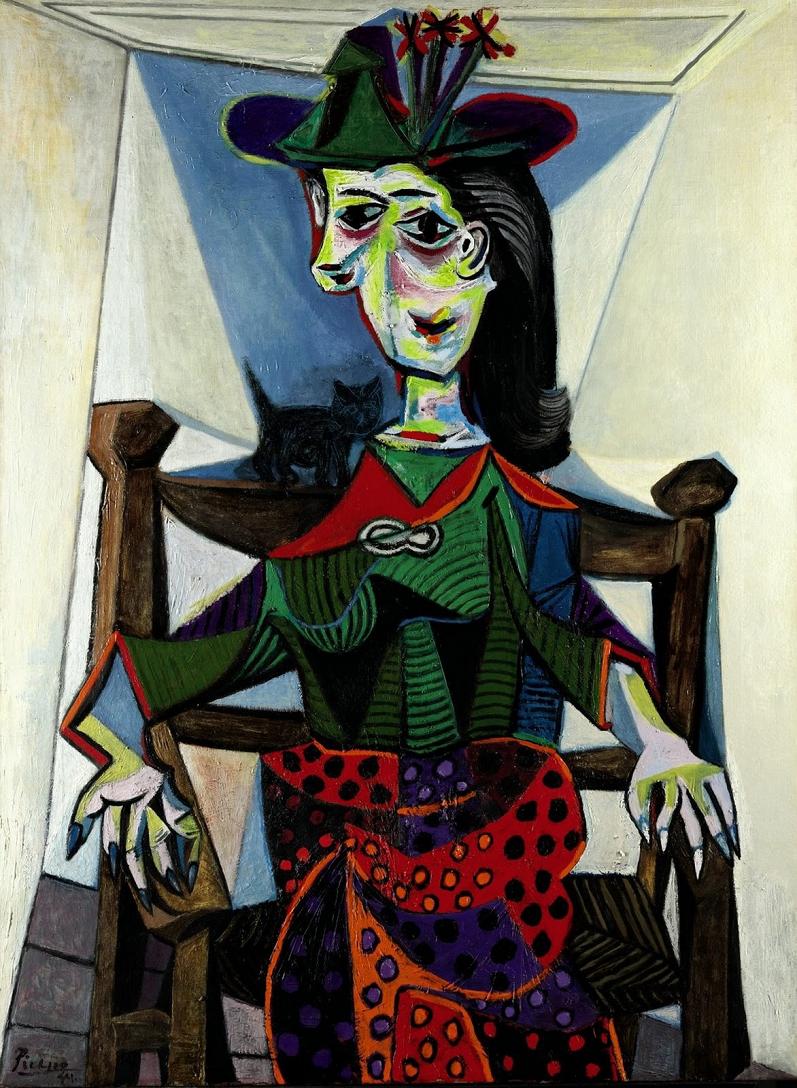
$$Pablo Picasso$$ What you may not know about Picasso Pablo Picasso was a Spanish painter, sculptor, and co-founder of the Cubist movement. He was born in 1881 in Malaga, Spain. His first words were “piz, piz,” a childish pronunciation of the Spanish word “lápiz,” meaning pencil. His father began teaching him art when he was a child. He drew inspiration from the people he met at the Quatre Gats café in Barcelona.
Pablo’s life went through several stages: the Blue Period (1901-1904) included works like “La Vie” and “The Old Guitarist.” The Rose Period (1904-1906) featured works such as “Family of Saltimbanques” and “Gertrude Stein.” Picasso’s later works were characterized by simplicity and a childlike style. He had countless wives, girlfriends, and children. One of his famous quotes is “Art is the lie that enables us to realize the truth.”
Additional information about Picasso is that his parents initially thought he was stillborn, but they discovered his early talent for drawing and mastering art at a young age. He was also a poet and playwright. He was asked to investigate the theft of the Mona Lisa painting. Pablo Picasso’s birthdate is October 25, 1881.
$$Biography of Picasso$$ Pablo Picasso was born in Malaga on October 25, 1881, becoming one of the greatest and most influential artists of the 20th century. He co-founded the Cubist school with Georges Braque. Picasso, the Spanish expatriate, was a painter, sculptor, theatrical designer, and was considered avant-garde in his work.
Picasso died on April 8, 1973, in Mougins, France, after a long professional life filled with creativity, yet he remained through the massive amount of his work and the legend that lives on to honor the controversial Spanish, the owner of the gloomy look that he believed would keep him alive.
Nearly eighty of his 91 years old, Picasso devoted himself to producing works of art that significantly contributed to the development of modern art in the 20th century.
$$Early life of Picasso$$ Pablo Picasso was born on October 25, 1881, in Malaga, Spain. His full name, honored by a collection of relatives and saints, was: Pablo Diego José Francisco de Paula Juan Nepomuceno Crispin Crispiniano María Remedios de la Santísima Trinidad Ruiz Picasso.
His mother was Doña Maria Picasso Lopez, and his father was Don José Ruiz Blasco, a painter and art teacher. Picasso was a precocious boy with a pair of dark, intense eyes and a bright look that made him seem destined for greatness.
My mother told me when I was a child: “If you become a soldier, you will be famous; if you become a monk, you will be the Pope.” Instead, I became a painter and wound up Picasso.
Picasso showed a remarkable talent for drawing despite being relatively poor, and the story goes that his first words were “piz, piz,” an attempt as a child to say the Spanish word “lápiz,” meaning pencil.
His father began teaching him drawing and painting when he was a child, and by the age of 13, the boy had surpassed his father’s skill level. Later, Picasso lost any desire to complete his studies and chose instead to spend his days at school drawing in his notebook.
Picasso said: “As a bad student, I was punished and banished to” Calamus, “a room with walls painted white and a seat to sit on. Later, I said,” I loved that room because I used its walls as a large board I drew on constantly, I had to stay there forever drawing without stopping. “
Picasso and his family moved to Barcelona when he was 14 years old, where he was immediately accepted into the prestigious City School of Fine Arts. Although the school usually only accepted students older than Picasso by several years, Picasso’s admission exam was unusual and received recognition and exception. Nevertheless, Picasso became tired of the strict rules and regulations of art school and began skipping classes to wander the streets of Barcelona and draw the scenes he noticed there.
Picasso moved to Madrid at the age of 16 in 1897 to receive his education at the Royal Academy of San Fernando. However, he was again frustrated by the teaching style that focused solely on classical subjects and techniques.
He wrote to his friend at the time: “They come on the same old things: Velázquez for painting, Michelangelo for sculpture.”
Picasso again began skipping his lessons to wander the streets of Madrid and draw what he noticed: dawn, beggars, and other things. Picasso returned to Barcelona in 1899 and met a group of artists and intellectuals who made their headquarters in a cafe called Cuatre Gats “Cats Four.”
Picasso drew inspiration from the disorderly people he met there and completely disconnected from the classical styles he was trained in and entered an experimental and creative stage that spanned his life.
$$Personal life of Picasso$$ Picasso was a ladies’ man, and he had countless relationships with girlfriends, lovers, and musicians. He married twice during his first life. A dancer was named Olga Khokhlova in 1918, and they continued together for nine years, where they had one child named Paulo, who was separated from them in. 1979 He married for a second time, Jacqueline Rock, who suicide in. 1986 Had with has in them a daughter of his death. Of these marriages, met 1935 Doramar in the film “Le Crime Monsieurlang” produce 1936, quickly a relationship professional, they into 1946. Three Three year relationship with Francois Gilot child.


Write a comment