The Latest Bitcoin & Macro news: Weekly Recap 28.04.2026

- 🧠Quote(s) of the week:
- 🧡Bitcoin news🧡
- 💸Traditional Finance / Macro:
- 🏦Banks:
- 🌎Macro/Geopolitics:
- 🎁If you have made it this far, I would like to give you a little gift:
🧠Quote(s) of the week:
Milton Friedman: “I am in favor of reducing taxes under any circumstances, for any excuse, with any reason whatsoever, because that’s the only way you are ever going to get effective control of government spending.”
Email had roughly 1% global adoption in 1992. Critics called it a toy for academics. Fax machines work fine. Email is too technical. Email is too slow. Bitcoin has 1.3% global adoption today. Same argument. Same critics. I wonder how the fax machine industry is doing. - Jeff Swanson
🧡Bitcoin news🧡
Photos hosted by Azzamo ( https://azzamo.net/)
On the 20th of April:
➡️PALANTIR CO-FOUNDER: “There’s one buyer that will be important in Bitcoin…AI Agents.” Joe Lonsdale, a Palantir co-founder, predicted last year that AI Agents could be among the biggest users of Bitcoin & crypto. NOW: AI Agents make up 19% of all on-chain activity. - Bitcoin Archive
➡️Sen. Rand Paul: “We bring in $5 trillion. We spend $7 trillion. We borrow the difference. The Fed prints money to cover it. That’s Inflation. And Inflation is making you poorer.”
I have a solution: Bitcoin!
➡️$12 TRILLION CHARLES SCHWAB now recommends up to 7% of assets in aggressive portfolios allocated to Bitcoin. That would be $854 BILLION BTC if applied to their total Assets Under Management (AUM). - Bitcoin Archive
Tom Lee in 2019 on Bitcoin: “We think the best approach for most people is to put 1% maybe 2% into BTC.” CNBC: “I still think that’s CRAZY.” Morgan Stanley & Charles Schwab 2026: “We recommend 7% allocation into BTC.” Wild times!
➡️$1.5T bitcoin market cap. $1 quadrillion in global wealth. Bitcoin is less than 0.2% of the world’s assets. 95% of the supply is already mined. 95% of the world owns none. You are still absurdly early. Great chart from Jesse Myers to put in perspective.
https://cdn.azzamo.media/f024de2a33272b265218904e4c191a2765a99250609994ede3c5e9286baadcb4
➡️Bitcoin Archive: ‘$12 TRILLION VANGUARD BUYS $195 MILLION MORE STRATEGY SHARES Vanguard bought an additional 1,210,422 shares of MSTR. In Q1 2026, it was worth approximately $195 million. Vanguard’s indirect Bitcoin exposure is growing.’
➡️Remember when they screamed bitcoin mining would boil the oceans? Data Center load in ERCOT is projected to be 25 times greater by 2032, and not a peep. Steven Lubka: ‘Insane the war we had to fight only for them to roll over and accept staggering data center growth.’
On the 21st of April:
➡️BITCOIN WHALES BOUGHT 1M+ BTC IN 3 MONTHS. Wallets holding 100–10,000 BTC added approximately 45,000 Bitcoin last week, the fastest rate since July 2025. - Bitcoin Archive
➡️Admiral Paparo, 4-star Admiral and Commander of U.S. Indo-Pacific Command, just testified before the Senate that: “Bitcoin shows incredible potential for national security, and proof of work imposes more cost than just the algorithmic securing of networks.” The Pentagon is framing Bitcoin as a cybersecurity tool and a form of power projection.
On the 23rd of April:
➡️Tether just froze $344 million in USDT in coordination with OFAC and U.S. law enforcement. Your stablecoins are not your stablecoins. They never were. - TFTC
➡️This is the most Bitcoin has diverged from global money supply on record. The SnapBack could be legendary. Are we witnessing the beginning of this move? - Bitcoin News
https://cdn.azzamo.media/7f8c7155f65f76536ba340ebfb9409d0ba420908ac0452c922ce049f37c89c88
➡️Bitcoin News: SOUTH AFRICA PROPOSES INSANE CRYPTO CONTROLS, POSSIBLE FORCED SALES
The South African National Treasury and the South African Reserve Bank have introduced draft Capital Flow Management Regulations that could dramatically restrict crypto use. The proposal would require disclosure of crypto holdings above an unspecified threshold and could allow the government to force holders to sell assets for rand. Under the draft, investors may not buy, sell, lend, or transfer crypto above the threshold without permission, except through approved providers. Transactions would require a stated purpose, and using funds for any purpose other than that could trigger mandatory resale. Cross-border transfers and payments using crypto would be banned without approval. Authorities would also gain powers to search individuals, demand declarations, and seize assets suspected of violating the rules. Critics say the changes raise serious constitutional concerns around privacy, property rights, and freedom of association, calling them among the most aggressive updates to South Africa’s decades-old exchange control system.
Oh, by the way, if Bitcoin is worthless, why is the South African government forcing its citizens to give up their holdings?
➡️April 23, 2011, Satoshi stepped away from Bitcoin and left it for the world!
https://cdn.azzamo.media/c2e2ab5ef9441e71f0e839eca11e357d342db258a23ff1a80f8152f3e18f693e
On the 24th of April:
➡️’BITCOIN was under $5 when this prediction was made. A financial analyst in 2012 used this slide to explain the future value of 1 BTC. BTC in 2012: <$5 BTC in 2026: >$78,000’ - Bitcoin Archive
https://cdn.azzamo.media/28bf8baaec878f7809638278555d7821b1ef3818620ad4af69cdd49ffbacdba3
➡️A bit cherry picking and hopium… ‘Discoverer of the Bitcoin Power Law, Giovanni Santostasi, says that in 20 years, 1 Bitcoin could be worth the equivalent of 10,000 ounces of gold. At today’s prices, that’s roughly $47 million.’ - Bitcoin News
➡️Japanese public company Metaplanet is issuing ¥8 billion in bonds to buy more Bitcoin.
➡️Treasury Secretary Bessent just confirmed the $344 million Tether freeze was an OFAC action targeting wallets tied to the Iranian regime. Gulf nations are opening up Iranian bank accounts as Tehran tries to move assets out of the country. Bessent: “We will follow the money that Tehran is desperately attempting to move outside of the country and target all financial lifelines tied to the regime.” - TFTC
Amount of USDT seized from Iran: $344M Amount of bitcoin seized from Iran: 0
Got Bitcoin?
➡️Daniel Batten: In 2002, I remember being at a sports bar, watching Ronaldinho lob David Seaman from 35 yards out in the World Cup quarter-final. England never saw it coming.
Twenty-three years later, Brazil just lobbed them again.
Last year, the UK wasted £1.47 billion in curtailed wind energy. That’s wind turbines spinning, generating power, and being told to stop because the grid couldn’t absorb it. (source: http://wastedwind.energy)
Brazil looked at the same problem - 20% of its renewable energy curtailed in 2025, costing generators around $1.2 billion in losses (http://pipelinevalor.globo.com) - and came up with a different answer. Itau Unibanco, Brazil’s largest bank, just invested in Minter through Itau Ventures. Minter builds mobile container data centers that mine Bitcoin directly at solar and wind renewable energy sites. The electricity that would otherwise be wasted - what Brazilian coverage calls “eletricidade desperdicada” - gets converted into Bitcoin.
3 things happen when you do this:
First, generators make money from the energy they were previously throwing away. Minter’s CEO says it’s more profitable than any alternative use of curtailed power. (source: https://letsmoney.com.br/noticias/minter-capta-serie-a-itau-data-centers-usinas/)
Second, the grid stabilizes. These containers are flexible, interruptible loads. When the grid needs the power back, the miners shut off instantly. They absorb surplus when it’s abundant and release it when it’s scarce. This is precisely the mechanism that was missing when Spain’s grid went down last year.
Third, the Bitcoin mined is 100% renewable surplus, not grid power diverted from households. This is surplus clean energy that would have gone to waste. Sustainability media company ESG Inside has labeled this Clean Bitcoin. (source: https://esginside.com.br/2026/04/22/itau-unibanco-lidera-rodada-serie-a-em-startup-de-infraestrutura-digital-que-monetiza-energia-renovavel-excedente/)
Energy systems and decarbonization expert Fengqi You says that when Bitcoin mining monetizes wasted renewable energy, it incentivizes the development of more renewable energy by increasing its profitability. Source: https://pubs.acs.org/doi/10.1021/acssuschemeng.3c05445
So while the UK pays wind farms to curtail energy, Brazil’s largest bank is investing in technology that turns that same surplus into sound money and grid stability. I’ve been saying for four years that Bitcoin mining is the missing piece of the energy transition. For the country that figures this out first, they don’t just get to turn wasted energy into Bitcoin - they simultaneously fix their grid, remove an attack vector against renewables, and get ahead of everyone else. Brazil just figured it out. England (again) never saw it coming.
https://cdn.azzamo.media/0c26b017cb80d44009647a2fdc3ba95ff490539a888815fcfcd321ecb7784b81
On the 25th of April:
➡️In 1995, Bill Gates tried to explain the internet on the David Letterman show, and the audience laughed. In 2009, Satoshi tried to explain Bitcoin to the world, and they laughed. In 2020, Saylor tried to explain Bitcoin to the world, and they laughed. In 2026, everyone who laughed is buying BTC. We are still early. - Bitcoin Archive
➡️The Bitcoin Libertarian: ‘Convinced buyers grew 69% in Q1, 3.6 million Bitcoin now held by people who simply do not sell. That’s the highest since 2020. While price dipped 22% Think about that. Conviction went UP while price went DOWN. That’s not a weakness. That’s accumulation.’
➡️Major Banks’ Bitcoin Price Predictions for 2026 • Citi: $189k bull • JPMorgan: $170k • Goldman Sachs: ~$200k scenario • Standard Chartered: $100k (end-2026), $500k by 2030 • TD Cowen: $140k. - Bitcoin Archive
➡️THE UNITED STATES is still the world’s leading Bitcoin holder by government. The U.S. holds 328,372 Bitcoin worth over $25.5 BILLION.
➡️Since 1971, gold has had a CAGR of 9.2%, and the S&P 500 has had a CAGR of 10.9%. You’re not a good investor. The money printer has just been turned on for the last 55 years.
https://cdn.azzamo.media/8324be7cf22ac2c3a45dfdc0a1aa2323bd2284cfc7b57b76e8f1528257784084
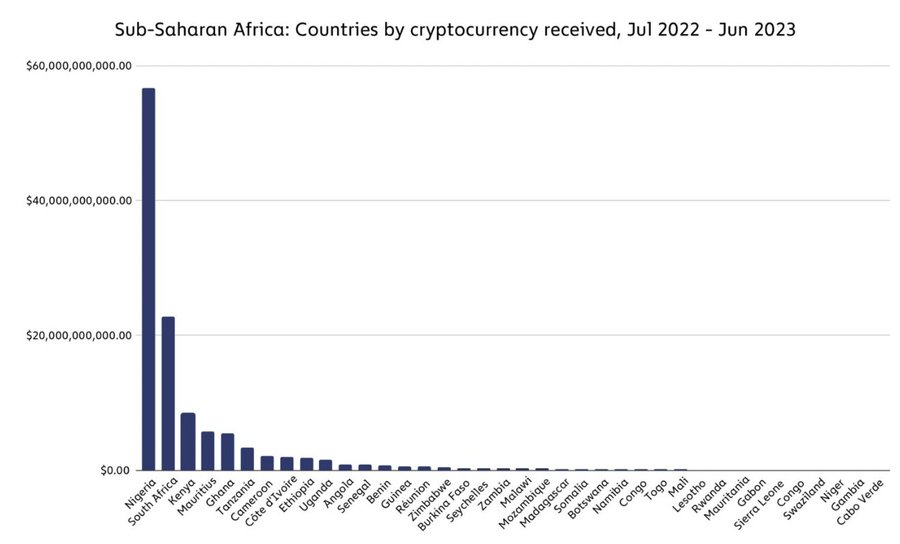
➡️Daniel Batten: Long before 4.1 million U.S. merchants started using Bitcoin’s Lightning Network to receive transactions this year (thanks @jack), Africa had already validated the usecase for Bitcoin as a medium of exchange “𝟳𝟬% 𝗼𝗳 𝗮𝗹𝗹 Bitcoin 𝘁𝗿𝗮𝗻𝘀𝗮𝗰𝘁𝗶𝗼𝗻𝘀 𝗼𝗳 𝗹𝗲𝘀𝘀 𝘁𝗵𝗮𝗻 $𝟭,𝟬𝟬𝟬 𝗲𝗶𝘁𝗵𝗲𝗿 𝘀𝘁𝗮𝗿𝘁 𝗼𝗿 𝗲𝗻𝗱 𝗼𝗻 𝘁𝗵𝗲 𝗔𝗳𝗿𝗶𝗰𝗮𝗻 𝗰𝗼𝗻𝘁𝗶𝗻𝗲𝗻𝘁” source: https://chainalysis.com/blog/africa-cryptocurrency-adoption/ “Crypto has penetrated key markets and become an important part of many residents’ day-to-day lives.” With the combination of autocracy and high Inflation, Bitcoin use in Nigeria is off the charts (see image below). Bitcoin’s % use as a medium of exchange in Africa is increasing as education improves and people understand it’s the only decentralized, censorship-resistant digital currency. This is thanks to several Bitcoiners working tirelessly in Africa.
➡️Nayib Bukele: “The Federal Reserve is nothing federal and has no reserves. They rob you of your wealth and of your savings, and that’s immoral. It’s not only immoral, but it also destroys some basic economic principles like saving.”
Or as Ronald Reagan once put it so eloquently: “We don’t have Inflation because the people are living too well, we have Inflation because the government is living too well.”
Oh, and remember what the Chair of the Federal Reserve, Jerome Powell, said: “Effectively, we’re borrowing from future generations — in the long run, the U.S. federal government is on an unsustainable fiscal path.” -
Anyway, got Bitcoin?
➡️Bitcoin Dominance hits ~60% for the first time in 2026!
On the 27th of April:
➡️Pensions, sovereign wealth, RIAs, insurers, and corporate treasuries control trillions. Most still own little to no Bitcoin. A 0.5% allocation from a $20T pool = $100B of demand. New Bitcoin supply is only ~450 BTC/day. Price is set at the margin. Bitcoin does not need mass adoption. It needs tiny allocations from giant balance sheets. - David Eng
https://cdn.azzamo.media/71ee0c7660a24438bfb27fa3ffa60caee99cf10c77d8398c5cf5ecbdd648951c
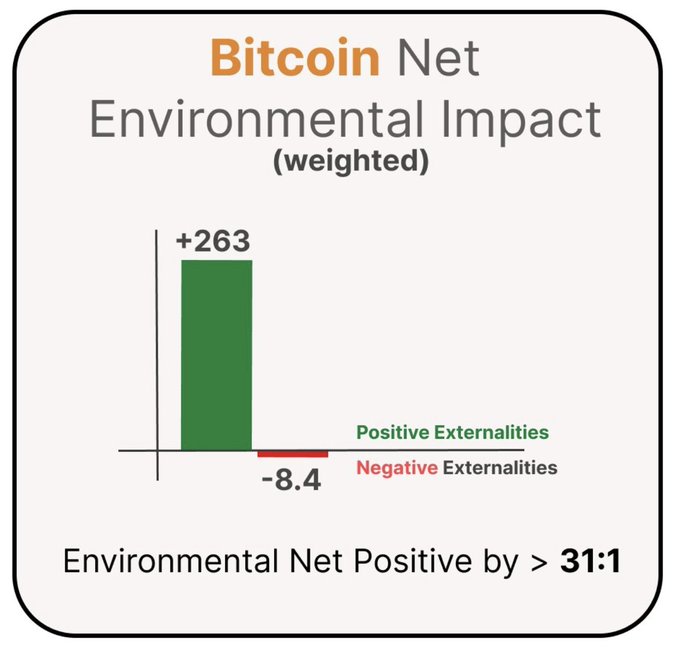
➡️Daniel Batten with another banger: “Environmentally, Bitcoin has a positive: negative ratio of 31:1. This makes Bitcoin arguably one of the most important environmental-impact technologies of our time.
As a fund manager of 2 impact funds, I said 4 years ago that I consider it gross negligence for an ESG investor not to include Bitcoin in their mix. Many called me crazy at the time. They are no longer saying that today (at least not for that reason!)
Here’s a data summary from our due diligence four years ago (which has since been vindicated by 24 peer-reviewed papers supporting the same findings we arrived at).
How did we reach this view? Simple: we did our job as investors. ie: we did due diligence on Bitcoin and energy (something very few people were doing at the time before recycling what has since proven to be factually inaccorate claims) Simple rue: - relevant domain knowledge + data => we listen - vested interest + narrative => ignore We listened to grid operators, climate scientists, bitcoin mining engineers, methane abatement experts, solar&wind installers, academics with multi-disciplinary expertise across energy systems/ sustainability / bitcion mining/ economics/ policy
We found
- 21 ways Bitcoin could be an environmental positive
- 5 ways bitcoin could be an environmental negative (Uncannily similar to the solar industry). We then applied an impact weighting to each factor and remeasured
The result was conclusive: Bitcoin mining is 31:1 net-positive for the environment. Bitcoin mining’s rapid adoption of renewable energy can inspire other industry sectors to follow suit. We found that in the next 5 years, Bitcoin mining would play a real part in global methane mitigation (it is), grid stabilization (it is), and monetizing wasted renewable energy (it is)
The rule is simple: do your own due diligence rather than listen to the opinions of anyone, be they media, politicians, environmental organizations, general energy experts, or bitcoiners themselves. That’s the path to truth.“
➡️Strategy just added another 3,273 bitcoin for $255 million. Total stack: 818,334 BTC. $61.8 billion invested. Average cost: $75,537. 9.6% BTC yield year-to-date.
On the 28th of April:
➡️ U.S. Attorney General Todd Blanche just said: “If you’re a coder building software and you’re not knowingly helping someone commit crimes, you will NOT be investigated or charged.” “We have fundamentally changed the game.”
➡️RON BARON: Money loses 4-5% of its value every year from Inflation, while the economy grows about 2% a year. That means the value of your money falls in half every 15 years, or put
➡️TFTC: Jack Dorsey’s Block added 114 Bitcoin to its corporate treasury in Q1 2026, bringing the company’s total corporate holdings to 8,997 BTC worth roughly $692 million. But the bigger story is transparency. Block just published its first quarterly proof-of-reserves report, confirmed by third-party auditors. The report covers all Bitcoin the company is responsible for: 8,997 BTC in the corporate treasury plus 19,357 BTC held on behalf of Cash App customers, totaling 28,355 BTC worth approximately $2.2 billion. Wallet addresses and cryptographic proofs are published for on-chain verification. Anyone can check them. Block has been buying Bitcoin with a percentage of its gross profit since 2020. The company also builds Bitkey, the self-custody hardware wallet, and Proto, the Bitcoin mining chip. The proof-of-reserves report is one more signal that Block is treating Bitcoin as core infrastructure, not a speculative side bet.
When you realize there’s only 21 million bitcoin, 5 million or more have been lost forever, Michael Saylor and BlackRock have bought 2 million since ETFs launched, no nation states own it in size, and there’s over 8 billion people on the planet. - Bitcoin Therapist
💸Traditional Finance / Macro:
On the 21st of April: 👉🏽Today, Tim Cook announced he is stepping down as CEO of Apple. It was worth $350 billion when he became CEO in 2011. Nearly 15 years later, it’s now worth over $4 trillion, a 1050% increase.
On the 24th of April:
👉🏽It’s finally happening. Brands like Nike have begun laying off tech employees. Nike is reportedly to cut 1,400 jobs, mostly from its technology department.
🏦Banks:
👉🏽No news
🌎Macro/Geopolitics:
’Socialism fails because economic calculation remains impossible without market prices. No amount of good intentions changes this mathematical reality.
When Ludwig von Mises published his calculation problem in 1920, he explained why central planners cannot rationally allocate resources. Without private property and voluntary exchange, you get no genuine prices. Without prices, you cannot determine costs. Without costs, every economic decision becomes a blind guess. The Soviet Union proved this theorem for 70 years, burning through mountains of capital while millions starved.
Venezuela offers the latest textbook case. Chávez nationalized over 1,000 companies between 2002 and 2012, from oil to toilet paper production. The government printed money to fund social programs while price controls created shortages. By 2018, Inflation hit 1,000,000% annually. Citizens fled by the millions. The same country with the world’s largest oil reserves cannot keep the lights on. Cuba tells the same story across six decades. Castro seized private property, banned markets, and promised prosperity through central planning. Result: doctors driving taxis because tourism pays better than medicine. Average monthly salary: $30. Meanwhile, the ruling class lives in luxury while ordinary Cubans risk their lives on rafts to escape socialism’s paradise.
The pattern repeats everywhere socialism takes root. Cambodia, East Germany, Yugoslavia, Zimbabwe. Each experiment begins with promises of equality and ends with poverty, repression, and collapse. Free market economists predicted these outcomes because economic laws operate regardless of political wishes.
You cannot suspend the laws of supply and demand any more than you can suspend gravity by voting.’ - Handre
On the 21st of April:
👉🏽Mario Nawfal: ‘U.S. government debt just smashed another milestone, and not in a good way! We’re talking about $39 TRILLION, and it’s accelerating like crazy. It hit $37T in August, $38T in October (during the shutdown), and added the latest $1 trillion in just 71 days. They’re speedrunning debt, that’s one of the fastest jumps ever outside COVID. Nearly $5T were added since January 2024. Meanwhile, interest payments are now the fastest-growing part of the budget… and they’ve already surpassed spending on Medicare AND national defense. And if you’re still thinking, “wth should I care?” think again! It’s your higher cost of living, more expensive loans, slower wage growth, and less government flexibility when the next crisis hits. The faster the debt grows, the quicker these effects hit middle-class families. It’s like ignoring a growing credit card balance; it feels fine until the interest payment eats your whole paycheck. This is why economists across the spectrum are ringing alarms! It’s about the very real squeeze on your wallet and your kids’ future. Source: U.S. Treasury
On top of that, 66% of all U.S. government spending now goes to welfare. That’s right! 2/3 of every tax dollar is being funneled into welfare programs. Americans are getting absolutely scammed. This isn’t sustainable, and the ballooning National debt is the result. Source: merlinscapital
https://cdn.azzamo.media/96dec70ff6b3c26ec01a391a9f9657ffc6a545a87562fcaf3e67d9eae1986004
👉🏽The Netherlands: The asylum crisis is not a force of nature. It is a political and administrative failure. The rejection of the Emergency Asylum Measures Act in the Senate is not just a political setback — it is an embarrassment for the Netherlands. While the country has struggled for years with overcrowded reception centers, pressure on public services, housing shortages, and growing social tensions, the government once again proves unable to deliver on one of the most important policy issues of our time.
Boris Dittrich, speaking on behalf of all Democrats 66 senators, announced opposition to the measures while also referring to the upcoming EU migration pact — even though D66 members in the European Parliament had previously voted against parts of that pact.
That contradiction says a lot. A government that claims it wants control over migration but then collapses into internal division, procedural games, and political paralysis is not governing the country. It is managing chaos.
👉🏽Latin America is now aging faster than ANY region in the world. Chile has a lower birthrate than even Japan. What is going on? - Brain Winter
https://cdn.azzamo.media/5ae45f0b28a6526405d915111117a687c7a19207804f60e2d0a858dfb149d8fd
👉🏽 World’s highest gasoline prices per liter as of April 13:
Hong Kong: $4.14
Malawi: $3.84
Netherlands: $2.80
Congrats Netherlands, top 3, only Hong Kong and Malawi above us. Stellar job.
https://cdn.azzamo.media/b7f56dfcf31e65da3d0c41264d716b514a0511e36f3fad329cd102acaa8e6c94
👉🏽The EU is protecting our children from the dangers of the internet through an app. Sounds great, right?
Arno Wellens is critical: “You can only effectively verify ages if you check everyone — not just children — and that is how the EU builds a digital gateway for the entire internet.”
Meanwhile, Hungary violated EU law when it banned children from accessing LGBTQ+ content, according to a ruling by the Court of Justice of the EU. - Politico Source: EU top court strikes down Hungary’s anti-LGBTQ+ rules – POLITICO
Pavel Durov: “So the EU wants to ban teens from social media — except for LGBTQ+ content? What a nuanced way to ‘protect children’ online.”
“Protecting children online” — also known as censorship.
👉🏽Simon Dixon: ’ECB chief Christine Lagarde warns of possible food rationing due to fertilizer disruptions. “A third of fertilizers are shipped through the Strait of Hormuz… that is at risk.”
The global reset is being manufactured. Here’s a list of major oil refineries/energy facilities being blown up this month: 3rd April: Russia’s Major Oil Export Terminal 4th April: Russia’s Crude Distillation Unit 7th April: India’s Power Plant 9th April: Mexico’s Refinery 14th April: India’s Power Plant 15th April: Australia’s Energy Refinery 20th April: Russia’s Oil Refinery 21st April: India’s Oil Refinery 21st April: Romania’s Power Plant 21st April: Texas Oil Rig Drones have blown up a few of them, but most of them have mysteriously caught fire.’
On the 22nd of April:
👉🏽The number of immigrants residing in the EU climbed to a RECORD HIGH of 64.2 million in 2025, up about 2.1 million from 2024, according to a new report. The figure compares with 40 million in 2010; Germany is the largest host, with nearly 18 million.
Reuters: Number of immigrants in EU reaches record high of 64.2 million in 2025, study shows | Reuters
On the 23rd of April:
👉🏽Each. Dot. Represents. 100. Migrants. This is what an invasion looks like:
https://cdn.azzamo.media/60692226f18f3d519e3c914a1eba7b61ba2b22b6a37d113b95e608cf2734e0a3
Millions of immigrants without assimilation is suicidal for Europe
But make no mistake!
Rüzgar is (partly) spot on: ‘Migration to Europe is largely a consequence of your politicians’ greed. You bomb people and then ask why they flee. It’s hypocritical and disturbing.’
https://cdn.azzamo.media/01c0fa6e9ec9402035e0cbe90bdc9c8e99eb722ca090eab36949a97740c9a4b5
Although I agree with him on that point, it is only one part. Most did not flee; they were financially incentivized to enter the EU.
The politicians are literally responsible for both. And they are profiting from it. To put it more bluntly, the USA/Israel bombs them, and we (the EU) get the immigrants. Predominantly, they are not only “fleeing”, but they are also migrating under the cover of asylum to profit from western healthcare, social services, and to destabilize the society. Our governments support this to stay in power.
And I have shared the following numbers of times:
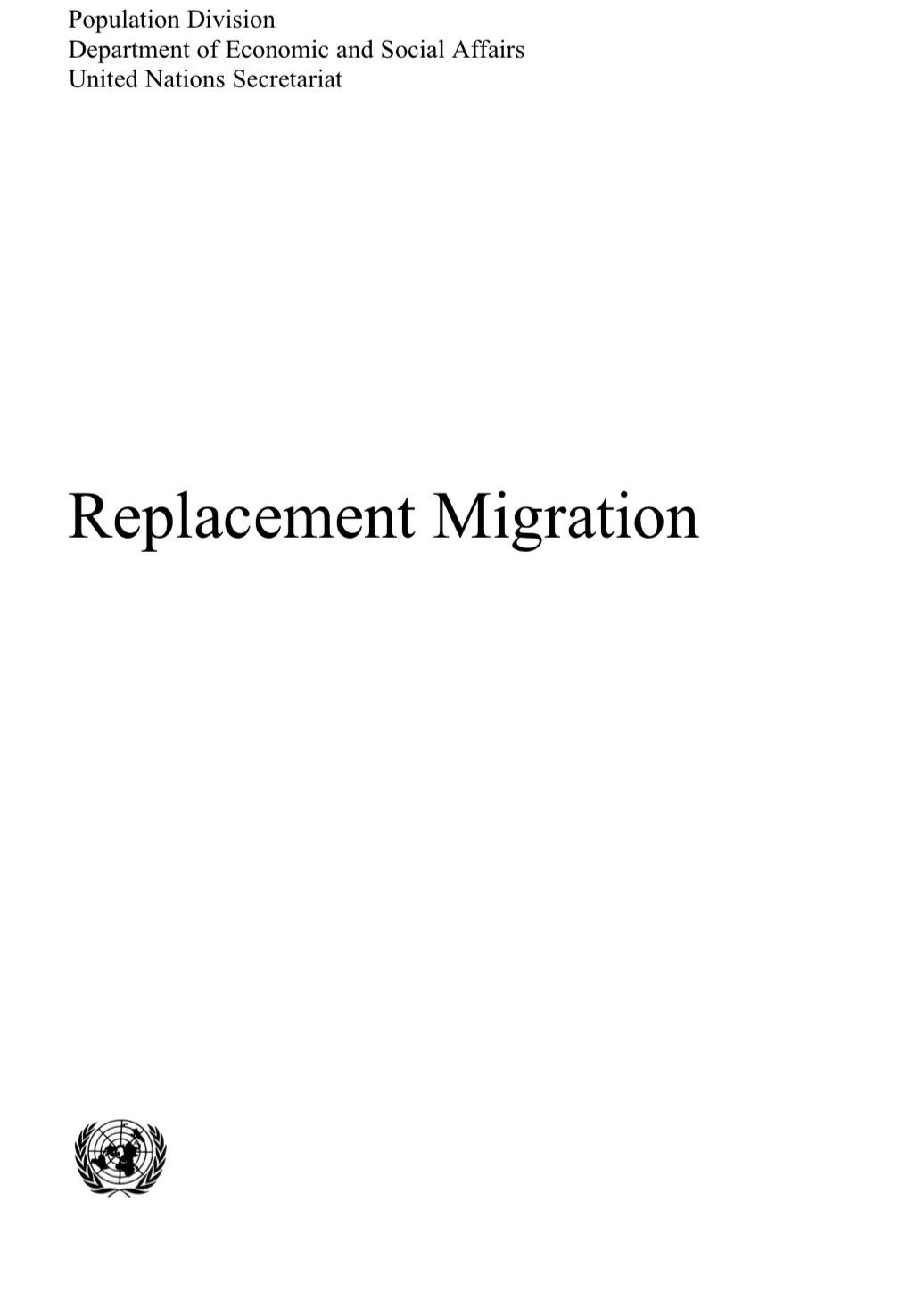
Devised and supported by unelected bureaucrats at the UN.
A 2000 United Nations report already discussed “replacement migration” as a possible way to offset aging populations and pressure on pension systems in Western countries.
So no, the idea that migration has long been viewed by policymakers as an economic and demographic tool is not some “far-right conspiracy theory.” It was openly discussed at institutional level decades ago.
That said, the report did not speak about a secret “population replacement plan,” as is sometimes claimed online. It mainly explored whether immigration could compensate for shrinking workforces and aging societies.
👉🏽 Interesting that Japan has more strategic petroleum reserves than all of Europe combined. - Lyn Alden
on the 24th of April:
👉🏽German industrial production is now 24% below its (former) long-term trend. The ‘Great Reset’ is destroying the country’s economic strength.
https://cdn.azzamo.media/b6dda043bb0402bc67fddc6844bdfeca3e2a09fdff175a2815bfc165e4d4f92a
Former Chancellor Angela Merkel announced the shutdown of all German nuclear power plants in 2011 following a tsunami in Japan. 15 years later, a clear majority of Germans realize it was a mistake. Other sources of electricity, such as natural gas, are in short supply due to sanctions against Russia and LNG blockades in the Middle East. Wind and solar have proven unreliable, forcing Germany to rely on France’s nuclear power plants to maintain a stable electric grid. Electricity prices in Germany are 2 to 3 times higher than in the USA, forcing German manufacturers to close plants and move production to other countries. Lousy policy has consequences.
Germany is in the deepest structural crisis since WWII. The industrial implosion is masked by debt-financed government job creation. Germany urgently needs structural reforms and lower taxes, yet the left in the government demands the exact opposite. Is there any hope for change?
One more time:
https://cdn.azzamo.media/c0ae18a4c0125bce206c9dd9bcdd28f9221e2fcda206e925d24965e8817731cb
Rob Roos: “Look, Netherlands, the Germans went ahead of us with the ideological “Green Growth”. The only things that are growing are dependency, taxes, and concerns. Only when we make money can we invest in a better future. But industry is relocating to places outside Europe where regulations are less strict, and the planet is not helped in the least. Facts that everyone can feel and see.”
More on that below…
👉🏽Jeroen Blokland: “How is it actually going? The electricity grid around Utrecht will be completely shut down as of July 1. Private households, businesses, it doesn’t matter: you won’t get an electricity connection anymore. This affects as many as 800,000 people.
Water company Vitens is warning of a drinking water shortage. The cause behind both of these essential life services—and that’s exactly what they are—is a lack of infrastructure. If a solution is found at all, it won’t be before 2031. So that’s five years from now. I have previously written about the quality of education and the fact that hundreds of thousands of people cannot reach a hospital in time in case of an emergency.
In The Hague, they already know the solution: higher taxes. You can safely assume that if you, for whatever valid reason, use more than 100 liters of water, you will soon receive an additional tax assessment. If you are critical in the Netherlands, you are dismissed as a killjoy, agitator, or far-right (whatever that is supposed to mean). But healthcare, education, safety, and also electricity and water are essential aspects that can easily destabilize a society.
The Dutch government must immediately stop unrealistic climate targets (how is your energy bill doing?), suffocating bureaucracy, countless pointless public expenditures, and (mass) immigration. In the Netherlands, a policymaker proposes a completely distorted rule or law that is never reversed but is instead structurally adjusted with even more distorted rules and laws: more rules and laws, less effectiveness, but many more civil servants.
On climate: look around at what is happening. Sustainability is good; we should continue with it, but in a realistic way and not at any cost. Companies are being destroyed, losing competitiveness due to absurd (climate) regulations, and are now also unable to get electricity. But let’s tax them more heavily. Immigration can be a positive, as long as you keep the overall picture of society in view. What is the point of bringing people here if you cannot provide them with housing, electricity, and water? And what do you think it does to people when some are prioritized, and others are therefore left without housing, electricity, and water?
The cliché of “we have it so good here” is not enough. Not because it isn’t true: many things in the Netherlands are still very good, but that attitude encourages passivity. In reality, things are already less good than before, and if we do nothing about it, it will truly become less pleasant. Dutch politicians, increasingly influenced by “Europe,” have become completely detached from the Dutch population, but are also simply unable to set priorities. Electricity and energy should be high on that priority list. Health, education, and safety as well. Taxing people for necessities is the result of particularly poor policy.
👉🏽If EU heavyweight Ursula von der Leyen gets her way, net contributor the Netherlands would have to transfer up to €5.5 billion extra per year to Brussels. The contribution already costs us €10 billion annually. So an extra 50% per person going to the EU? Diabolical!
https://cdn.azzamo.media/405c52dedb15dda2e4ccc5378e40c04768d8bed1a15cd337fdbc2cc2e5590019
The Netherlands pays significantly more than France and has only a fraction in return. The same applies to several other countries. The idea that the EU is looking at our savings stems from jealousy. We saved. They spent. That is why we are being made poorer step by step. Here lies the Achilles heel of the EU: no economically sound perspective due to too many hands in the EU budget.
I will repeat it one more time. Wealth taxes designed to go after billionaires never work. The billionaires have the flexibility to leave or find loopholes. A wealth tax usually results in that jurisdiction bringing in LESS tax revenue, not more.
👉🏽In 2024, there were 518,000 first-time entrants to the housing market. Broken down by category, it looks like this: Immigrants: 288,222 (55.6%) People living with parents: 189,201 (36.7%) Other household members: 25,711 (8.1%) Institutional households: 22,366 (7%)
Just let that sink in.
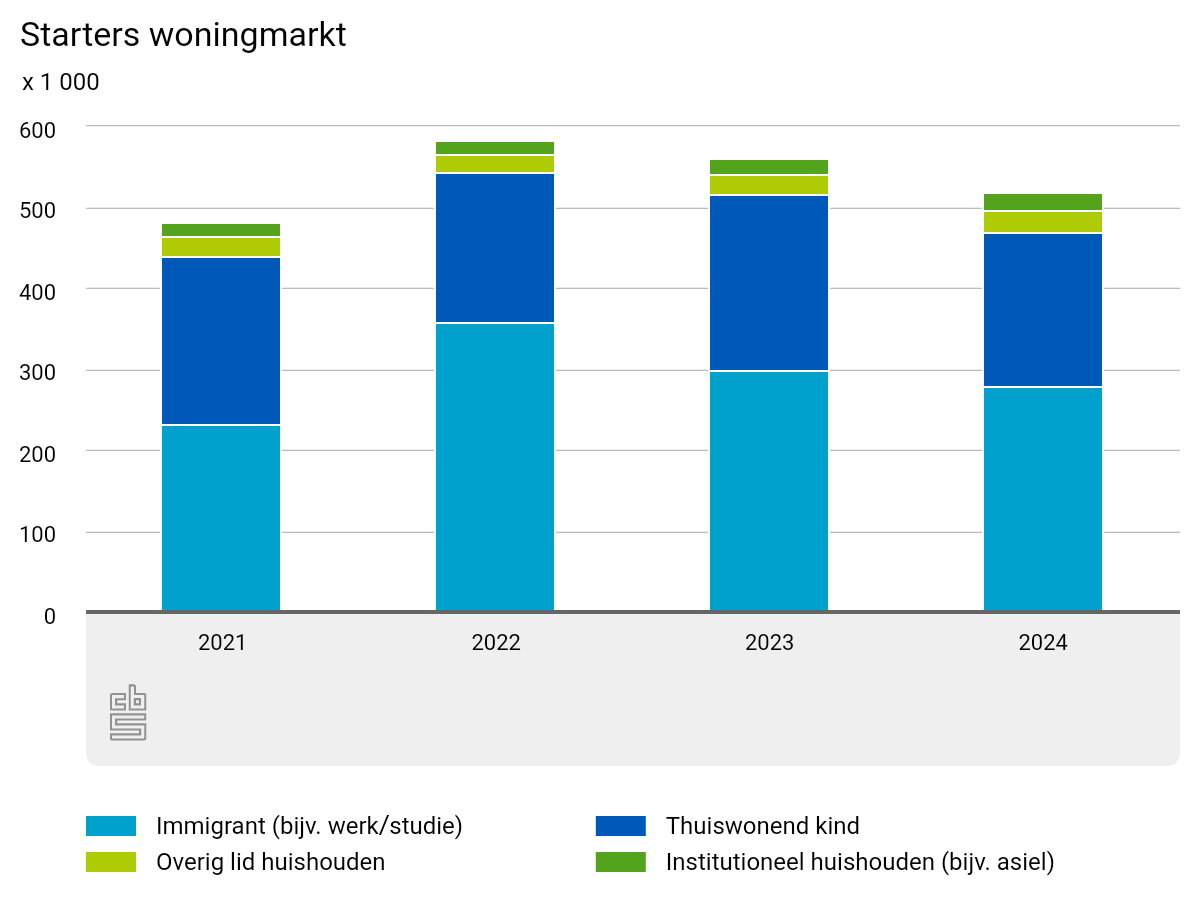
Source: CBS Minder starters op woningmarkt; 25- tot 35-jarigen wonen vaker thuis | CBS
👉🏽How is it legal to make $10k/month and lose nearly 50% to taxes? Europe is finished.
https://cdn.azzamo.media/bb28540866198901ea33e2a806b446c04bf791e4211d1c3323101ddba71bf354
Meanwhile, in the Netherlands: The idea behind the national savings campaign “Pay Yourself First” by Stichting Financieel Gezond Nederland and platform Wijzer in geldzaken is to immediately save money for a financial buffer as soon as you receive your salary. Honorary chair Queen Máxima attended the launch.’ - Dutch Royal House
Good advice — if you actually have anything left to save after income tax, VAT, excise duties, property tax, energy taxes, Box 3 taxes, and Inflation. In reality, it’s mainly The Hague that gets paid first.
👉🏽Jamie Dimon, CEO of JPMorgan Chase, says that U.S. Government raising taxes doesn’t do anything to help the average American He says raising taxes does nothing because Congress launders the money to their friends, special interest groups and “17,000 lobbying groups” “I don’t know anyone, and you guys in the room, you might be Democrats, Republicans who thinks that sending another trillion dollars to Washington D.C will actually improve anything. So when you say raise taxes, if you said raise taxes and directly give it to the people who need it, do it. That does not happen. It goes to all these interest groups, and they give it to their friends and all that.” “Which is why the people are considered a swamp. It’s a swamp, the 17,000 lobbying groups. But bank companies are guilty too. They’re just fighting for their own self-interest as opposed to what’s good for my country”.
‘The bankster’s finally admitting what insiders have always known. Dimon’s not confessing; he’s distracting. He knows the fix is in: tax money doesn’t help you because it was never meant to. It feeds a machine of graft, lobbyist kickbacks, and war budgets. Raising taxes pours more fuel on that fire while the elite laugh behind closed doors.’ - BunnyCrumbs
👉🏽The new pension law is truly turning out to be a very bad deal. Pensioners can forget about indexation in the coming years, and that after 15 years of keeping a tight grip on spending and a 30% loss in purchasing power. You are being stripped bare in plain sight. Thanks to the entire political center.
👉🏽Germany just released 2025 crime data. Overall, Algerian nationals commit crimes at 18x the rate of Germans and nearly 100x the rate of Japanese nationals. Let that sink in. And while it’s sinking, Germany is debating whether pointing this out is the real problem.
https://cdn.azzamo.media/2c6facf743d83e4de9a274753669c54d6763a6fde5e8ad0a98015ce05a481255
Click here for more stats. (19) Smirkley op X: ’Germany just released 2025 crime data. Overall, Algerian nationals commit crime at 18x the rate of Germans and nearly 100x the rate of Japanese nationals. 1/11 https://t.co/iRXG4wLkys' / X
For example, Murder 2025, Manslaughter & Rape & Sexual assault in Germany in 2025.
Ergo: This is fantastic data. African and Arabs commit all kinds of crimes, including rape, murder, etc. Eastern Europeans commit more non-violent crimes like burglary, shoplifting.
2025 German Crime Statistics by Nationality. These figures are based on official 2025 German police data and the rates calculated using 2024 official resident data. Notes: Doesn’t include illegal aliens in the base rate (illegal immigrants), only registered residents. This can skew the rates. Breakdown is by nationality (current citizenship), not ethnicity or country of birth. German nationals include migrants who have German citizenship and their children.
But hey, there is no link between immigration and crime, right? This German data shows Japanese nationals at just 0.19x the local crime rate, even after adjusting for population and excluding immigration offenses. Its culture: strong social norms, respect for order, and personal responsibility. When people ask what “assimilation” looks like in practice, this is it.
👉🏽Merlijn the Trader: ‘Weeks ago, we started tracking a whale. 11 oil trades. 11 wins. Perfect timing. Every time. BBC validated it. White House denied it. Now, a reporter asked Trump directly. “Are you concerned about insider trading?” Trump: “The world is a casino. It is what it is.” Trade on a tip from your friend—federal prison. Front-run a war decision with $17 million. No consequences. The President just told you the rules don’t apply to everyone. The game is rigged. He just confirmed it.’
👉🏽The Fed has quietly started Quantitative Easing (digital money printing) again. They were reducing the Fed’s balance sheet from the peak of $9 trillion. It got down to $6.535 trillion in December 2025. Today it is $6.707 trillion—an increase of $172 billion in 4 months.
👉🏽On Oct 13, 2025, Italian journalist Gabriele Nunziati asked EU chief spokesperson Paula Pinho:
“You’ve said Russia should pay for Ukraine’s reconstruction. Do you believe Israel should pay for Gaza’s reconstruction, since it destroyed almost all the Strip and its civilian infrastructure?”
Pinho replied: “It’s definitely an interesting question on which I have no comment at this stage.”
Two weeks later (Oct 27), Agenzia Nova fired Nunziati, calling the question “technically incorrect” and “out of place.”
EU Commission: No involvement. Journalist unions condemned the dismissal as a threat to press freedom. Apparently, this is the freedom of the press and of journalism in Europe these days. Charlie Kirk: You better keep asking questions, cause it’s the only thing that keeps us free.
👉🏽Carlo van de Weijer, mobility/transportation expert, over the proposed €49 train subscription from Progressief Nederland: “A sympathetic idea, but it will achieve very little. They have tried it abroad many times. Every time, the result is the same: people travel more, which makes it look like a success, but you never see significantly fewer cars on the road. The climate does not benefit from more travel.” The criticism is mainly based on experiences with Germany’s €9 and later €49 “Deutschlandticket.” Studies and evaluations showed that public transport use increased substantially, but the reduction in car usage was limited. Critics also argue that cheaper public transport mainly attracts: existing train travelers, people making extra leisure trips, and urban residents who already use public transport relatively often, rather than convincing large numbers of motorists to abandon their cars. Supporters counter that affordable public transport can still reduce financial pressure, improve accessibility, and make train travel more attractive in the long term — especially if service quality improves at the same time.
👉🏽Macron just admitted Europe’s greatest skill was killing itself. 80 years of peace later, they built a whole institution to stop doing what they were good at. Somehow, that institution is now destroying Europe from within
French President Macron: We were the continent whose expertise was civil war. I mean, for centuries, we’ve had civil wars. The initial project was a peace-and-prosperity project—and we delivered. No more civil wars among Europeans.’
Macron is upset that Europe is falling behind in critical areas of technology and energy security. Europe has chosen more regulation, higher taxes, and open borders. Until that changes, the incentives in Europe won’t change.
We need to stop this mass immigration fanaticism from the EU. Ursula von der Leyen, a mass-immigration ideologue, leads the EU Commission. During the refugee crisis in Germany, she was an important person in the Merkel government, and said that Germany would “lose its soul” if it didn’t let in the migrants. Letting in a million migrants turned out to be a disaster for Germany, which Ursula von der Leyen has never admitted. But now she has moved on to be President of the European Commission, where she pushes programs that will lead to further mass immigration from Middle Eastern and Southeast Asian countries. - Jonatan Pallesen
On the 25th of April:
👉🏽Rep. Anna Paulina Luna says it’s “statistically not possible” for Nancy Pelosi to outperform billionaire Warren Buffett in the stock market without insider information. ‘Bye Nancy Pelosi’ - Annual salary $174,000 - Net worth $300 million Nancy Pelosi’s stock portfolio gained an estimated 17,000% since joining Congress, surpassing $290 million. Cantillon effect.
👉🏽Justin Trudeau: The wealthy of the world need to “step up” and limit their wealth intake. He charges $100k for speaking.
Socialism and hypocrisy are two things I really hate. The virtue signaling & hypocrisy are still strong with this one.
Just like Pelosi (and the majority of politicians), wait until you see his net worth from when he was first elected to when he finished.
When the people calling for less wealth concentration earn six figures per speech to people who own everything, the system isn’t broken. It’s working as designed.
👉🏽Belgium: Even in a relatively favorable interest-rate scenario, the interest costs on government debt will continue to rise in the coming years. By 2031, this will amount to 2% of GDP above the low point in 2022. In today’s euros, that translates into an additional €13 billion in annual interest expenses.
👉🏽I have shared the following numerous times, with data, but the truth is that migrants aren’t the problem. The main problem is the economic policy and, therefore, also the demographic policy in Europe. The real problem will be in 10 -30 years. Why, it is all about demographics. You already see it happening in small numbers in France and in the UK.
The following statement by WallStreetMav is a tad exaggerated, but the core thesis is clear and true.
“Europeans don’t have children because they can’t afford to raise them. Muslims in Europe have lots of children because Europeans give them subsidies that are luxurious relative to where they came from. Europeans are being taxed to pay for Muslims outbreeding them.”
Europe’s demographic crisis is real. Most European countries are far below the replacement birth rate of 2.1 children per woman, with EU averages around 1.4–1.6. An aging population, rising pension pressure, and shrinking workforces are becoming structural problems. At the same time, research consistently shows that Muslim and immigrant fertility rates in Europe are generally higher than native European averages. A major study covering 25 European countries found Muslim fertility rates were roughly 47% higher than national averages: Study: Fertility Patterns of Native and Migrant Muslims in Europe
Pew Research also found Muslim women in Europe averaged around 2.6 children versus roughly 1.6 for non-Muslims during the studied period: Pew Research: Europe’s Growing Muslim Population
The difficult political question is not whether demographic change is happening — it clearly is. The real debate is: Why are Europeans having fewer children, while migration continues to rise? Economic pressure plays a role: housing, childcare, taxes, and economic insecurity matter. But culture matters too: delayed family formation, secularization, urbanization, and changing priorities all contribute to falling birth rates.
One of Europe’s biggest political weaknesses is that too many policymakers focus almost exclusively on short-term moral intentions, without seriously accounting for the long-term economic and societal consequences.
Wanting to help people is not the problem. Ignoring sustainability is. For years, many political leaders — especially on the progressive side — approached migration primarily from a humanitarian perspective, while underestimating the pressure it can place on housing, infrastructure, healthcare, education, policing, energy systems, and social cohesion when numbers become too large relative to integration capacity. That does not mean migrants are “the problem.” That is an oversimplification. But pretending there are no long-term consequences from rapid demographic change is equally detached from reality.
What is often ignored is that demographic policy is economic policy.
A society that becomes too expensive for young families eventually imports labor and population growth from elsewhere.
A society that ignores middle- and long-term economic and social consequences eventually creates instability — regardless of how well-intentioned the original policies were.
👉🏽Foreign holdings of U.S. Treasuries surged +$200 billion in February, to a record $9.49 trillion. Of that total, $7.76 trillion, or 84%, consists of long-term Treasury securities, with the remainder held in short-term Treasury bills. Over the last 12 months, holdings have risen by +$587 billion.
Japan, the largest foreign holder, raised its stockpile by +$14 billion, to $1.24 trillion, the highest since February 2022. This marks Japan’s 13th consecutive monthly purchase in the last 14 months, as Japanese institutions continue to chase higher yields overseas. The UK, the 2nd-largest holder, posted a +$17 billion increase, to $897 billion, the 2nd-highest on record.
China, the 3rd-largest owner, trimmed its stockpile by -$1 billion, to $693 billion. Foreign demand for U.S. debt remains strong. - TKL
https://cdn.azzamo.media/eb007ba727741be939ec8c0d6ad4399b77a53833a7dae9df3f7b312c9dad2d8d
👉🏽Eric Basmajian: Rate hikes are supposed to push corporate interest expense higher. Not this cycle. Net interest expense fell to 1.2% of GVA—the lowest in 60+ years.
https://cdn.azzamo.media/f63674f0d99f1c9559d041b6d68a91e7d5f7b6f6d2e45e4c0645a9a18280ca2e
Lyn Alden: ‘This is partially a symptom of fiscal dominance. Rate hikes pushed up federal interest expense rather than corporate interest expense.’
👉🏽Syrians living in Germany reportedly sent their genuine German residence permits back to Syria. There, the documents were allegedly handed to similar-looking Syrians so they could illegally enter Germany or the Schengen Area. Source: Focus the article on the German investigation
Honestly, Europe has become completely detached from reality when it comes to migration enforcement. And once again: this is primarily a systems problem, not simply “a people problem.” That distinction matters. If you build a system with weak controls, inconsistent enforcement, overloaded asylum structures, limited deportation capacity, and enormous incentives for document fraud and human smuggling, then abuse becomes inevitable. This is also not an isolated German issue. The Dutch Royal Marechaussee has been reporting historically high levels of identity and document fraud at the borders for several years now. Syrians are heavily represented in the registered fraud cases. That does not mean that “migrants are the problem,” but it does show that large-scale migration systems with weak control mechanisms predictably lead to more fraud, human smuggling, and a loss of public trust.
There have also been reports and investigations into residency permit fraud, forged documents, and failures to investigate fraud signals within the Dutch immigration system properly:
A serious society should be capable of saying two things at the same time: Most migrants are not criminals. Large-scale migration systems with weak enforcement inevitably attract fraud, abuse, organized crime, and political backlash. And then people act surprised when parties like Alternative for Germany continue growing in Germany. You do not stop populism by pretending problems do not exist. You stop it by enforcing laws, controlling borders, reducing systemic abuse, and restoring public trust.
Regarding the AfD
👉🏽WallStreetMav: The Alternative for Germany (AfD) is polling at their highest level ever, 28%, bigger than any other political party in Germany. The AfD is the only party in Germany that wants mass deportations. Chancellor Merz’s CDU party has fallen to 24%. He is launching attacks on AfD and is terrified about the regional elections, which show AfD winning 40% in some areas of Germany. The AfD is becoming so popular that other parties will have difficulty forming a coherent coalition to keep it out of power. The CDU, which is considered ‘centrist’, would need to be in a coalition with the Green Party and SPD. The Green Party is basically a communist anti-civilization group of crazies. The CDU and the Green party have zero issues in common for a coalition government.’
https://cdn.azzamo.media/5fd46b93ffbdab9c12a556ffeace26fb9bc886480cf5314ccd3ccc065284d204
Not sure if I am calling CDU ‘centrist’, to me, they moved to the left. Again, people act surprised when parties like Alternative for Germany continue growing in Germany.
👉🏽The Dutch news increasingly talks about water scarcity and citizens needing to reduce daily water usage from roughly 120 liters to 100 liters per person. At the same time, hyperscale datacenters consume enormous amounts of water for cooling, while industry and energy production remain by far the largest users of freshwater in the Netherlands. According to Dutch water company Vitens, concerns about drinking water availability have increased significantly in recent years due to population growth, climate pressure, rising industrial demand, and infrastructure limitations. What makes this debate striking is that in 2018, Vitens still publicly stated that the Netherlands “did not need to worry about water supply” because groundwater and surface water sources were continuously replenished. Today, the tone is completely different.
https://cdn.azzamo.media/d5514919a9e72fcb96560e55a86168f82cd02ca778d971a4afa303a88cc5727f
That does not necessarily mean the Netherlands is literally “running out of water.” Still, it does show how quickly long-term assumptions can change when demand rises faster than infrastructure, storage capacity, and policy adaptation. The deeper issue is broader than water alone: Europe is increasingly struggling with long-term planning for infrastructure, energy, housing, population growth, and industrial policy. And when governments fail to scale infrastructure in time, the burden eventually shifts to citizens through restrictions, higher prices, taxes, and behavioral campaigns. Sources: Vitens – Archived discussion on Dutch water supply
Dutch government – Water use and freshwater statistics
https://cdn.azzamo.media/995aa03495a79a2c343a0560797269b86eed55a4cdefa6dc4acff9b5b5c8e5c9
👉🏽Police-recorded rape offenses in England & Wales rose from roughly 8,000 cases around 2000 to more than 74,000 by the end of 2025. That is an extraordinary increase. Official UK statistics confirm the rise: ONS – Crime in England and Wales (Year Ending December 2025) At the same time, the Office for National Statistics also warns that police-recorded sexual offenses are not a perfect long-term trend indicator because reporting rates, legal definitions, and recording practices have changed significantly over the years. So no, the data does not automatically prove that actual rape incidents increased ninefold in reality. But dismissing the trend entirely would also be intellectually dishonest. Even after accounting for better reporting and registration, England and Wales clearly face a serious societal and criminal justice problem regarding sexual violence and public safety. Many people immediately try to reduce the discussion to race or religion. Reality is more complicated. There have been documented cases and investigations in the UK where certain migrant-origin groups were statistically overrepresented in specific organized sexual exploitation scandals, particularly grooming gang cases. Authorities were also criticized for avoiding discussions around ethnicity out of political sensitivity. At the same time, there is no complete national dataset proving that one racial or ethnic explanation alone accounts for the broader rise in rape statistics across the UK. Source: ONS – Ethnicity and sexual offense data limitations
The deeper issue is broader: Western societies increasingly struggle with social cohesion, integration, policing capacity, family instability, trust in institutions, and political unwillingness to address uncomfortable topics honestly. Denying problems fuels polarization. Oversimplifying them fuels extremism. Neither helps solve the issue.
https://cdn.azzamo.media/5b057933c478922ef6071c13b50519e13b933b87159409c71358997e3d5aa1a6
👉🏽The Netherlands: In 10 years, electricity consumption in Utrecht rose by about 1%, by 2% in Gelderland, and by 14% in Flevoland (according to Klimaatmonitor). At the same time, network congestion and infrastructure costs have increased sharply, leading to delays in housing projects, grid connection limits, and growing pressure on the system. This creates a paradox: low overall consumption growth on paper, but rapidly rising stress on the electricity grid in practice. The explanation lies not only in total demand, but in structural changes in the system: electrification of transport and heating, increased peak loads, decentralized solar production, and a grid not originally designed for this usage pattern. As a result, investment in capacity is lagging behind the changing shape of demand. This tension was already noted decades ago in Dutch political debate, often summarized as the risk of capacity lagging behind demand — though the exact attribution varies by source. The core question is therefore not simply “how much electricity are we using,” but whether the infrastructure is adapting fast enough to how we are using it. When that alignment fails, constraints appear even in the absence of strong overall growth.
https://cdn.azzamo.media/1ef5b236cfe0fc2625f31ef63fc3781f2142ffb282469284a3ae368998ff707e
In Utrecht, a power shutdown is expected due to an overloaded electricity grid. Professor David Smeulders has his own view on this. “If you run a bakery and want to make it more sustainable, just keep those gas ovens for a while, it will still take 7 years before electric ovens are available. According to Smeulders, we have been overly optimistic for too long and now really need to be warned: ‘After the power shutdown, the next thing that could go wrong is a blackout.’”
On the 27th of April:
👉🏽Michael A. Arouet: This chart helps explain why the German economy is falling apart. Instead of starting small businesses, Germans prefer to “work” for the government. A nation cannot stay prosperous with such a mindset. Only entrepreneurialism and free markets create prosperity, not the state.
https://cdn.azzamo.media/e342c7e0ae6a7288123d67cdfc6bee6d575ef6c61cddd312974ad94911efd17f
On the 28th of April:
👉🏽Amid an energy crisis and warnings of stagflation, @EmmanuelMacron has renewed calls for Eurobonds, or EU joint debt. Lex Hoogduin: “No need for even more debt in the EU and for a ‘way out’ for countries like France and Belgium to avoid getting their public finances in order.”
👉🏽Italy is expected to overtake Greece next year as the EU country with the highest debt-to-GDP ratio. While Greece’s debt ratio is declining rapidly thanks to economic growth and improved fiscal discipline, Italy’s public debt burden continues to rise. That is remarkable, considering that Greece long stood as the symbol of the European debt crisis. Attention is now increasingly shifting toward Italy: a much larger economy struggling with structurally low growth, rising interest costs, and limited fiscal flexibility. The government of Giorgia Meloni is also failing to meet its own budget targets, even as financial markets remain relatively calm for now. That last point is important: within the eurozone, sovereign debt risks are still partially cushioned by the European Central Bank’s support mechanisms. The key question is therefore not only how high Italy’s debt ratio will rise, but how long markets will remain willing to finance it in an environment of structurally higher interest rates and weak economic growth. Source: Financial Times / FD article on Italy missing budget targets
👉🏽The European Parliament is pushing for a €2.2 trillion EU budget for 2028–2034 — roughly 10% higher than the European Commission’s proposal. Critics argue that Brussels continues to expand spending while already funding controversial NGO programs and increasing fiscal centralization across the EU. Supporters counter that Europe faces rising costs in defense, energy, infrastructure, and geopolitical competition. The debate is no longer whether the EU budget will grow, but how far fiscal integration inside the bloc will ultimately go. Source: De Telegraaf article on proposed EU budget increase
Rob Jetten said just last week that Democraten 66 is critical of the growing flow of money toward Brussels. Yet today, the D66 faction in the European Parliament voted in favor of increasing the EU’s multiannual budget toward €2.2 trillion. Once again, it highlights the often significant gap between national political messaging and voting behavior in Brussels. Sources: De Telegraaf article on the proposed €2.2 trillion EU budget D66 official website / Rob Jetten statements on EU finances
👉🏽This is simply unreal. No wonder the UK is heading into a debt crisis. The UK doesn’t need higher taxes; it needs pro-business policies to stop entrepreneurs leaving and get people back to work, rather than living on welfare without work requirements. What needs to happen? - Michael A. Arouet
https://cdn.azzamo.media/e32d0fd2fdbe84eda5d588569caa5b4e5e10013eabe5a9dd2a82ed277b2dc2b6
👉🏽The UAE announces it will be leaving OPEC effective May 1st. This will officially end the UAE’s 59-year membership in the organization. The Iran War is redefining the global energy industry forever. - TKL
👉🏽 China just warned the EU: back off the “Made in Europe” plan. The EU wants to rebuild its manufacturing base. Industrial Accelerator Act: 70%+ European components for EVs. Low-carbon steel quotas. Aluminum requirements. Local content rules. The EU is trying to break free from its reliance on Chinese supply chains. China is threatening economic consequences. The trade war just opened a second front.
I think that is a good thing. Establishing local control is vital for Europe’s long-term economic sovereignty. It’s a massive transition, but the focus is on long-term resilience. The only question is… is Europe committing economic suicide?
🎁If you have made it this far, I would like to give you a little gift:
What Bitcoin Did -The Biggest Lie in Economics | Allen Farrington & Sacha Meyers “If your system can’t survive without Inflation, the problem isn’t deflation.” Allen Farrington and Sacha Meyers return to the show to break down one of the most misunderstood ideas in economics: deflation. Allen & Sacha are the authors of Bitcoin is Venice. In this episode, they get into their latest essay, “Number Go Down,” where they challenge the core assumptions of modern macroeconomics. They argue that the idea that Inflation is necessary for a healthy economy is not grounded in reality, but in flawed models, bad incentives, and a fundamental misunderstanding of how growth actually happens. They get into why the 2% Inflation target is arbitrary, how Keynesian economics confuses credit collapse with true deflation, and why falling prices driven by innovation might actually be the most important signal of a functioning economy. They also explore the paradox of thrift, malinvestment, and why distorted price signals lead to systemic fragility. Allen and Sacha explain why saving is the foundation of real growth, how deflation can drive investment rather than kill it, and why trying to “manage” the economy through measurement and intervention is fundamentally misguided. They also get into debt, why Inflation acts as a hidden bailout mechanism, and what a world built on sound money might actually look like.
Click here: https://youtu.be/wmzIipG5Tu4
Credit: I have used multiple sources!
My savings account: Bitcoin. The tool I recommend for setting up a Bitcoin savings plan is PocketBitcoin, especially suited for beginners or people who want to invest in Bitcoin with an automated investment plan once a week or monthly. (from now on, full KYC, so be aware)
Use the code SE3997
Get your Bitcoin out of exchanges. Save them on a hardware wallet, run your own node…be your own bank. Not your keys, not your coins. It’s that simple. ⠀ ⠀ ⠀⠀ ⠀ ⠀⠀⠀ Is this post helpful to you? If so, please share it and support my work with a zap. ▃▃▃▃▃▃▃▃▃▃▃▃▃▃▃▃▃▃ ⭐ Many thanks⭐ Felipe - Bitcoin Friday! ▃▃▃▃▃▃▃▃▃▃▃▃▃▃▃▃▃▃
Write a comment