Financial Freedom Report #122

- SUBSCRIBE HERE
- GLOBAL NEWS
- RECOMMENDED CONTENT
- BITCOIN AND FREEDOM TECH NEWS
- BITCOIN RECOMMENDED CONTENT
Welcome to this week’s Financial Freedom Report.
In North Korea, officials summoned more than 30 software developers to Pyongyang for what was presented as a technical training session, only to publicly reprimand them for building unauthorized software. In targeting developers, North Korea is trying to thwart the creation of independent tools that could help citizens communicate, organize, or access information that contradicts regime propaganda.
In Bitcoin news, Tando announced that Kenyan phone numbers now work as Bitcoin Lightning Addresses. That means someone abroad can send bitcoin to a Kenyan phone number, and the recipient can receive Kenyan shillings through M-Pesa or claim the address to receive bitcoin directly. The feature brings Bitcoin into a system millions of Kenyans already use, turning ordinary phone numbers into a bridge between global, open money and local mobile payments.
We include the latest episode of the HRF x PubKey Freedom Tech Series featuring Félix Maradiaga, a former Nicaraguan opposition leader and current President of the World Liberty Congress. In a fireside chat with Jhannisse Vaca Daza, director of the Freedom Fellowship program at HRF, Maradiaga discussed peacefully resisting the dictatorship of Daniel Ortega and Rosario Murillo, and how activists use Bitcoin and freedom tech to support their work.
SUBSCRIBE HERE
GLOBAL NEWS
North Korea | Crackdown on “Unauthorized” Software Development
In mid-April, North Korean officials invited more than 30 software developers to Pyongyang for what it called a technical training session, only to criticize the developers for developing software beyond what the state had authorized. They reviewed how the developers’ programs had been built, used, and distributed, and raised 11 points of criticism — aiming to intimidate developers and reassert state oversight over any software outside approved channels.
In context: The freedom to write and distribute code is central to financial freedom, and can provide vital access to information that makes it essential for democracy. Open and independent code can help people communicate, share information, organize, and access financial tools beyond state reach. For a fully authoritarian regime built on surveillance, isolation, and informational control, unauthorized software becomes a threat.
Thailand | Cash Handout Expands State Digital Payments
Thailand’s regime approved the “Thai Help Thai Plus” scheme, a 175 billion baht relief program covering more than 43 million people. State welfare cardholders will receive 1,000 baht per month automatically, while 30 million others can register through the Pao Tang app for a 60/40 co-payment benefit worth up to 4,000 baht over four months. The funds can only be used at participating merchants between 6 am and 11 pm through the state-linked wallet app, and cash withdrawals are prohibited. The program may help households facing surging fuel and living costs, but it also deepens reliance on government-controlled digital payment infrastructure. When economic relief is tied to identification, apps, spending rules, and approved merchants, support can quickly become another layer of state control.
Ethiopia | Binance Suspends P2P Trading of Birr
Binance, a major digital asset exchange, suspended trading of the Ethiopian birr, sparking criticism from local peer-to-peer (P2P) users. Many relied on P2P to access foreign currency and receive remittances. Binance proved a useful tool after the Ethiopian government froze the bank accounts of individuals conducting foreign currency exchanges outside of the banking system and devalued the birr to meet international loan obligations. The suspension also exposes an inherent flaw of centralized exchanges like Binance. While they can expand financial access, that access can disappear overnight. For those facing financial controls at the behest of a fully authoritarian regime, dependence on a centralized platform creates fragility. Bitcoin’s deeper promise is the ability to hold and transfer value through open, peer-to-peer systems that no corporation or regime can delist.
Democratic Republic of Congo | Suppression of Free Expression
Human Rights Watch has reported that Congolese officials are increasingly harassing, arresting, and detaining journalists, activists, protesters, and opposition members. The escalation comes as the current president, Félix Tshisekedi, floats possible constitutional changes that could allow him to remain in power beyond the current two-term limit. Police have violently cracked down on anti-amendment protesters, and two journalists went into hiding after reporting critically on the amendments. Civil society figures and everyday people have also been punished for peaceful protests over the state’s failure to provide basic services like water, electricity, and security. The DRC has previously used financial repression to limit citizens’ autonomy, including forcing electronic payments in Congolese francs and moving toward a ban on cash transactions in US dollars and other foreign currencies.
In context: Under pressure from the conflict with Rwandan-backed M23 rebels in the east, officials have accused critics of colluding with armed groups, narrowing space for dissent.
Russia | VPN Block Leads to Declining Online Activity
In April, the Kremlin pressured some of the country’s largest online marketplaces — including e-commerce platforms Ozon and Yandex Market and classifieds giant Avito — to block users accessing their services through VPNs. After the restrictions took effect, the platforms reported declines in traffic and sales, with some reportedly losing up to 10% of users and revenue drops of up to 30%. VPNs help Russians bypass censorship, protect their online privacy, and access financial freedom tools like Bitcoin. Forcing major digital platforms to restrict VPN use makes online and financial life vulnerable to state surveillance.
RECOMMENDED CONTENT
HRF x PubKey Freedom Tech Series with Félix Maradiaga
HRF and PubKey convened in New York for the latest edition of the Freedom Tech Series, hosting a fireside chat with former Nicaraguan opposition leader and World Liberty Congress President Félix Maradiaga. In conversation with HRF Freedom Fellowship Director Jhannisse Vaca Daza, Maradiaga discussed his experience resisting the dictatorship of Daniel Ortega and Rosario Murillo, leading a global network of dissidents, and how activists use Bitcoin and other freedom tech tools to defend their work.
————————————————————————————————————————
Join Us at the 18th Annual Oslo Freedom Forum
Join HRF this year at the 18th annual Oslo Freedom Forum (OFF), hosted in Oslo, Norway, from June 1–3. This year’s OFF theme of “Dismantling Dictatorship” celebrates the activists, thinkers, technologists, and artists who take tyranny apart with ingenuity, creativity, and solidarity. Together, we celebrate stories of courage and explore bold ideas to advance freedom and unleash human potential through innovative solutions. On June 2, theFreedom Tech track will explore how tools like Bitcoin, offline messaging like Bitchat, decentralized communication protocols like Nostr, and open-source AI are helping human rights defenders resist repression.
Purchase Tickets
————————————————————————————————————————
BITCOIN AND FREEDOM TECH NEWS
Tando | Kenyan Phone Numbers Become Bitcoin Lightning Addresses
Tando, a payment app that connects Bitcoin to Kenya’s M-Pesa mobile money system, announced that phone numbers in Kenya can now act as Lightning Addresses. A Lightning Address is similar to an email address, but for Bitcoin payments. Tando makes this feature work by connecting two systems behind the scenes: Bitcoin’s Lightning Network and M-Pesa, Kenya’s leading mobile money network. The new feature means someone abroad can send bitcoin to a Kenyan phone-number-based address, with the payment converted into Kenyan shillings and delivered through M-Pesa. If the recipient wants Bitcoin instead, they can claim their phone-number-based Lightning Address by linking it to their own Lightning wallet and verifying ownership through a small M-Pesa payment.
Why this matters: Tando is connecting freedom money to systems Kenyans already widely use: phone numbers and M-Pesa. It also shows a practical path for Bitcoin adoption — not necessarily replacing payment systems overnight, but linking Bitcoin to financial infrastructure people already use and understand.
Bit2Kwacha | New Bitcoin On-and Off-Ramp in Zambia
Bit2Kwacha is a new Bitcoin tool for Zambia that lets users move between Bitcoin and the Zambian kwacha using mobile money. Zambians can buy bitcoin with kwacha or sell bitcoin and receive kwacha into mobile money wallets. No account is required. The tool was built during the Lusaka Lightning Developer Bootcamp, a five-day program held in August 2025 by HRF grantee Africa Free Routing, with partners including Btrust and OpenSats.
Why this matters: Bit2Kwacha is a Bitcoin on- and off-ramp, which helps people enter or exit Bitcoin without needing a bank account. For activists, nonprofits, and ordinary Zambians, this can make Bitcoin more practical for savings, payments, and remittances in a hybrid authoritarian regime.
Obscura VPN | Android Release
Obscura VPN, a private and open-source VPN designed for maximum censorship resistance and privacy, officially launched on Android. Developed by former Bitcoin Core developer Carl Dong, Obscura cannot log users’ network activity, because it is designed to never see users’ encrypted internet traffic. This means that even under the coercion of autocratic regimes, Obscura cannot be compelled to share user data. Obscura VPN’s arrival on Android is an important step for mobile privacy and censorship resistance, especially given Android’s global dominance. It broadens access for nonprofits, dissidents, and everyday citizens who need secure and private internet access on the go.
Ibis | New Release Adds Spark, Silent Payments, and Multisignature
Ibis Wallet, an open-source, self-custodial Bitcoin wallet, released a beta update adding Spark, multisignature support, and Silent Payments. Spark gives users another option for fast, low-cost Bitcoin payments. Multisignature wallets let dissidents and nonprofits secure their bitcoin with multiple private keys, reducing the risk of loss, theft, or coercion under tyranny. Beyond speed and security, the update also improves donation privacy through the addition of Silent Payments, a Bitcoin privacy tool that lets a person or organization publish one static receiving address for donations, while each payment is received at a unique on-chain address. Ibis users will now be able to directly donate to nonprofits or activists using Silent Payment addresses, helping protect the recipient’s donation history and reducing the chance that dictators could trace their payment.
Spiral and Block | Bitcoin Security Scanning Tool Launched
Payments company Block and its Bitcoin-focused subsidiary, Spiral, announced Loupe, a new AI tool designed to scan open-source Bitcoin projects for security vulnerabilities. The tool should help maintainers of Bitcoin projects use AI to more quickly identify bugs and weaknesses. Several major projects are already participating in early testing, including Bitcoin Core and Cashu. Loupe has the potential to make advanced security tooling accessible to the open-source Bitcoin ecosystem, allowing builders to find and patch vulnerabilities with AI before attackers do — as happened in the case of the recent hack on peer-to-peer exchange Bisq.
Tether | New Bitcoin Wallet Released
Tether, the company behind USDT, the world’s largest stablecoin, announced Tether Wallet, a new self-custodial app for sending and receiving Bitcoin and USDT. Stablecoins are becoming widely used tools for savings, payments, and cross-border transfers, especially in countries facing inflation, banking instability, or capital controls. The new wallet allows users to hold and transfer Bitcoin and Tether while holding their own Bitcoin keys. The wallet also has “@tether.me” usernames, allowing people to send bitcoin without copying long wallet addresses.
In context: The wallet’s self-custodial Bitcoin design may appeal to activists, nonprofits, and dissidents who want more control over their funds. But Bitcoin and stablecoins carry very different ownership guarantees. Self-custodied Bitcoin cannot be frozen by a government or company, while self-custodied USDT can still be frozen by Tether at the protocol level. In the last month alone, Tether froze $514 million in USDT, underscoring the ownership risks associated with stablecoins.
BITCOIN RECOMMENDED CONTENT
Mostro: Building Censorship-Resistant P2P Bitcoin Trading on Nostr with Francisco Calderón
In this episode of new renaissance capital, Venezuelan developer Francisco Calderón discusses his journey from experiencing his country’s economic collapse to building Mostro, a tool for decentralized and peer-to-peer Bitcoin trading. Mostro uses the decentralized social network Nostr and Bitcoin’s Lightning Network to let people buy and sell bitcoin without relying on centralized exchanges, custodians, or accounts. The conversation explores why this matters in places like Cuba, Bolivia, and Venezuela, where financial repression, broken banking systems, and authoritarian rule make ordinary payments difficult.
If this email was forwarded to you and you enjoyed reading it, please consider subscribing to the Financial Freedom Report here.
Support the newsletter by donating bitcoin to HRF’s Financial Freedom program via BTCPay.
Want to contribute to the newsletter? Submit tips, stories, news, and ideas by emailing ffreport @ hrf.org.
The Bitcoin Development Fund (BDF) is accepting grant proposals on an ongoing basis. The Bitcoin Development Fund is looking to support Bitcoin developers, community builders, and educators. Submit proposals here.
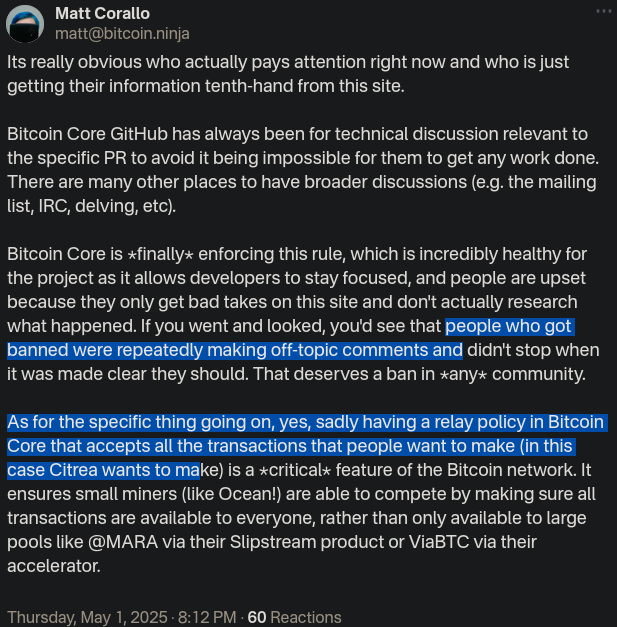
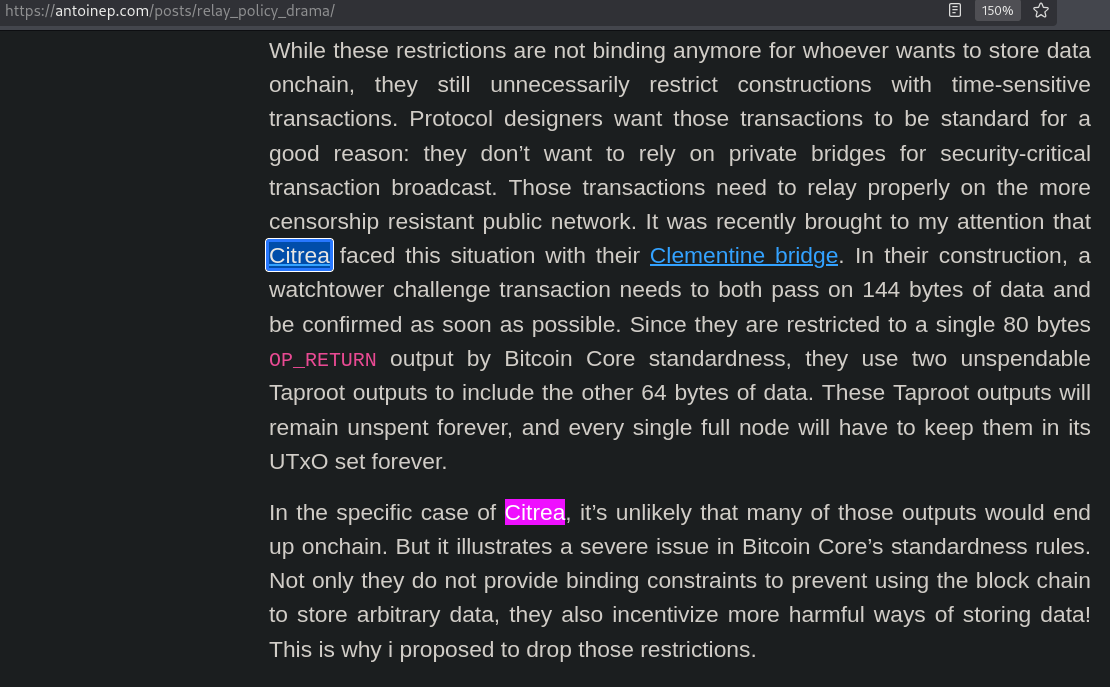
Freedom report: Citrea who are supported by compromised Core are fucking shitcoiners.
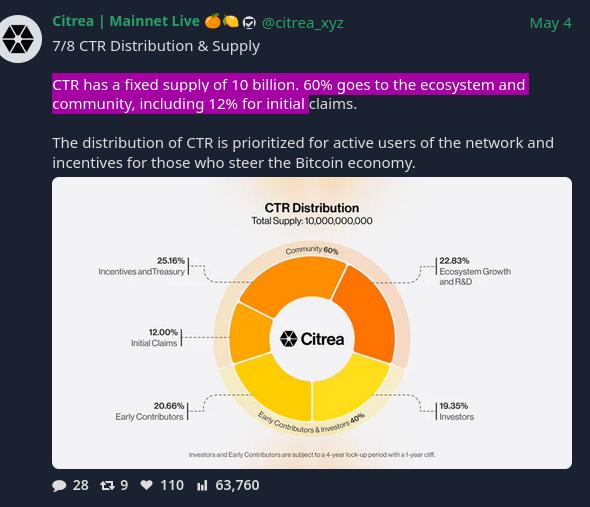
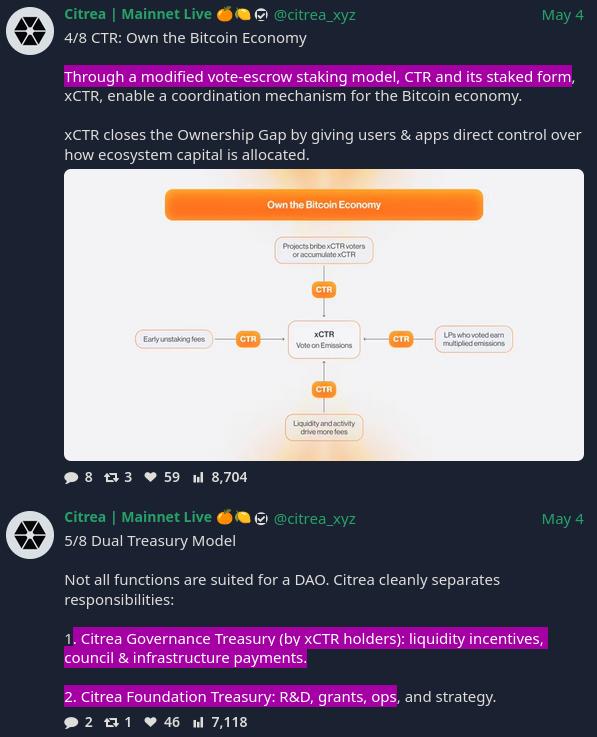
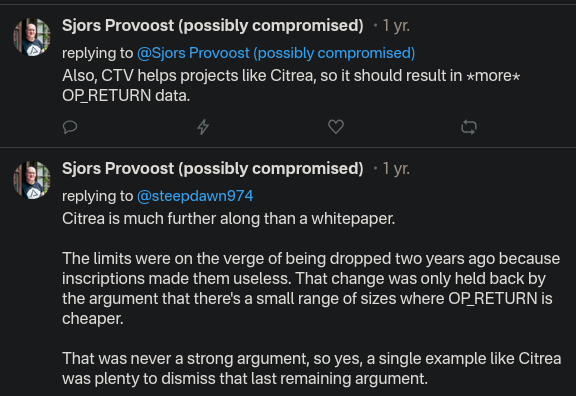
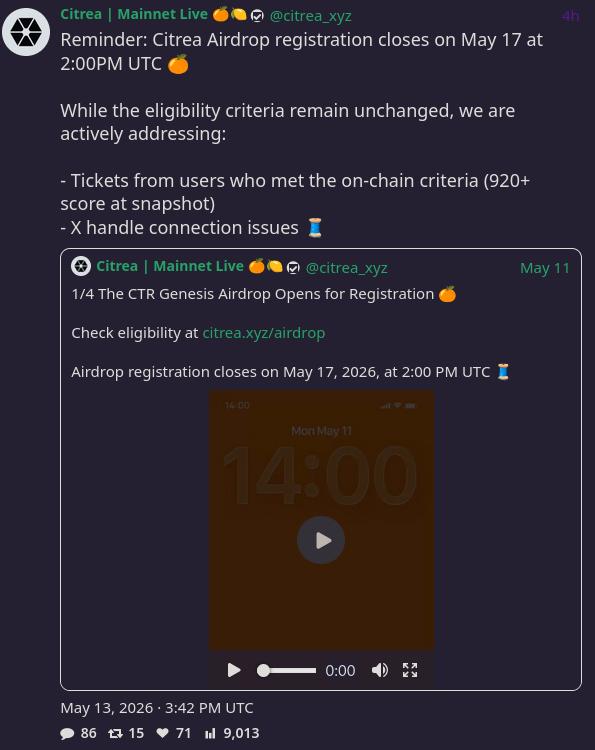
Citrea scammers are doing what they intended - to turn Bitcoin into Ethereum shitcoin 2.0 Citrea launched a 💩💩💩shitcoin💩💩💩 on top of Bitcoin. Compromised Core actively supports Citrea scammers. Disgusting!
Bitcoin Knots and BIP 110 fixes this mess.
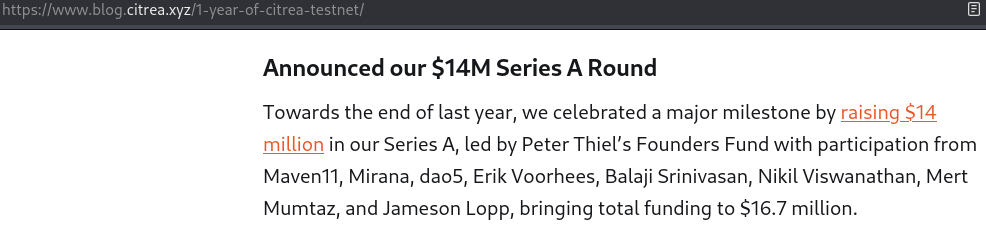
Citrea in which Jameson SLopp, Peter Thiel the chairman of Palantir and the major scammer Erik Voorhees are investors.
 “We’re hearing things like Citrea is better than Ethereum,” Chainway Labs co-founder Orkun Mahir Kılıç told CoinDesk. “It’ll be better with time, because there’s like $1 trillion, as of now, sitting in the Bitcoin blockchain. It is the most secure, battle-tested and decentralized blockchain. And we are bringing decentralized finance to it.”
https://finance.yahoo.com/news/bitcoin-zero-knowledge-rollup-citrea-173000226.html?guccounter=1
https://www.nobsbitcoin.com/citrea-raises-2-7m/
“We’re hearing things like Citrea is better than Ethereum,” Chainway Labs co-founder Orkun Mahir Kılıç told CoinDesk. “It’ll be better with time, because there’s like $1 trillion, as of now, sitting in the Bitcoin blockchain. It is the most secure, battle-tested and decentralized blockchain. And we are bringing decentralized finance to it.”
https://finance.yahoo.com/news/bitcoin-zero-knowledge-rollup-citrea-173000226.html?guccounter=1
https://www.nobsbitcoin.com/citrea-raises-2-7m/

Write a comment