Trump Endorses Armenian Prime Minister Nikol Pashinyan for Re-election
Trump Endorses Armenian Prime Minister Nikol Pashinyan for Re-election President Donald Trump’s enthusiastic endorsement of Armenian Prime Minister Nikol Pashinyan has turned a small-country election into a test case for great‑power realignment and U.S. influence in the South Caucasus.
On the one hand, conservative-leaning coverage frames Trump’s move as a logical extension of Armenia’s strategic pivot away from Moscow and toward Washington, Europe, and even former adversaries Turkey and Azerbaijan. Pashinyan is portrayed as having “completely reinvented” Armenia’s foreign policy, taking it from a “de facto protectorate of Russia to one bordering on hostility” and aligning with U.S.-backed regional projects. In this view, Trump’s praise of Pashinyan as a “great friend and Leader” making Armenia “strong, wealthy, and very secure” is less meddling than a reward for choosing the Western camp.
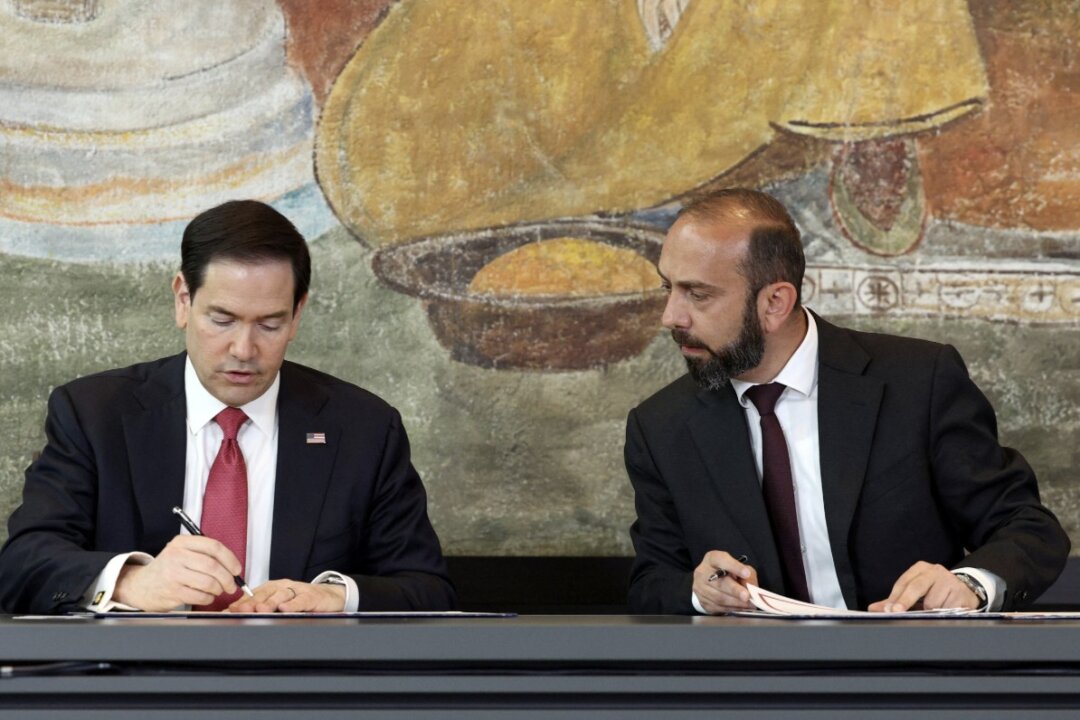
The timing reinforces that narrative. Trump’s “COMPLETE and TOTAL Endorsement” of Pashinyan’s June 7 bid comes just as Secretary of State Marco Rubio and Armenian Foreign Minister Ararat Mirzoyan unveiled a “bilateral framework agreement on the Trump Route for International Peace and Prosperity (TRIPP)” and signed a Strategic Partnership Charter and critical minerals MOU in Yerevan. Another account highlights that the endorsement coincided with a U.S.–Armenia strategic partnership agreement, tying Pashinyan’s political fortunes to deeper security and economic ties with Washington.
Critics, however, see the same facts as evidence of overt U.S. electioneering. Trump’s intervention “ahead of the most important election in Armenia’s history” is characterized by some as “blatant interference in Armenia’s electoral process,” even as Pashinyan’s camp casts the contest as a battle between “democracy and Russian-influenced reactionaries.” That framing risks reducing Armenia’s complex domestic politics to a binary proxy struggle, while bolstering a leader with “dismal approval ratings” whose advantage stems largely from a “fractured and listless” opposition.
The result is a stark contrast: to supporters, a bold consolidation of a new Western-oriented order in the South Caucasus; to skeptics, a precedent-setting case of great‑power leverage over a vulnerable democracy’s ballot box.
Write a comment