WHCD Shooting Suspect Cole Allen Charged With Attempted Assassination
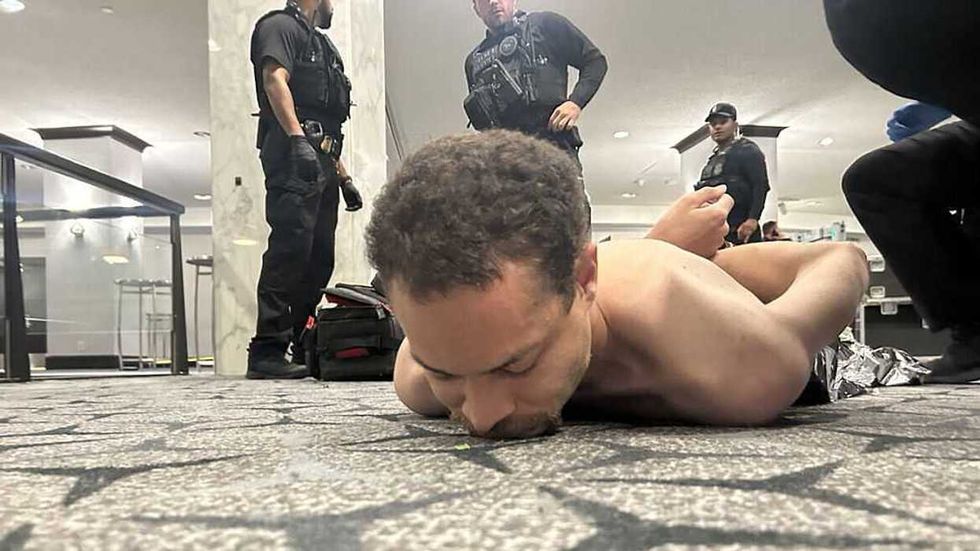
WHCD Shooting Suspect Cole Allen Charged With Attempted Assassination Cole Tomas Allen, 31, has been charged by federal prosecutors with three crimes, including attempted assassination of President Donald Trump, following a shooting incident at or near the White House Correspondents’ Dinner at the Washington Hilton in Washington, D.C. Coverage across liberal- and conservative-aligned outlets agrees that Allen allegedly rushed or breached a security checkpoint armed with a shotgun, fired shots that wounded a Secret Service officer or agent, and was quickly detained by law enforcement on site. Both sides report that he possessed multiple weapons at the time of his arrest, had previously written or emailed materials expressing animus toward Trump, and is expected to face additional federal counts beyond the initial three charges already filed.
Outlets on both sides note that federal authorities, including the Justice Department and the acting attorney general, have stressed the seriousness of an attack targeting a sitting president at a high‑profile media and political event. They also agree that investigators have recovered a manifesto‑style document or detailed writings in which Allen laid out his intent against Trump and his administration, and that prosecutors are framing the case as a direct assault on democratic institutions and the peaceful conduct of political life. The shared coverage emphasizes continuity with prior federal responses to political violence and signals that the case will be handled as a major security failure at a nationally watched event involving senior government officials and journalists.
Areas of disagreement
Framing of the threat. Liberal-aligned sources tend to frame the shooting primarily as an attack on democratic norms and the safety of journalists and public officials gathered at the WHCD, placing the incident in a broader pattern of rising political violence. Conservative outlets more strongly emphasize that this was a direct, targeted attempt to kill Trump personally and potentially his Cabinet, highlighting the vulnerability of the president despite heavy security. Liberal coverage stresses institutional resilience and the rapid law-enforcement response, while conservative coverage underscores how close an assailant allegedly came to breaching presidential protection.
Motives and rhetoric. Liberal coverage briefly notes Allen’s manifesto and emails showing animosity toward Trump, but typically avoids framing the incident as the product of one partisan side’s rhetoric, instead presenting his writings as evidence of individual radicalization. Conservative outlets give more weight to the manifesto, using it to argue that a climate of intense anti-Trump hostility has dangerous real-world consequences and pointing implicitly to media and political elites who, they suggest, normalize such animus. Where liberal sources talk in more generalized terms about extremist violence, conservative sources more explicitly link the suspect’s motives to anti-Trump sentiment in the broader culture.
Institutional accountability. Liberal-aligned reporting focuses on the Justice Department’s swift filing of charges and the Secret Service’s fast response, generally portraying federal institutions as acting competently and in accordance with rule of law. Conservative coverage also notes the rapid charges but is more inclined to question how security at a marquee event allowed an armed assailant to get close enough to injure a Secret Service officer, implicitly raising doubts about recent management and policy decisions around presidential protection. Liberal outlets highlight DOJ statements as reassurance that the system is working, while conservative outlets treat those same statements as necessary but not sufficient, pushing for scrutiny of security lapses.
Political implications. Liberal sources often downplay the immediate partisan implications, warning against using the attack to score political points and instead framing it as part of a broader national challenge of political extremism. Conservative outlets more readily situate the incident within the narrative of Trump and his supporters being uniquely targeted and under physical threat, suggesting that critics underestimate the risks of sustained demonization of the former president. Liberal coverage tends to call for lowering the temperature across the spectrum, while conservative coverage suggests that hostility toward Trump in particular has become normalized to a dangerous degree.
In summary, liberal coverage tends to emphasize institutional responses, democratic norms, and generalized political extremism without heavily personalizing the blame, while conservative coverage tends to stress the direct targeting of Trump, the cultural climate of anti-Trump animus, and lingering questions about security and elite rhetoric.
Write a comment