Azerbaijan Accuses Iran of Drone Attack on Nakhchivan Airport
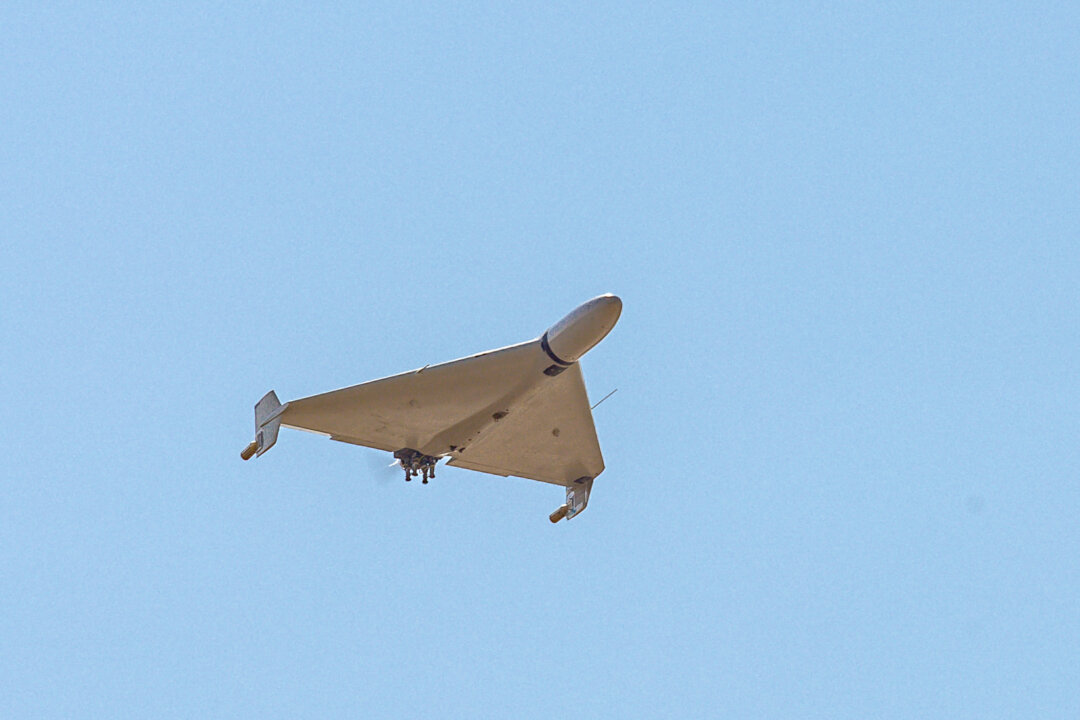
Azerbaijan Accuses Iran of Drone Attack on Nakhchivan Airport liberal Liberal coverage describes the Nakhchivan drone strikes as a serious and potentially escalatory incident, highlighting Azerbaijan’s accusations against Iran but also giving space to Iran’s denials and claims of a possible false flag operation. It underscores the complex regional context, warning that miscalculation between Azerbaijan, Iran, Israel, and their partners could rapidly widen the conflict. @The Gateway Pundit
conservative Conservative coverage presents the drone attack as clear evidence that Iran is expanding its regional war, treating the strike on Nakhchivan as Tehran’s first direct hit on Azerbaijani territory and part of a broader pattern of aggression. These outlets emphasize Azerbaijan as a victim and partner against Iran, arguing the incident underscores the need for stronger deterrence of the Iranian regime. @Washington Examiner @The Epoch Times Azerbaijan and multiple international reports state that drones struck Nakhchivan International Airport and nearby civilian infrastructure in the Nakhchivan Autonomous Republic, injuring several people (most accounts say four wounded) and damaging the terminal and at least one school building. Both liberal- and conservative-aligned outlets agree that Azerbaijani President Ilham Aliyev and the foreign ministry publicly condemned the incident as an act of terror and aggression, explicitly blamed Iran for the strike, and declared that Azerbaijan reserves the right to retaliate while placing its armed forces on heightened readiness. Across the spectrum, coverage notes that Iranian state channels and officials deny responsibility, frame the incident as a possible false flag intended to inflame tensions, and in some cases point the finger at Israel as seeking to provoke conflict between Muslim-majority states.
Liberal and conservative sources both situate the incident within the broader pattern of escalating drone warfare and proxy clashes tied to Iran, Israel, the United States, and regional rivals in the South Caucasus and Middle East. They emphasize that Nakhchivan is a strategically sensitive Azerbaijani exclave bordering Iran, Turkey, and Armenia, and that any confirmed Iranian strike there would mark a serious expansion of the regional confrontation beyond more typical theaters like Syria, Iraq, and the Gulf. Coverage on both sides highlights institutional actors such as the Iranian Revolutionary Guard Corps, Azerbaijan’s security establishment, and regional alliances, and points to long-standing frictions over Azerbaijan’s close partnership with Israel, Iran’s support for Armenia, and the risk that small incidents around dual‑use or civilian sites like airports can rapidly escalate into wider conflict.
Areas of disagreement
Responsibility and blame. Liberal-aligned outlets generally foreground Azerbaijan’s accusation as the central fact claim, emphasizing reported evidence of Iranian-origin suicide drones and Aliyev’s characterization of the strike as unprovoked terror, while mentioning Iran’s denial mainly as a defensive counter-narrative. Conservative sources, while also repeating Baku’s accusations, give more weight to the idea that the strike fits a broader pattern of Iranian adventurism and sometimes treat IRGC-linked Telegram claims of retaliation as circumstantial confirmation, thereby more firmly presuming Iranian culpability. Both mention Iran’s attempt to shift blame onto Israel, but conservatives frame that as classic Iranian disinformation, whereas liberals present it more neutrally as part of a dueling narrative.
Framing of escalation and regional war. Liberal coverage tends to describe the event as a dangerous escalation with potential to widen an already volatile regional environment, but still as one episode whose full attribution and strategic intent require further investigation. Conservative coverage is more likely to portray the incident as clear evidence that Iran is widening the regional war beyond its traditional fronts, explicitly calling it Iran’s first direct strike into Azerbaijan and linking it to a pattern of increasingly aggressive Iranian actions. Liberals stress uncertainty over whether this marks a new phase of conflict or a one-off provocation, whereas conservatives fold it into a pre-existing storyline of Iranian expansionism and proxy warfare.
Characterization of Azerbaijan and Iran. Liberal-aligned outlets often maintain a more critical distance from the Aliyev government, describing its vow to retaliate and military readiness as potentially escalatory and situating Azerbaijan within a complex web of alliances that includes Israel and Turkey. Conservative outlets tend to present Azerbaijan more straightforwardly as a victim of aggression and a frontline partner against Iranian influence, downplaying internal governance concerns in Baku. At the same time, conservatives use sharper language toward Iran, emphasizing the role of the Iranian regime and the Revolutionary Guard, while liberals use somewhat more restrained terminology and highlight mutual distrust between Tehran and Baku.
Role of Israel and the United States. Liberal coverage generally notes Iran’s claim that Israel is behind a false flag and its allegation of U.S.-Israeli plotting as part of the rhetorical backdrop, but treats these as unproven accusations and focuses on the local Azerbaijan–Iran dynamic. Conservative sources more readily integrate Iran’s references to Israel and the United States into a narrative of Tehran lashing out at a U.S.- and Israeli-aligned Azerbaijan, arguing that Iran aims to punish Baku for its security and intelligence cooperation with Israel. Liberals frame the Israel angle primarily as a factor complicating regional diplomacy, whereas conservatives depict it as a central reason Iran allegedly launched the drones in the first place.
In summary, liberal coverage tends to emphasize competing narratives, evidentiary uncertainty, and the risk of wider escalation that demands restraint from all sides, while conservative coverage tends to treat Iran’s responsibility as more settled, cast the strike as a deliberate expansion of regional war by Tehran, and frame Azerbaijan as a key partner confronting Iranian aggression.
Story coverage
Write a comment