US and Canadian Jets Scrambled to Intercept Russian Military Aircraft Near Alaska
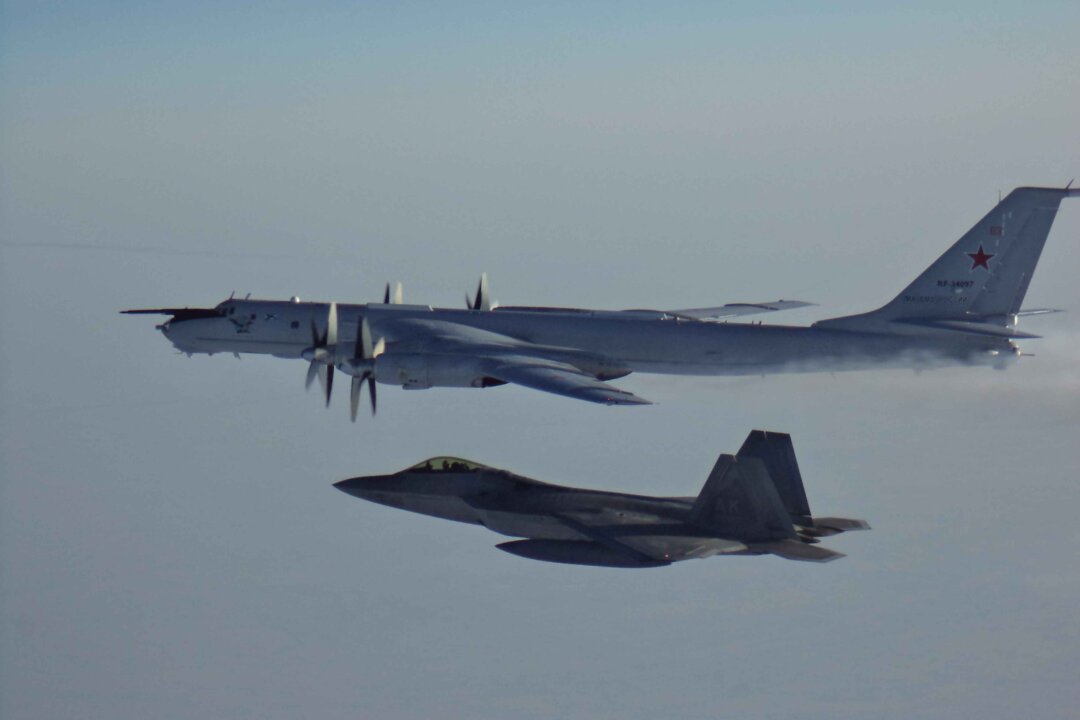
US and Canadian Jets Scrambled to Intercept Russian Military Aircraft Near Alaska conservative Conservative coverage presents the Russian flights near Alaska as another example of Moscow testing North American defenses, emphasizing the scramble of U.S. and Canadian jets and the need for strong deterrence and military readiness. While acknowledging NORAD’s assessment that there was no direct threat, it often connects the episode to concerns about U.S. leadership and a broader pattern of adversarial probing. @The Epoch Times @Fox News US and Canadian media from across the spectrum agree that two Russian military aircraft, identified as long‑range maritime patrol or reconnaissance planes (often described as TU‑142) were detected by NORAD operating within the Alaskan and Canadian Air Defense Identification Zones but remaining in international airspace. Both liberal and conservative outlets report that U.S. and Canadian fighter jets were scrambled to intercept, track, and visually identify the aircraft near Alaska, that the incident occurred over a short, clearly monitored window of time, and that at no point did the Russian planes enter U.S. or Canadian sovereign airspace. Coverage across the board cites NORAD as the key source, relaying its assessment that the event did not constitute a direct threat and that the intercept unfolded in a professional manner.
Liberal- and conservative-leaning outlets also concur on broader contextual elements such as the role of NORAD as the binational U.S.-Canada command charged with aerospace warning and control over North America, and they note that foreign military aircraft routinely operate in these identification zones under international law. Shared background includes the longstanding pattern of Russian military flights probing or approaching the periphery of North American airspace, as well as the standard practice of scrambling jets to intercept and escort such aircraft as a deterrent and a signal of readiness. Both sides highlight that these episodes often occur without escalation, are governed by established rules of engagement, and are framed by ongoing geopolitical tensions between NATO members and Russia without implying that this specific encounter marked a departure from prior behavior.
Areas of disagreement
Threat framing and seriousness. Liberal-aligned coverage tends to echo NORAD’s language that the intercept was routine, emphasizing that the Russian aircraft stayed in international airspace and did not pose an immediate danger, often placing the event lower on the urgency scale. Conservative outlets, while also quoting NORAD’s “no threat” assessment, are more likely to foreground the scramble of fighter jets and the proximity to U.S. and Canadian territory, which can give the incident a more dramatic or security-focused tone. Liberals often situate the episode among many similar flights to downplay the idea of an acute crisis, whereas conservatives may underline the pattern as an indicator of persistent Russian testing of North American defenses.
Geopolitical interpretation. Liberal sources generally frame the flights as part of a predictable, mutual great‑power signaling game, noting that both Russia and NATO conduct such patrols and emphasizing the importance of avoiding escalation. Conservative coverage is more inclined to interpret the incident as another example of Russian assertiveness or provocation in the wake of broader conflicts, sometimes linking it to perceived U.S. weakness or distracted leadership. Where liberals highlight institutional continuity and the professionalism of NORAD in managing predictable interactions, conservatives often stress the need for robust deterrence and vigilance in the face of adversarial probing.
Domestic political implications. Liberal-leaning reporting tends to minimize direct partisan angles, focusing instead on military protocol and alliance cooperation, and may treat the event as technocratic business-as-usual for defense institutions. Conservative outlets are somewhat more likely to connect the episode to critiques of current U.S. national security policy, suggesting that adversaries like Russia are emboldened by what they view as indecisive or inconsistent U.S. leadership. This can manifest in subtle or explicit contrasts with prior administrations’ posture, whereas liberal coverage typically refrains from using the intercept as a vehicle for domestic political blame.
Risk of escalation and public reassurance. Liberal coverage usually emphasizes assurances from NORAD that there was no violation of sovereign airspace and no immediate risk, often stressing transparency and the calm handling of the situation to reassure the public. Conservative sources, while not predicting imminent conflict, may dwell more on the potential risks inherent in such encounters and the importance of maintaining readiness to prevent miscalculation. As a result, liberals frame the story as evidence that systems worked as designed, while conservatives frame it as a reminder of enduring external threats that justify strong defense postures.
In summary, liberal coverage tends to treat the intercept as a routine, well-managed security event that underscores institutional stability and the importance of de-escalatory framing, while conservative coverage tends to highlight the episode as a vivid reminder of ongoing Russian probing and a rationale for emphasizing vigilance, deterrence, and tougher national security policies. Story coverage
Write a comment