Minnesota Officials Testify Before Congress on Fraud Scandal
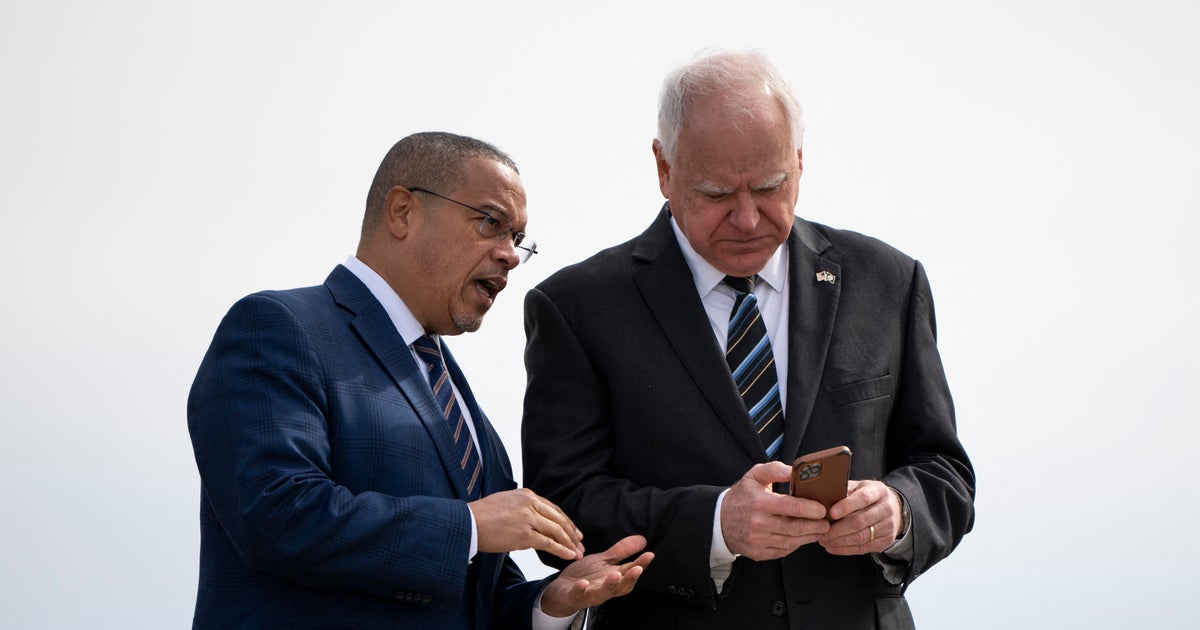
Minnesota Officials Testify Before Congress on Fraud Scandal liberal Liberal-aligned coverage portrays the hearing as a contentious but necessary examination of large-scale fraud that arose from rushed federal program expansion, emphasizing Walz and Ellison’s efforts to cooperate with investigations and push for structural reforms. It acknowledges serious oversight failures but stresses systemic and federal-state coordination problems over deliberate political protection of specific communities. @CBS News @The Gateway Pundit Minnesota Governor Tim Walz and Attorney General Keith Ellison appeared before the House Oversight Committee in Washington, D.C., to testify about large-scale fraud schemes involving federal funds administered in Minnesota, including Medicaid-related autism services and pandemic-era food aid like the Feeding Our Future program. Both sides report that Republicans on the committee, including Representatives Brandon Gill, Nancy Mace, and Jim Jordan, led aggressive questioning that focused on when state officials first became aware of suspicious claims, whether whistleblowers were ignored or retaliated against, and how oversight systems failed to prevent hundreds of millions of dollars in allegedly fraudulent payments. Coverage agrees that Walz acknowledged, under questioning, that as governor he is ultimately responsible for misused tax dollars in his state and that he conceded some claim patterns—such as a spike in autism-related Medicaid claims—did not appear reasonable. It is also commonly reported that Walz and Ellison pushed back on certain Republican narratives, defended their broader record on combating fraud, and criticized some federal enforcement tactics, while the session repeatedly returned to the scale of the fraud, its concentration in Somali and immigrant communities, and the timeline of state and federal interventions.
Across outlets, shared context highlights that the scandal centers on the misuse of federal safety-net and COVID relief programs that rapidly expanded during the pandemic, often with loosened guardrails that made them more vulnerable to fraud. Reporting from both perspectives notes that Minnesota’s experience is part of a wider national concern about pandemic-era fraud and inadequate coordination between federal agencies, state governments, and courts, including disputes over how judicial orders affected the timing of enforcement actions. There is broad agreement that whistleblower complaints, internal audits, and federal investigations played important roles in ultimately uncovering the fraud, and that both state and federal institutions are now under scrutiny for whether they responded quickly and transparently enough. Both liberal and conservative accounts acknowledge that the hearing is being used to debate broader reforms, such as tightening eligibility checks, improving data analytics to flag unusual billing patterns, clarifying lines of authority between state executives and courts, and ensuring protections for employees who report suspected fraud.
Areas of disagreement
Responsibility and blame. Liberal-aligned coverage tends to frame Walz’s admission of ultimate responsibility as a formal acknowledgment that comes with any executive office but emphasizes his claims that systemic weaknesses and federal policy design were the primary drivers of the fraud. Conservative coverage portrays the same admission as a damning confession, arguing it shows Walz personally failed to act on clear warning signs and thus bears direct blame for the scale of the losses. While liberal sources highlight competing legal constraints and judicial decisions, conservative outlets downplay those factors and instead focus on what they describe as obvious red flags that state leaders chose to ignore.
Whistleblowers and retaliation. Liberal sources report Republican allegations of retaliation against whistleblowers largely as claims made by GOP members, juxtaposed with Walz’s repeated denials that he knew of or directed any reprisals and his insistence that whistleblower input was integral in exposing the schemes. Conservative coverage treats the retaliation narrative as central, asserting that whistleblowers were sidelined or punished to protect political interests and that Walz’s denial strains credulity given the magnitude of the fraud. Where liberal accounts convey ambiguity about internal personnel disputes and emphasize ongoing investigations, conservative outlets cast them as clear-cut examples of an administration punishing those who tried to stop fraud.
Political and cultural framing. Liberal-aligned reporting generally treats references to the Somali community and questions about gender definitions as tangential political theater, suggesting Republicans were using culture-war themes to score points rather than illuminate how the fraud occurred. Conservative sources present the same exchanges as highly revealing, arguing that Walz’s responses on issues like defining a woman or addressing fraud in Somali-led organizations expose a broader ideological reluctance to confront misconduct in favored identity groups. While liberal coverage criticizes these lines of questioning as distractions from technical oversight failures, conservative outlets argue they show how identity politics and electoral calculations allegedly shielded certain communities from scrutiny.
Federal-state dynamics and motives. Liberal reporting centers on Walz and Ellison’s criticisms of federal operations such as Operation Metro Surge and portrays them as pushing for more collaborative, less politicized enforcement that respects state prerogatives and civil liberties. Conservative coverage highlights their critiques as attempts to deflect attention from state-level failures and to shift blame onto federal agencies or courts, depicting Republican questioners as trying to uncover a pattern of deference to politically important constituencies. Thus, where liberal sources stress structural and intergovernmental complexity as explanations, conservative sources emphasize partisan and electoral motives behind enforcement decisions.
In summary, liberal coverage tends to present the hearing as a partisan-charged but institutionally complex inquiry into pandemic-era fraud and systemic oversight weaknesses, while conservative coverage tends to frame it as an indictment of Walz and Ellison’s personal and political culpability, including their alleged protection of favored constituencies and mishandling of whistleblowers. Story coverage
Write a comment