Rubio Meets With Hungary's Orbán, Calling Relations a 'Golden Age'
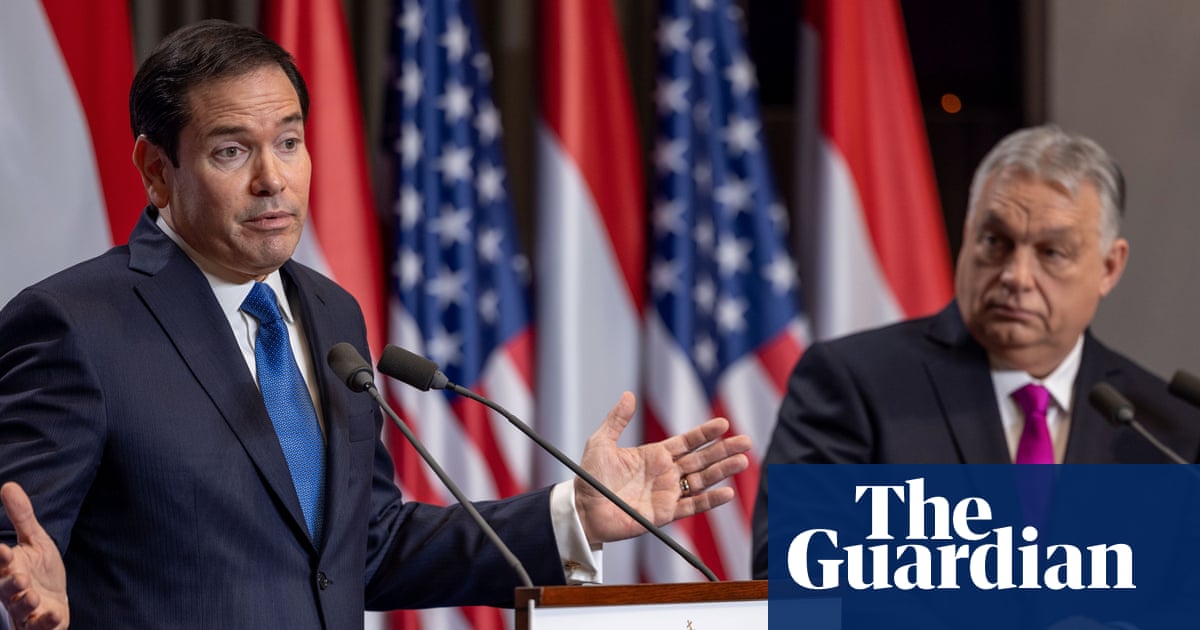
Rubio Meets With Hungary’s Orbán, Calling Relations a ‘Golden Age’ liberal From a liberal perspective, Rubio’s warm rhetoric toward Orbán and talk of a “golden age” highlight a worrying alignment with an illiberal leader that could undermine EU unity and democratic norms. The nuclear and financial cooperation is seen less as neutral policy and more as political backing that may further embolden Orbán ahead of key elections. @The Guardian
conservative From a conservative perspective, Rubio’s visit showcases a productive partnership with Hungary, grounded in personal rapport between Trump and Orbán and culminating in a substantive civil nuclear cooperation deal. The relationship is framed as advancing U.S. strategic and energy interests in Central Europe while respecting national sovereignty and shared priorities. @The Epoch Times Marco Rubio met with Hungarian Prime Minister Viktor Orbán in Budapest, where Rubio lauded current U.S.-Hungary relations as a “golden age” and emphasized personal rapport between Donald Trump and Orbán as a key driver of the partnership. Reports agree that Rubio conveyed Trump’s strong personal support for Orbán and his commitment to the Hungarian leader’s success, with the visit taking place shortly before a significant Hungarian parliamentary election and amid broader tensions in transatlantic politics. Both liberal- and conservative-leaning coverage note that the trip included discussions of financial assistance and strategic cooperation, and that it unfolded against a backdrop of European concern about internal cohesion within the EU and NATO.
Across outlets, there is consensus that the visit involved institutional agreements as well as rhetoric, particularly a civil nuclear energy cooperation deal signed between Rubio and Hungarian Foreign Minister Peter Szijjártó on February 16. The civilian nuclear pact is described as enabling closer collaboration on nuclear technology, including potential deployment of U.S.-backed small modular reactors and positioning Hungary as a regional hub for this technology. Coverage from both sides identifies this as part of a broader U.S. effort to deepen energy ties with Central Europe, enhance technological cooperation, and potentially offer Hungary alternatives to reliance on other major powers for nuclear and energy infrastructure.
Areas of disagreement
Framing of the relationship. Liberal-aligned outlets frame Rubio’s praise of a “golden age” and his emphasis on Trump’s personal bond with Orbán as troubling, suggesting it signals alignment with an illiberal leader and risks legitimizing democratic backsliding in Hungary. Conservative outlets instead present the same language as evidence of a pragmatic, mutually beneficial partnership, emphasizing shared interests and respect between national leaders. While liberal coverage highlights fears within the EU about U.S. encouragement of Orbán’s defiance of European norms, conservative coverage downplays those fears and stresses sovereignty, bilateral ties, and strategic alignment.
Implications for Europe and alliances. Liberal coverage stresses that Rubio’s warm words are reinforcing EU anxieties that Washington, under Trump-aligned Republicans, might encourage disunity within Europe and weaken collective positions on rule of law and Ukraine. Conservative outlets largely sidestep intra-EU political tensions, framing the visit instead as strengthening a key NATO and European partner through energy and strategic cooperation. Liberals connect the timing before a crucial Hungarian election to concerns about outside political signaling favoring Orbán, while conservatives treat the timing as routine diplomacy and emphasize continuity in security and economic cooperation.
Characterization of the nuclear deal. Liberal-leaning sources mention potential financial assistance and cooperation but focus more on the political symbolism of closer ties to Orbán than on the technical merits of the civil nuclear agreement. Conservative outlets foreground the nuclear pact as a concrete policy achievement, portraying it as a win-win step that advances regional energy security, U.S. technological influence, and Hungary’s role as a small modular reactor hub. Liberals tend to treat the nuclear cooperation as one piece of a broader pattern of alignment with an illiberal government, while conservatives treat it primarily as a technocratic and strategic energy initiative.
Assessment of risks and benefits. Liberal coverage emphasizes risks: the potential erosion of democratic norms, emboldening Orbán’s domestic agenda, and straining U.S.-EU unity at a sensitive geopolitical moment. Conservative coverage emphasizes benefits: stronger bilateral ties, diversification of European energy sources, and closer collaboration with a government seen as assertively pursuing national interests. Where liberals see U.S. endorsement possibly undermining Western cohesion and values-based diplomacy, conservatives see a realist recalibration that prioritizes strategic partnerships and concrete cooperation over ideological disputes.
In summary, liberal coverage tends to cast Rubio’s overt praise and deepening ties with Orbán as a worrisome endorsement of illiberalism that may fracture European unity, while conservative coverage tends to present the visit and nuclear cooperation deal as pragmatic, sovereignty-respecting statecraft that strengthens energy security and a key Central European partner. Story coverage
Write a comment