Sen. Susan Collins of Maine Announces Reelection Bid
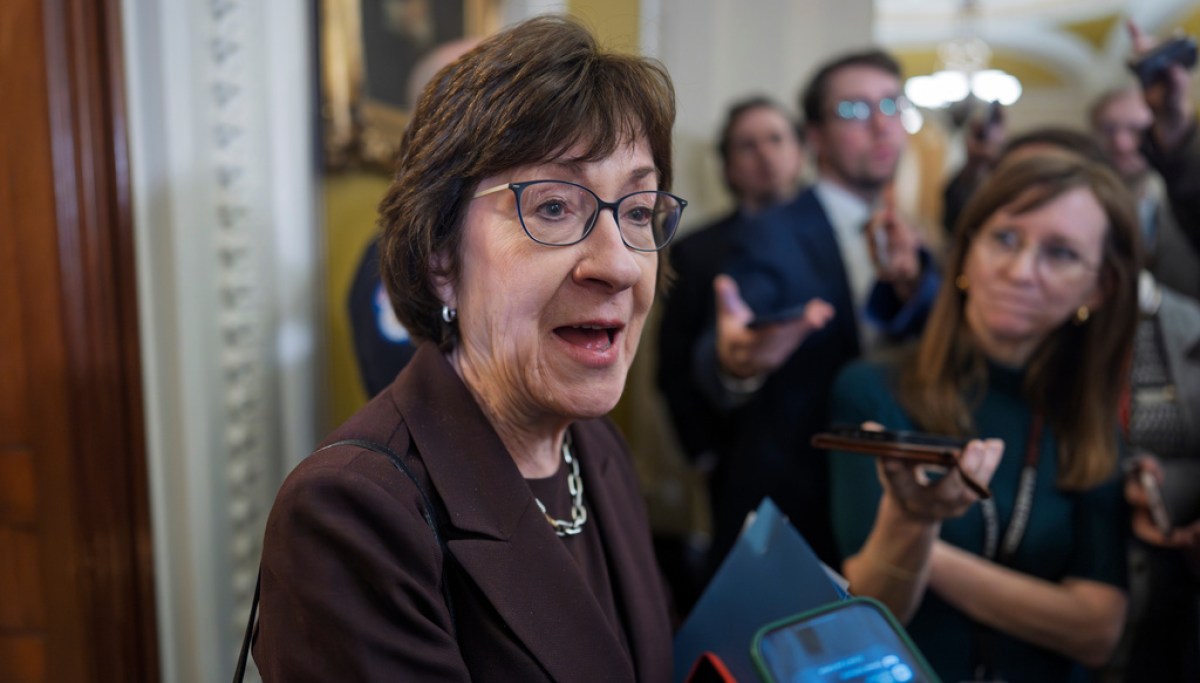
Sen. Susan Collins of Maine Announces Reelection Bid liberal From a liberal perspective, Susan Collins’s reelection bid is a high-stakes opportunity to unseat a long-entrenched Republican whose self-styled independence obscures consistent alignment with GOP priorities. Coverage focuses on Democratic and progressive energy to challenge her, portraying Maine as a key battlefield for reshaping Senate control and curbing Republican influence over appropriations. @CBS News
conservative From a conservative perspective, Collins’s announcement is a welcome decision by a seasoned, centrist lawmaker whose seniority and bipartisan credentials are crucial in a closely divided Senate. Reporting highlights her reputation as an independent problem-solver, her occasional breaks with Trump, and the belief that retaining her seat is vital to preserving Republican strength and pragmatic governance in Washington. @The Washington Times @Fox News @Washington Examiner Sen. Susan Collins of Maine has formally announced that she will seek a sixth term in the U.S. Senate in the 2026 election, launching what both liberal and conservative outlets describe as a high-stakes contest in a state often labeled a toss-up. Reports agree she is 73 years old, a Republican, and currently chairs the powerful Senate Appropriations Committee, giving her significant influence over federal spending. Coverage from both sides notes that she confirmed her decision on X with language emphasizing that she is “ALL-IN for 2026” and that this race could be pivotal in determining future control of the Senate. Media across the spectrum also underscore that the Democratic field is unsettled, with Gov. Janet Mills identified as a key participant and newcomer Graham Platner mentioned as drawing progressive enthusiasm, even as state and national Democrats actively target Collins.
Across outlets, Collins is portrayed as framing her reelection bid around the need for independent or moderate voices in an increasingly polarized Congress, presenting herself as an experienced problem-solver in Washington. Both liberal and conservative sources point out that her candidacy comes in the context of intense party competition and that national party leaders in both parties see Maine as a battleground seat. Reports concur that Collins has faced criticism from former President Donald Trump, even as Senate Republican leadership publicly hails her as a proven and battle-tested leader whose seniority and committee clout matter for Maine. The common narrative holds that this race will test Collins’s long-cultivated brand as a centrist Republican against a Democratic effort to harness voter frustration and nationalize the contest around control of the Senate.
Areas of disagreement
Collins’s political identity. Liberal-aligned outlets tend to describe Collins’s “independent” and “problem-solver” branding as more rhetorical than real, stressing that her voting record often aligns with Republican leadership despite her moderate image. They highlight progressive frustration and portray her as a conventional Republican incumbent trying to preserve power in a purple state. Conservative outlets, by contrast, embrace and amplify her self-presentation as an independent-minded centrist, emphasizing her willingness to break with Trump and to negotiate bipartisan deals as proof that she is distinct from more hardline Republicans.
Electoral vulnerability and public standing. Liberal coverage emphasizes that Democrats see Collins as vulnerable, citing attacks from the Maine Democratic Party that label her a “betrayer” and point to low or weakening approval ratings. These stories stress that a serious Democratic challenger, whether Gov. Janet Mills or a progressive-backed alternative like Graham Platner, could capitalize on discontent and national headwinds for Republicans. Conservative reports generally acknowledge that Maine is competitive but frame Collins as “battle-tested” and resilient, stressing her long history of surviving tough races and suggesting that her seniority and established reputation still give her an edge.
Framing of the Democratic field. Liberal sources cast the Democratic side as energized but divided, underscoring progressive enthusiasm for newcomers and internal debate over whether an establishment figure like Mills or a fresher face is better suited to defeat Collins. They often frame this as a legitimate contest over the party’s ideological direction in Maine, not just a tactical question. Conservative coverage gives far less oxygen to these intra-Democratic dynamics, instead presenting the Democratic opposition mostly as a generalized, nationalized effort to knock off a key Republican incumbent, with less focus on ideological nuance and more on Democrats’ determination to flip the seat.
National stakes and partisan narratives. Liberal-leaning outlets tend to place Collins’s race within a broader narrative of Republican obstruction and the fight for Senate control, suggesting that defeating her could ease passage of Democratic priorities and diminish the influence of Republican appropriations power. They stress that her leadership role magnifies the policy consequences of the election. Conservative media, meanwhile, foreground the race as a test of whether voters still value bipartisan dealmaking and institutional experience, warning that a Democratic win could tilt the chamber toward more partisan gridlock, not less, and reduce Maine’s leverage in federal spending negotiations.
In summary, liberal coverage tends to question Collins’s moderate branding and stress her vulnerability as a Republican power broker whose defeat is central to Democratic ambitions for Senate control, while conservative coverage tends to validate her centrist image, emphasize her experience and independence from Trump, and portray her reelection as crucial to maintaining pragmatic, bipartisan influence for Maine in Washington.
Story coverage
Write a comment