Protests and Rail Sabotage Disrupt Winter Olympics in Italy
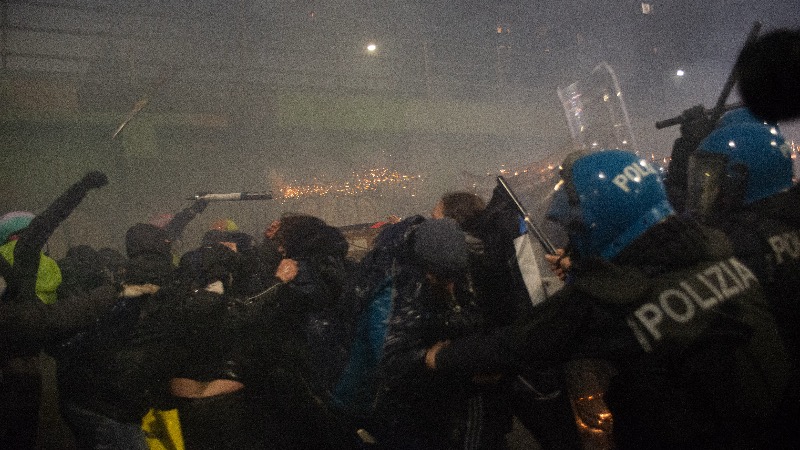
Protests and Rail Sabotage Disrupt Winter Olympics in Italy conservative Conservative coverage depicts the protests and rail sabotage as a coordinated, ideologically motivated attack on Italy and the Winter Olympics, often linked to anarchist or far-left groups. It emphasizes the need for a firm law-and-order response, endorses Meloni’s harsh rhetoric, and prioritizes defending national image and critical infrastructure over accommodating dissent. @The Washington Times @Infowars Media across the spectrum report that Italy’s preparations for the upcoming Winter Olympics have been disrupted by protests in Milan and at least three incidents of rail infrastructure sabotage in northern Italy. Coverage agrees that the actions caused notable travel interruptions on key rail lines, that investigators are probing a likely link between the sabotage and anti-Olympics or anti-establishment activism, and that Italian Prime Minister Giorgia Meloni has publicly condemned those responsible, calling them “enemies of Italy and Italians.” Both liberal- and conservative-leaning outlets, where they cover the story, highlight the time overlap between the street demonstrations and the rail attacks, note that no mass-casualty incident has been reported so far, and emphasize that law-enforcement and security services have been placed on high alert around Olympic-related sites and transport hubs.
Across ideologies, outlets situate the events within long-running tensions around large international sporting events, including concerns over public spending, environmental impact, and security. There is broad agreement that Italian authorities are under pressure to guarantee safe and smooth logistics for athletes and spectators, that rail infrastructure is a critical vulnerability for a geographically dispersed Winter Games, and that anarchist or far-left anti-establishment groups are among the leading suspects in the sabotage investigations. Reporting from both sides notes the central roles of national police, railway operators, and Olympic organizers in coordinating the response, as well as the likelihood of tightened surveillance, reinforced patrols, and legal reforms or harsher penalties aimed at deterring further attacks.
Points of Contention
Characterization of protesters. Liberal-aligned outlets tend to distinguish between peaceful anti-Olympics demonstrators with social or environmental grievances and a smaller fringe possibly responsible for sabotage, warning against tarring all protesters as extremists. Conservative outlets more often group the street unrest and rail attacks together, describing a broader wave of “violent” or “radical” opposition to the Games and echoing Meloni’s language about “enemies of Italy.” Liberals are more likely to emphasize civil liberties and the legitimacy of protest, while conservatives foreground law-and-order concerns and national unity.
Framing of government response. Liberal coverage, where present, typically stresses the need for a proportionate and rights-respecting security response, raising questions about potential overreach, surveillance expansion, or the use of the incidents to clamp down on dissent. Conservative coverage highlights the firmness of Meloni’s condemnation, casts strong policing and tougher penalties as necessary to protect critical infrastructure, and often praises the government for taking the threat seriously. While liberals may spotlight calls for dialogue with local communities and activists, conservatives frame the situation primarily as a security challenge requiring decisive state action.
Causes and responsibility. Liberal-oriented reporting is more inclined to explore the underlying drivers of anti-Olympics sentiment, such as displacement, public spending priorities, or environmental concerns, and it often cautions against speculating on the exact perpetrators before investigations conclude. Conservative outlets more readily accept early police theories pointing to anarchist or far-left groups and link the sabotage to a wider pattern of ideological extremism in Europe. Liberals tend to situate individual acts within systemic grievances, whereas conservatives emphasize personal and organizational culpability and the ideological motivations of the suspects.
Impact on the Olympics narrative. Liberal sources are apt to place the disruptions within a broader debate over whether mega-events serve host communities, sometimes questioning the overall model even while condemning violence. Conservative sources usually stress the damage to Italy’s international image, the risk to tourism and investment, and the need to shield the Games from what they portray as radical spoilers. Liberal coverage frames the Olympics as a site of contested priorities between citizens and state, while conservative coverage frames them as a national project that should rise above partisan conflict.
In summary, liberal coverage tends to separate legitimate protest from criminal sabotage, probe root causes, and warn against heavy-handed crackdowns, while conservative coverage tends to fuse the unrest and sabotage into a single security threat, underscore ideological extremism and national loyalty, and endorse a muscular state response.
Story coverage
Write a comment