At Least 14 Dead After Migrant Boat Collides With Greek Coast Guard Vessel
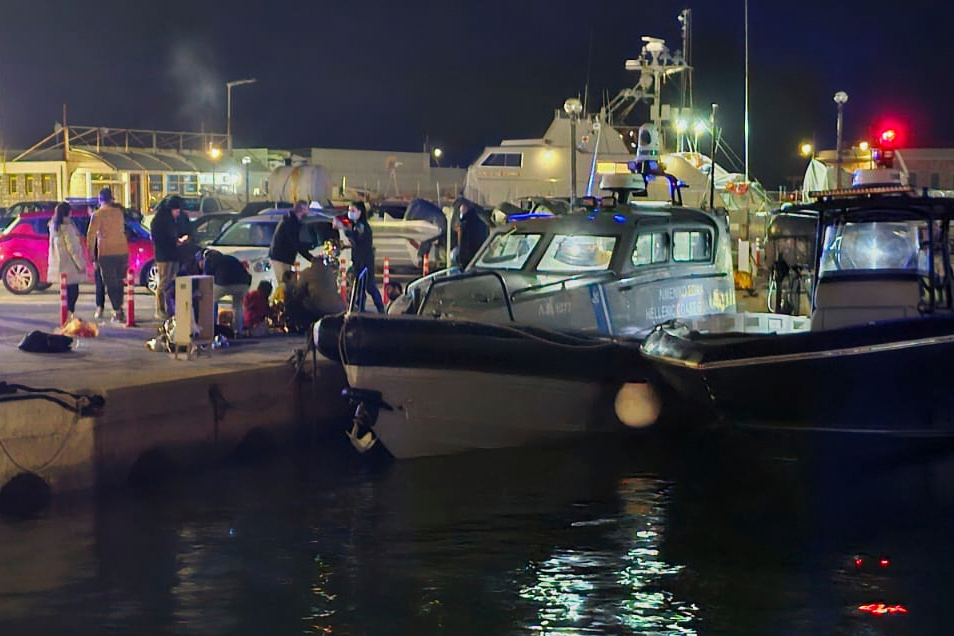
At Least 14 Dead After Migrant Boat Collides With Greek Coast Guard Vessel conservative Conservative coverage presents the collision as a tragic but predictable result of illegal migration and smuggling in the Aegean, emphasizing that smugglers’ reckless tactics and unsafe boats put families and children at grave risk. It highlights the efforts of the Greek coast guard and local medical staff to rescue survivors and manage the aftermath, and uses the event to argue for stricter border control and stronger action against trafficking networks. @The Washington Times @The Epoch Times At least 14–15 people died and more than two dozen were injured when a speedboat carrying migrants collided with a Greek coast guard vessel near the eastern Aegean island of Chios during the night of February 3. Coverage across the spectrum agrees that the vessel was carrying migrants, that the Hellenic Coast Guard patrol boat was involved in the collision, that search-and-rescue operations were launched for possible missing individuals, and that survivors—including men, women, and several children—were taken to medical facilities on Chios. Reports concur that most of the victims are believed to be migrants attempting to reach Greek territory by sea from the Turkish coast, and that the death toll initially reported at 14 later rose to 15 after one injured woman died in hospital.
Liberal and conservative outlets both situate the tragedy within the ongoing Aegean migration routes and the broader European migration and asylum context, noting that the incident occurred in waters frequently used by smugglers transporting people in overcrowded, unsafe boats. They highlight the role of Greek and European border authorities, the repeated pattern of dangerous crossings from Turkey to Greek islands, and the vulnerability of families and children in these journeys. Both sides reference existing EU and Greek debates over border security, search-and-rescue obligations, and anti-smuggling efforts, and they acknowledge that this crash adds to a long history of deadly migrant incidents in the Mediterranean and Aegean seas.
Points of Contention
Responsibility and blame. Liberal-leaning coverage tends to frame the incident within systemic failures of European migration policy and questions whether aggressive border enforcement or past pushback allegations may contribute to unsafe conditions at sea. Conservative outlets emphasize the role of human smugglers and illegal crossings, casting the crash primarily as the consequence of criminal networks exploiting migrants and the inherent risks of unauthorized migration. Liberals are more likely to explore whether operational decisions by the coast guard or EU-level deterrence policies indirectly increased danger, while conservatives largely present the coast guard as responders to a crisis created by smugglers and permissive migration pull factors.
Portrayal of the Greek coast guard. Liberal sources often adopt a more skeptical tone regarding the coast guard, situating this crash against a backdrop of prior investigations and NGO allegations of misconduct or pushbacks in the Aegean. Conservative coverage depicts the coast guard mainly as a professional rescue entity that saved dozens of people under difficult conditions, stressing ongoing search efforts and medical evacuations. Where liberal accounts may probe potential procedural failures, accountability questions, or call for independent inquiries, conservative pieces focus on the heroism and strain on Greek authorities tasked with both border control and humanitarian response.
Policy lessons and proposed reforms. Liberal-aligned reporting tends to use the tragedy to argue for safer legal pathways, more robust EU asylum mechanisms, and humanitarian search-and-rescue policies that reduce the need for clandestine crossings. Conservative coverage more often advances arguments for tougher border enforcement, stronger action against smuggling networks, and clearer deterrent measures to discourage dangerous sea journeys. Liberals highlight the human rights and protection dimensions, suggesting reforms that shift away from securitization, while conservatives underscore sovereignty, law enforcement, and the need to manage or restrict irregular arrivals.
Narrative emphasis and language. Liberal outlets tend to foreground the stories of migrants and their families, emphasizing the vulnerability of children, the trauma of survivors, and the broader humanitarian crisis driving people to flee. Conservative outlets, while acknowledging the human toll, often give more space to official statements, operational details of the collision and rescue, and the strain on local services and border agencies. Liberal language leans toward framing the event as a symptom of a moral and policy failure in Europe’s migration approach, whereas conservative language presents it as a tragic but foreseeable outcome of illegal migration routes that must be more tightly controlled.
In summary, liberal coverage tends to cast the tragedy as evidence of a flawed, overly securitized migration regime that endangers vulnerable people and demands more humanitarian, rights-centered reforms, while conservative coverage tends to stress the culpability of smugglers and the risks of illegal crossings, highlighting the burdens on and professionalism of Greek authorities and calling for stronger enforcement and deterrence.
Story coverage
Write a comment