House Republicans Push Voter ID Bill, Threaten Government Shutdown
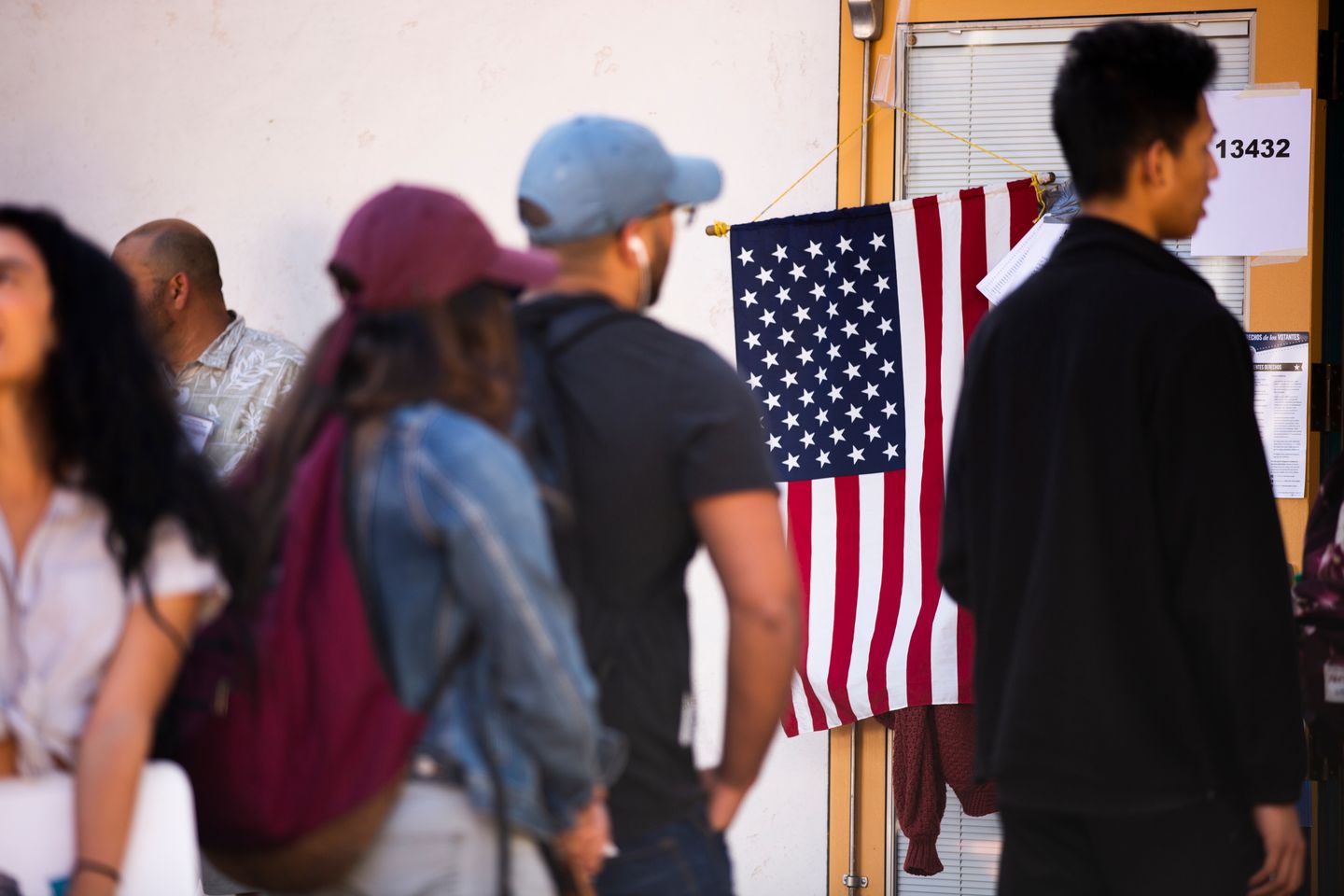
House Republicans Push Voter ID Bill, Threaten Government Shutdown conservative Conservative sources portray House Republicans as rightly insisting that government funding bills include strong voter ID and proof-of-citizenship requirements to secure federal elections, even if that risks a prolonged shutdown. They argue that these measures are common-sense safeguards against fraud and that resistance from Democrats and the Senate shows a lack of seriousness about protecting election integrity. @The Washington Times @Fox News House Republicans, including figures such as Reps. Anna Paulina Luna, Chip Roy, and Mike Lee, are advancing new federal election legislation that would require voter identification and proof of U.S. citizenship for voting or registering in federal elections, often referenced in conservative coverage as the SAVE or SAVE America Act. The dispute is unfolding as Congress faces a partial government shutdown deadline, with a bloc of House conservatives threatening to stall or oppose a short-term funding deal unless Senate leaders agree to take up the voter ID and citizenship bill, creating the possibility that the funding impasse and the election bill become linked in final negotiations between the House, Senate, and White House.
Across outlets, coverage notes that the clash centers on how federal election rules intersect with congressional budget authority and the looming shutdown calendar, rather than on a specific documented surge in noncitizen voting. Both sides acknowledge that current federal law already restricts noncitizen voting in federal elections and that states administer voter registration and ID requirements within that legal framework, while Congress can set national baselines for federal contests. Reporting also agrees that any House-passed measure would still have to clear the Democratic-led Senate and avoid a presidential veto, so the immediate leverage point for House conservatives is tying their election bill demands to time-sensitive government funding rather than expecting the underlying voter ID legislation to sail through on its own.
Points of Contention
Nature of the problem. Liberal-aligned outlets tend to frame the voter ID and proof-of-citizenship push as a solution in search of a problem, emphasizing official findings that documented noncitizen voting in federal elections is extremely rare and that current law already makes it illegal. Conservative outlets, by contrast, depict the issue as an urgent “election integrity” gap, highlighting vulnerabilities in registration systems, the growth of noncitizen populations, and high-stakes future elections as justification for new safeguards. Liberal coverage often stresses the lack of public evidence for widespread illegal voting, while conservative coverage treats the potential for abuse as sufficient grounds for sweeping reforms.
Voter access versus security. Liberal sources typically warn that strict voter ID and citizenship documentation requirements risk disenfranchising eligible voters—especially naturalized citizens, low-income voters, students, and elderly people who may lack ready access to paperwork—portraying the bills as part of a broader pattern of vote suppression. Conservative sources frame the same requirements as modest, common-sense rules akin to showing ID for everyday activities, arguing that they do not meaningfully burden lawful voters and instead boost trust in election outcomes. Where liberal reporting emphasizes barriers and the administrative burden on states and local officials, conservative reporting emphasizes deterrence of fraud and public confidence.
Use of shutdown leverage. Liberal-aligned coverage tends to describe House conservatives’ willingness to risk or prolong a government shutdown as extremism or legislative hostage-taking, stressing potential harm to federal workers, services, and the broader economy over a partisan election fight. Conservative outlets are more likely to portray the tactic as principled hardball or a necessary stand, arguing that tying the election bill to urgent funding is one of the few ways a small House faction can force the Senate and the administration to engage on election integrity. Liberal stories usually frame the gambit as reckless brinkmanship over a niche ideological demand, while conservative stories frame it as using constitutional spending powers to secure reforms they say have broad public backing.
Partisan framing of motives. Liberal coverage generally casts the GOP push as an effort to reshape the electorate in Republicans’ favor, tying it to former President Trump’s false claims about the 2020 election and to long-running partisan fights over voting rights. Conservative coverage, in contrast, highlights Republican sponsors as responding to grassroots concerns and fulfilling campaign promises, and often accuses Democrats of opposing basic safeguards because they benefit from looser rules or higher turnout among demographic groups that lean Democratic. While liberal narratives stress historical patterns of discrimination and civil-rights concerns, conservative narratives stress patriotism, rule of law, and the idea that secure elections are non-negotiable.
In summary, liberal coverage tends to see the voter ID–shutdown linkage as an ideologically driven escalation that threatens government stability to address a largely unsubstantiated problem, while conservative coverage tends to see it as a justified use of leverage to enact what they describe as broadly popular election integrity safeguards and to pressure a resistant Senate and White House.
Story coverage
Write a comment