US, Denmark, and Greenland Begin Talks to Resolve Diplomatic Crisis
US, Denmark, and Greenland Begin Talks to Resolve Diplomatic Crisis liberal Liberal coverage portrays the Washington talks as an effort to resolve a diplomatic crisis sparked by Trump’s remarks about buying Greenland, highlighting the need to respect Danish and Greenlandic sovereignty while reestablishing normal relations. It emphasizes constructive but still tentative discussions aimed at balancing U.S. security interests with allies’ political boundaries. @CNBC @The Gateway Pundit
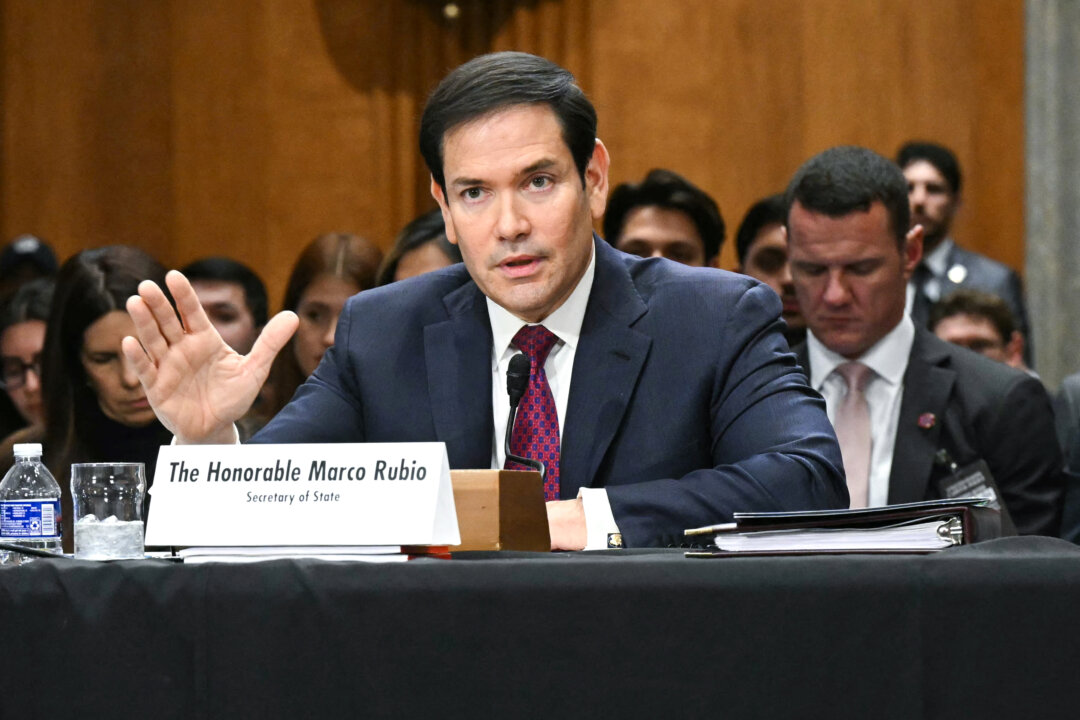
conservative Conservative coverage frames the discussions as part of a broader Arctic security push, focusing on Marco Rubio’s role and the establishment of a regular process to secure positive outcomes for all sides. It downplays past diplomatic friction and stresses U.S. strategic needs and flexibility in the Arctic region. @The Epoch Times The latest coverage from both liberal- and conservative-aligned outlets agrees that the United States, Denmark, and Greenland have initiated high-level technical talks in Washington, D.C. to address a diplomatic rift involving the Arctic island of Greenland. All sides report that Danish Foreign Minister Lars Lokke Rasmussen and U.S. Secretary of State Marco Rubio characterized the initial meetings as constructive, with Rasmussen saying relations are “back on track” and Rubio stressing a “regular process” aimed at flexible, mutually beneficial outcomes. The outlets concur that no definitive agreement or concrete policy changes have yet emerged, and that the talks are framed as part of an ongoing process rather than a one-time summit.
Across the ideological spectrum, reporting situates these talks within a broader context of U.S. national security interests in the Arctic, Denmark’s sovereignty over Greenland, and Greenland’s growing strategic relevance as an autonomous territory. Both liberal and conservative sources note that the discussions are meant to reconcile U.S. security priorities—especially in the Arctic region—with Denmark’s and Greenland’s political boundaries and prerogatives. Coverage also agrees that a formal working group or technical channel was created to manage these issues on a continuing basis, and that the new process is an attempt to restore stable diplomacy after a period of heightened tensions over U.S. ambitions in Greenland.
Points of Contention
Framing of the crisis. Liberal-aligned outlets explicitly describe the situation as a “diplomatic crisis” rooted in former President Trump’s threats or desires to acquire Greenland, emphasizing how those comments strained relations with Copenhagen and Nuuk. Conservative coverage, by contrast, largely downplays the notion of a crisis and presents the talks as a natural evolution of Arctic security policy, foregrounding strategic needs rather than diplomatic damage control. As a result, liberals cast the talks as a repair effort, while conservatives portray them as a proactive security initiative.
Emphasis on U.S. behavior. Liberal reporting highlights Trump’s rhetoric as a central cause of the tensions, stressing that Washington must now reassure Denmark and Greenland that their sovereignty and boundaries will be respected. Conservative outlets instead focus on Rubio’s leadership and the institutional continuity of U.S. policy, implying that American actions are measured responses to emerging Arctic challenges. This leads liberal sources to frame the U.S. as correcting past missteps, while conservative sources present U.S. behavior as steady and primarily threat-driven.
Narrative on security vs. sovereignty. Liberal-aligned sources balance coverage of U.S. security concerns with repeated references to Denmark’s and Greenland’s political autonomy, underscoring the need to respect European allies’ limits and sensitivities. Conservative coverage centers the narrative on enhanced Arctic security and strategic competition, treating sovereignty questions as acknowledged but secondary to countering rival powers. Consequently, liberals stress diplomatic reassurance and constraints on U.S. ambitions, whereas conservatives stress flexibility and the importance of expanding U.S. presence.
Assessment of outcomes and process. Liberal outlets describe the talks as “constructive” but emphasize that no concrete solutions have been reached, implicitly questioning whether U.S. goals can be reconciled with Danish and Greenlandic concerns. Conservative sources echo the optimistic tone but highlight Rubio’s promise of a regular, flexible process that will yield “positive outcomes,” suggesting confidence in incremental, security-focused progress. Thus, liberals frame the process as cautious and remedial, while conservatives frame it as confident, institutional, and oriented toward long-term strategic gains.
In summary, liberal coverage tends to treat the talks as a much-needed diplomatic reset after Trump-era missteps that strained Denmark–U.S. relations, while conservative coverage tends to frame them as a forward-looking Arctic security initiative that showcases U.S. strategic leadership and institutional continuity. Story coverage
Write a comment