TFTC - Housing Hasn't Seen This Since 2008! | Melody Wright
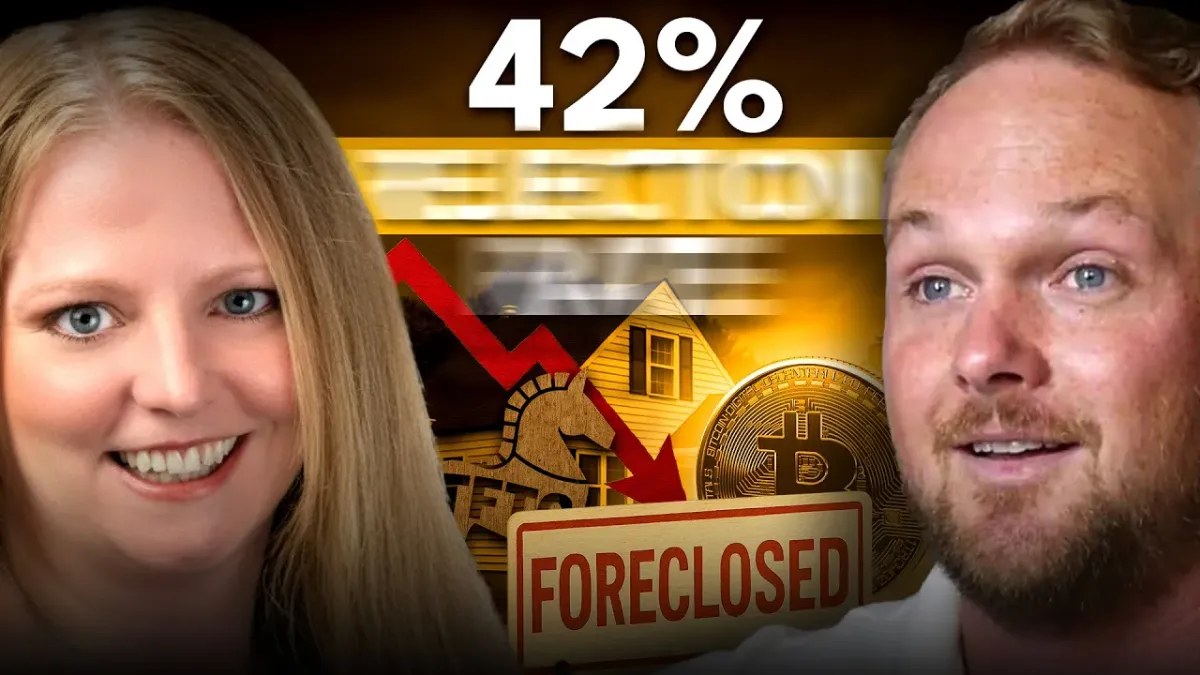
Key Takeaways

Melody Wright argues the U.S. housing market is set for a painful reset despite unprecedented post-COVID interventions: FHA has effectively replaced subprime (~13% share) with low-down-payment, low-FICO lending; affordability is crushed by surging property taxes, insurance, and utilities; first-time buyers have collapsed as credit tightens (student loans back on reports, high refi rejections), so even lower rates won’t revive demand. Institutional landlords overbuilt luxury units, are underwater in key metros, and may trigger localized distress. With 15.6M boomers aging out by 2035 and housing used as a speculative store of value, she expects rising delinquencies now and a meaningful foreclosure wave starting in 2026 as FHA “guardrails” end serial modifications.
Best Quotes
- “The FHA program today is what subprime was last time, 13% of the market and headed for trouble.”
- “Even if rates go lower, you’re not going to have a lot of people who qualify.”
- “We had the lowest first-time home buyers on record last year. The median age of a new homeowner is now 56.”
- “Being a landlord is not going to be cool. It’s not cool.”
- “Housing has to become boring again.”
- “Whatever they try to do to help the boomers is going to crush the younger generations.”
- “The worst thing you can be in right now is in debt. Debt slavery will crush you.”
Conclusion
Wright’s prescription is to stop engineering outcomes, let prices normalize, and make housing “boring” again, shelter first, not a casino. Bailouts to protect boomers risk further crushing younger generations; solutions should refocus locally (stronger city planning, repurposing vacant stock) while households avoid leverage in a volatile credit cycle. Without a credible path to affordability and hope for younger Americans, economic and social strain will intensify.
Timestamps
0:00 - Intro
1:33 - Mortgage Crisis Signals Return
3:50 - Affordability Crisis & Government Lending
8:08 - Housing Costs vs Bitcoin Store of Value
16:01 - Bitkey & Unchained
17:42 - Supply Myths & Melody’s Housing Tour
29:18 - Obscura & SLNT
31:31 - Historical Cycles & Auto Crisis Leading
40:27 - Opportunity Cost
41:11 - Bailouts vs Generational Solutions
54:34 - Bitcoin Innovation & Local Community Focus
1:05:45 - FHA Changes & Rising System Costs
Transcript
(00:00) They put the guard rails on this FHA program which could single-handedly take down this market. This is going to be uglier than most people think. They’re underwater. They’re getting hit with property taxes, insurance, at the same time their cost of funds to keep that Ponzi scheme going. We have seen unprecedented intervention.
(00:18) So many people took forbbearances during co we have the highest folks working two jobs that we’ve ever seen. After 2008, the banks really stepped back out of the mortgage market. You only have to have 3 and 12% down. That share of the market right now is around 13% which is about the share of what subprime was the last time things started falling apart.
(00:36) I think the banks want them out of mortgage. There’s going to be a cycle where they’ve brought everybody in they can possibly bring in. But it is a ponzi. It’s a drug and it becomes very addictive. These were middle class people that were coming and moving. Ultimately, they’re being priced out. So even if rates go lower, you’re not going to have a lot of people who are going to be able to qualify.
(00:53) We had the lowest first-time home buyers on record last year. 15.6 6 million boomers are going to age out between now and 2035 and they own the majority of homes. We had all this built for rent. All the homes were empty and and I was just like, what is going on? A lot of them look like army barracks. It’s all luxury.
(01:09) It’s like everybody forgot who lives in this country. We might see a bailout in the form of Fanny and Freddy, a government agency, buying back the homes from private equity. By privatizing, I think that Fanny and Freddy would suicide themselves. Being a landlord is not going to be cool. It’s not cool. Whatever they try to do to help the boomers is going to crush the younger generations.
(01:34) Melody Wright, welcome to the show. Thank you for joining me. Well, thank you so much for having me. It’s my pleasure. Well, as I was I was saying before we hit record, I was on Michael Ferris’s show, Coffee and Mike, last week and after our conversation off the record, he said you have to reach out to Melody.
(01:51) I was telling him I’m in the market to buy a house. uh where I live in the northeast in the Philadelphia area and you’ve been on his show. I’ve since my conversation with Michael watched a few of the podcasts you’ve been on in recent months and I think this is a conversation that I’m not only going to get value out of but we have a lot of millennials Gen Xers uh in the audience who are probably in a similar position than I am. So I’m really happy to jump in and talk about the real estate market with you. Awesome. Looking forward to it.
(02:22) Yeah. And like I said, I wanted to open with a chart. You come with a bunch of quantitative hard data. Uh something I like to follow not only in real estate but just generally is is Google trends. And if we look at Google trends right now particularly for the search help with mortgage we are at uh we have reached uh March 2009 levels. Yeah. Yes.
(02:52) Uh this is not surprising at all. Um and you know what’s crazy about this though, Marty, is if you think about it, we have seen unprecedented uh intervention already and loan modifications and workouts that you know so many people took um forbearances during co and once those forbearances were over um you know you could go up to 18 months of not making payments.
(03:18) You had to have some sort of workout to deal with those foreborn payments. And so what many people did was a payment deferral if you had a Fanny or Freddy loan or a partial claim if you had a FHA and they put it at the back of the loan to be paid off when you sell the home or pay off the mortgage. Um and then many people did modifications as well uh reducing their payment.
(03:41) So this is quite shocking because we’ve had intervention that far outweighs what we saw after the last housing crisis and yet people need help with their mortgage. And what is driving this uh specifically? You think it’s um the labor market, people becoming unemployed, not being able to afford it. Is it mainly homeowners who got um committed to adjustable rate mortgages and with the mortgage rate being above 6% their their payments just became too much is a combination of things. It’s a combination of things.
(04:17) um and based but you know a lot of it is yes the labor market is weak you know we have kind of um the highest uh folks working two jobs and those are part-time jobs right now um that we’ve ever seen and so you know I think the labor market has been weak for some time but people got into mortgages they couldn’t afford um what a lot of people don’t understand about this market is that after uh 2008 the banks really stepped back out of the mortgage market this was because of Basel 3 requirements the supplement or leverage ratio, things like that. And the non-bank stepped in, but they did um
(04:51) they’re funded basically by the government sponsored enterprises and agencies. And so what you have now is a largely government market and um the FHA program specifically kind of stepped in where private was last time with subprime. Um people getting mortgages with credit scores of 580 if you have a big down payment, for instance. Uh you only have to have three and a half% down.
(05:16) And so that share of the market right now is around 13%. Which is about the share of what subprime was the last time things started falling apart. And so people just simply can’t afford it. And and something I said years ago is that we wouldn’t even have to have a deteriorating labor market to see a crisis because property taxes and insurance have risen so much that people simply what you know they were already taking out um too much leverage that they really couldn’t afford.
(05:45) you know, based on uh these loans they were getting from these government agencies, but then you tack on uh property taxes and insurance. And I’ve seen um you know, your mortgage serer pays those and they put it into your payment. And I’ve seen escrow notices go out saying we’re sorry.
(06:04) Uh well, they don’t even really say we’re sorry, but you know, hey, your payment has just increased uh it’s just doubled because like if you’re in California, for instance, because of that insurance increase after the fires and and property taxes. So, I think it’s just a real affordability crisis at this point. Yeah. And you property taxes are interest. They’ve been a topic of conversation the last couple of podcasts, particularly after Ronda Santis started on his campaign trail of eliminating property taxes in Florida specifically, and I think I forget who it was, but basically described property taxes as unrealized cap gains taxes that are really pushing people out of the market.
(06:40) And I imagine they are affecting uh the boomers the most in retirement age. They thought they had their nest egg in their retirements account, the retirement accounts. They’re looking at their average mortgage payment and say, “Okay, we need to hit this level.
(07:00) We could sustain these payments and buy food and go on trips and whatever.” And then you see inflation across the board and the triple whammy, I guess, with with property taxes going up as well. Yep. When I was in Miami of of uh July of 2023, there was actually uh seniors stormed a condo ad administration building

Write a comment