TFTC - 30 Year China Expert REVEALS How China is Beating The US in the Financial War | Peter Alexander

Key Takeaways
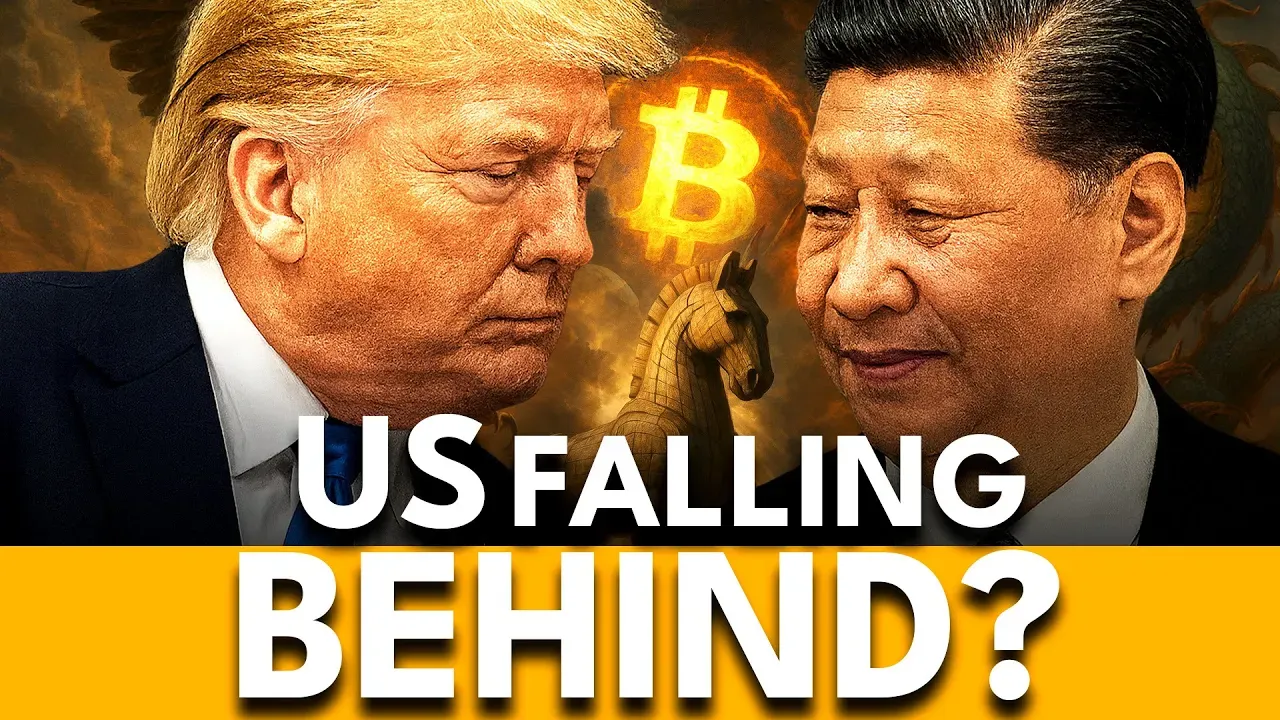
This episode argues that Western policy circles misread China by projecting short-term, nation-state logic onto a millennia-old civilization that prizes stability, resources, and incremental, asymmetric advantage; China isn’t seeking global hegemony so much as regional primacy in Asia while hedging the dollar system via gold settlement, selective decoupling, and supply-chain leverage (rare earths, polysilicon, manufacturing). The U.S., meanwhile, is “fiscally boxed in,” overextended militarily, and deeply reliant on Chinese inputs, yet clings to ideology over pragmatism. Alexander likens the moment less to a Soviet-style Cold War and more to pre-WWI Britain, Germany missteps, where tariffs, posturing, and misreading the other side’s incentives raised the odds of conflict. He contends U.S. leverage still exists (consumer market, forward deployment, finance) but must be exercised through joint ventures, deregulation that enables on-shore production with Chinese capital/know-how, and, critically, an explicit diplomatic recognition of China as an equal to unlock cooperation.
Best Quotes
- “The United States is absolutely unquestionably fiscally boxed in.” – Alexander frames America’s limited room to maneuver economically.
- “China is a civilization pretending to be a nation state.” – Captures the core difference in how China views itself versus Western assumptions.
- “The moment the Chinese think they no longer need or find value in a partnership, they’re going to cut you off.” – On the transactional nature of Chinese business relationships.
- “Hope is not a strategy. If you’re waiting on your mortal enemy to collapse, that’s a recipe for disaster.” – His critique of US complacency.
- “China doesn’t want allies. They want counterparties. They want to build, sell, make money, and prosper economically.” – A sharp contrast with US alliance-based geopolitics.
- “If you go for the king, you better not miss.” – On China’s preference for asymmetric tactics.
- “China never really wins wars. Their power comes from assimilation over time, not military conquest.” – Undermining the common fear of a Taiwan invasion.
- “The critiques of China are very narrowly defined and miss the enormity of what else is going on.” – Warning against reductionist narratives in the West.
- “The first step the US must take is to sit down and recognize our two countries are equals.” – On the diplomatic gesture China seeks most.
- “When you’re digging a hole and trying to get out, the first thing you need to do is stop digging. The United States needs to stop digging.” – His blunt prescription for US policy.
Conclusion
Avoiding a needlessly dangerous confrontation requires replacing wishful thinking (“China will collapse”) with realism about interdependence and time horizons: China will keep chipping away at dollar centrality and shoring up resources, while the U.S. must “stop digging,” rebuild industry, and de-risk supply chains without theatrical saber-rattling. A face-saving reset, framed as equality plus practical pathways (targeted JVs, regulatory relief, shared standards), offers the best chance to stabilize relations, restore U.S. productive capacity, and keep competition bounded. Misperception at the margins is how great-power rivalries spiral; disciplined pragmatism is how this one doesn’t.
Timestamps
1:00 - Intro
1:05 - Peter’s background
6:37 - China is a civilizaiton
11:17 - Western misperceptions
17:10 - Bitkey & Unchained
18:51 - Why this isn’t Cold War 2.0
30:45 - Joint ventures and deregulation
34:25 - US leverage with China
38:43 - Obscura & SLNT
40:35 - Military parade, hegemony
49:54 - Opporunity Cost
50:39 - China’s gold, Yuan vs Renminbi and Hong Kong
54:28 - Stockholm meetings and rare earths
1:02:11 - Recognizing China as an equal
1:25:08 - Taiwan
1:36:34 - Cautious optimism
Transcript
(00:00) The United States is absolutely unquestionably fiscally boxed in. If the United States didn’t go to war for 20 years, would China be where it is? Probably not. If there was a significant reduction in access to the United States market, it would have a tremendous negative effect on the Chinese economy.
(00:18) It becomes this battle of attrition, who can suffer the pain the most? Above all else, it’s about the resources. You started to see China begin to limit the amount of US treasuries it was going to take on. The moment the Chinese think that they no longer need or find value in this partnership, they’re going to cut you off.
(00:34) The US right now is nowhere near having the ability to understand how to navigate it. I’ve been hearing China’s economy is going to collapse for the last 25 years. Like what’s the joke? China’s trying to work at the margins to sort of undermine the American geopolitical position. This was as much if not more about national security and nobody talks about that. You need the Chinese to invest.
(00:54) The first step that would need to be taken by the United States, a sit down where the United States says, “We recognize that our two countries are equals.” \[Applause\] Peter, welcome to the show. Thank you for joining me. Marty, I got I got to do this. And this is going to demonstrate just how long I’ve been following you guys. the mandibles. The mandibles right now.
(01:27) Um I mean I’ll leave that to Matt to to highlight and let him continue to beat you with a sock full of quarters every week because you haven’t read it. But uh no, I was I was um I I just started laughing because I’m like, “Oh, after we went back and forth last night, I thought to myself, oh, I’m gonna I’m gonna have to bum rush him at the beginning with the mandibles book.
(01:47) I don’t have it on my bookshelf. I don’t have it on my on my uh Kindle either. It’s a book I I’ll get to it. I think eventually I will get to The Mandibles. Okay. As I’ve said many times, a rabbit hole recap. It’s essentially been read to me uh on air over the course of seven years from that. Yeah.
(02:09) And and to to answer your question, yeah, I I’m of the mind that we are in the middle of the mandibles right now. Lovely. Yeah. Lovely. Well, let’s uh let’s set the stage for this conversation. I wrote a newsletter earlier this week. We talked about um talked about it on Rabbit Hole Recap yesterday. There was a chart of China uh gold stock on Warrant at the Shanghai Gold Exchange.
(02:38) And if you see the chart, it is straight up and to the right. uh just a crazy step function growth over the course of the last year and a half really and that sent a signal to me like what’s going on? Seems like China’s preparing for something. Wrote the newsletter. You responded on Noster um saying that I need to get the full picture of China.
(03:01) You have been living in China for 30 years, correct? 30 years, correct? So maybe we maybe we start there. How did you end up in China? uh and uh deciding to stay for for 30 years. Um I’ll give you the uh the abridged version. Uh number one, it’s always great to be young and dumb. So I was working on Wall Street back in the middle early mid 90s.
(03:27) Um and that was the first time China sort of landed on uh the sort of Wall Street radar. And so I was dabbling in, you know, what was going on in China, you know, working as an analyst, so on and so forth. And ultimately I decided rather than to get my MBA, I was studying a little bit of Chinese in New York and thought, you know what, I’ll go to China for a couple years.
(03:53) I’ll teach English, get a lay of the land, firm up my uh uh my language capabilities, and then I’ll just circle back and come to uh to New York and start up the whole new career. And you know, what’s the old saying? You know, life is what happens when you’re busy making plans. And you know, one thing after another just happened.
(04:12) Uh, you know, I did the the teaching gig and then I got a job working as an analyst for a UK investment bank in Hong Kong. That lasted about four months and then the Asian financial crisis hit. got married, had a couple kids, you know, became what’s called a chief rep, which is a glorified sort of secretary for a handful of American companies, you know, did all that and then um right after WTO was working for Credential Financial of Lovely Newark, New Jersey and uh you know set up a joint venture for them in the finance space and thought you know maybe there’s a maybe there’s an opportunity here for me to become sort of a consultant. Rather than work for one company, I’ll work for a bunch. So I
(04:53) went out and set up this company called Zeban Advisors in 2004 and you know it’s sort of 20 21 years later I’ve been doing that just basically a consultant helping you know predominantly European American financial firms navigate what the possibilities are in China and it’s not it’s not that easy.
(05:13) Not simply because China is a different market, but because especially the American organizations, they’re just so tied to how they do business globally and just an unwillingness to adapt to the local market. So, yeah, it’s, you know, 30 years just happens overnight, you know, and here I am. Yeah.
(05:34) And as I was saying before we hit record, I’m very excited for this conversation. I’ve had uh Baji on the podcast. he’s got um a perspective that China is going to eat the US’s lunch if we don’t really light a fire under our proverbial asses to to compete um in many different aspects of the economy. Uh I was also telling you that my interaction with the Chinese uh over the last seven years has been via the Bitcoin mining industry and from what I’ve observed these individuals are incredibly ruthlessly capitalistic uh in a way that surprised
(06:

Write a comment