What It Would Take to Finally Slay the Gerrymander
This is an edition of Time-Travel Thursdays, a journey through The Atlantic’s archives to contextualize the present. Sign up here.
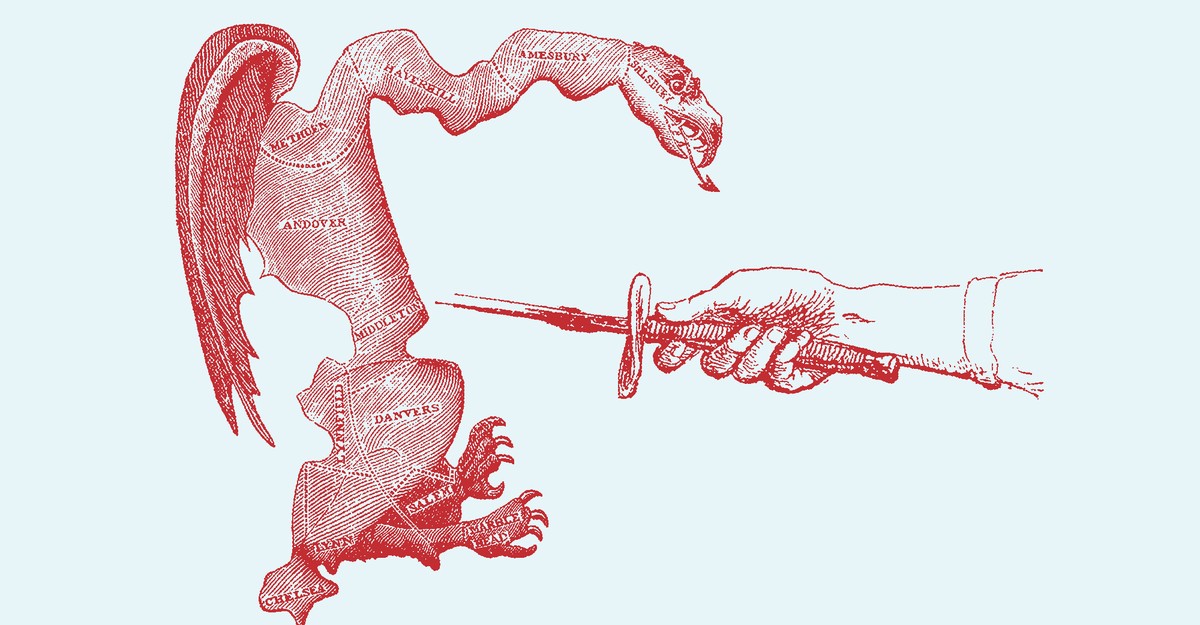
What It Would Take to Finally Slay the Gerrymander Gerrymandering, a practice of drawing electoral districts to favor one party, has a long history in the United States, persisting through various reforms and legal challenges. Despite efforts to ensure fair representation, partisan manipulation of district maps has led to extreme imbalances and a corrosion of political culture. The article suggests that traditional districting solutions are insufficient and proposes proportional representation as a potential alternative to truly democratic governance.
- Gerrymandering, named after Governor Elbridge Gerry in 1812, continues to be a significant issue in U.S. politics.
- Recent actions by state legislatures and Supreme Court decisions have created conditions for a ‘golden age’ of gerrymandering.
- Historical attempts to regulate districting, such as the 1842 Apportionment Act and Supreme Court rulings like Wesberry v. Sanders, have had mixed success.
- The advent of computer modeling has enabled more precise partisan districting.
- Proportional representation, a system that allocates seats based on the statewide vote share, is proposed as an alternative to eliminate districts altogether.
- The article argues that districting can erode democracy by discouraging voter participation and aligning leaders with narrow party interests.
No comments yet.
Write a comment